skip to main |
skip to sidebar
Folkvang and Sessrumnir
When the Aesir and the Vanir tribes of gods ceased the war between them, there was an exchange of gods as a token of peace between the two tribes. One of the most famous deities of the Vanir to be sent to the Aesir side was Freyja.
She is the goddess of love, fertility, the pleasures of the body, spring season and also war and magic, she is very much honored by all. She is the eldest child of Njörd and Nerthus and sister to Freyr. She is the patron of those who work with the norse magic, Seidr, especially the women. It was Freyja who taught Odin the magic arts of Seidr/Seiðr.
This is a goddess that can be seen in Asgard and also in Vanaheim, traveling from one real to another for many purposes throughout the year. But this post is about the places of Asgard, so I will only be writting about her hall in Asgard.
While in the real of the Aesir, she is frequently seen in her hall, Sessrumnir, and also with the Valkyries of Valhalla, because too often she rides to war with them to pick those who have fallen in battle and take them with her, especially women, although, she will only take those sworn to her or to any other Norse god with the exception of those who are sworn to Odin, Thor or those who have to be sent to Helheim.
Freyja's duties in Asgard are not equal to those of Vanaheim, her works in Asgard are linked to war and death. It is in Asgard that she keeps all she needs to go to war including her female pig called Hildisvin which is the offspring of Gullinbursti, the great boar of Freyr, brother of Freyja.
Her hall is placed in a field called Folkvang/Fólkvangr and her hall is also has the same name, although her home is called Sessrumnir, which might be the same Hall or two different ones. As I have written on another post about the flora and fauna of Asgard, because it is a realm so bright and most of the year it is like summertime, it is hard for any flower to sprout and live there, but in Folkvangr most of the time is springtime, ir is the only place in Asgard that this happens, obviously because of Freyja. All of the area is really pleasent, filled with trees, most given to Freyja by Idunna, but there are a lot of gardens, springs, meadows and so on. It is the place where warriors also go, but it is more like a place of rest, to clear the mind of all those disorders of war.
This is the place where the warrior learns to balance both sides of his condition as a warrior, where the warrior learns how to behave, meditate, to ponder and appreciate the gentler side of the war arts which require discipline.
As nowadays cats are so popular (they are awesome by the way) I would like to mention that Folkvangr, especially around Freyja's hall and in it, is filled with cats.
The inside of the hall is beautiful, divided in small areas with fire places and beautifully carved walls and colums. The place itself encourages people to gather around and talk or entertain themselves with music and games, this is the perfect hall of those who have dificulties in friendships, sometimes even if the reason is as simple as not knowing how to speak/deal/approuche another of our own kind. This is one of the major reasons why the hall of Freyja is called both Folkvangr and Sessrumnir, because the first one is huge and it is a place filled with guests, and outside there is another hall, a small one where Freyja is often seen along with practicers of Seidr, and that smaller hall might be Sessrumnir.
Note: If you have any questions for me or if you want to see my artistic works, check out my Facebook page and make a Like if you can by following this link --> http://www.facebook.com/ArithHarger
The Boar was once considered a sacred animal, as well as his domestic descendant the Pig, not just in to the Norse/Germanic peoples, but to many other European peoples, such as the Celts, the Lusitanians ( which in fact in todays Portugal is still an animal much honored by the neo-pagans ), the Gauls and so on. The Boar is a very intelligent animal and was the sacred animal of the Gods from many pantheons, but speaking of the Norse/Germanic Deities, they hold this animal in a very high esteem, a noble animal renowned for his intelligence, fighting spirit and its delicious flesh. For example, the God Frey rode the golden boar called Gullinbursti and his sister, the goddess Freyja rode a similar mount called Hildisvini.
In many old pagan religions throughout Europe the boar was a symbol of courage and strength to the warrior class, and also the symbol of ultimate sacrifice, giving himself to death so others could eat and survive, the same way as a warrior gives himself to death to protect those he loves to protect his home, the sense of duty, but he doens't give himself so willingly, he will fight fearlessly, testing his enemies and take some of those with him. The Boars blood was often used to purify and sanctify temples and sacred places and even the body.
In other places and cultures, the Boar was the symbol of Death, not just the Boar but all the other animals from the swine family, for Boars and Pigs devoured the crops, livestock animals, children and some times even adult humans, the Boar is so strong so feared, that the devouring demons from many mythologies were seen with huge boar's tusks.
The Boar is an animal who likes to live in the deep forest, near swamps and pools, places seen by ancient folk as the very entrances to the Underworld, the border between civilization and the cosy places of the human communities, with the untamed wild, mystical, mysterious, the place of the Gods and the spirits and the Boar was its fearsome protector.
Note: If you have any questions for me or if you want to see my artistic works, check out my Facebook page and make a Like if you can by following this link --> http://www.facebook.com/ArithHarger
Inguz
Mythology:
Frey, the Norse god of the earth's fertility, is the primary deity associated with the rune Inguz. He is also identified - although tenuously - as the god of horses, Ing or Ing-Frey. However, Frey did not actually ride a horse. His preferred steed was a wild boar named Gullinbursti, or "golden bristles". The bristles on the boar's back symbolised fields of repening wheat. Although most sources refer to Ing and Frey as being one and the same, there is an element of doubt regarding this identification. As the "ing" sound often denotes "son of " , Ing-Frey may not be Frey himself, but rather his unnamed son. He also appears to have been a semi-historical person who, in words of the rune poem "was amongst the East-Danes first seen by men".
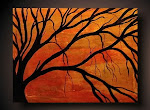
Note: The artwork to illustrate this post is a painting made by me. If you have any questions for me or if you want to see my artistic works, check out my Facebook page and make a Like if you can by following this link --> http://www.facebook.com/ArithHarger


 Posts
Posts