Showing posts with label Offerings. Show all posts
Showing posts with label Offerings. Show all posts
Roman Britain : Offerings to the Gods
In the year of 2010 a metal detectorist belonging to a club of metal detectorists in Selby in Yorkshire, found two pots stuffed full with coins. He called in the archaeologists to take a look at his finding.
Before I go any further with this subject, I would like you to take notice that Metal detectorists in Great Britain are extremely helpful when it comes to the finding of archaeological sites where metal can be found of course. There are thousands of groups of metal detectorists all over Britain, and it is actually a profession; they always cooperate with the professionals of archaeology, history and anthropology. In other countries, a metal detectorist is the same as a tomb raider, burglar, grave robber, well... a thief. They do not cooperate with anyone but themselves, they steal and sell whatever they find in the black market, or anyone else interested in antiquities. There is a constant struggle between archaeologists and metal detectorists. But have in mind, that in Great Britain it isn't the case, and metal detectorists are quite useful.
Going back to the subject, such a large find of coins was instantly classed as a treasure and the British Museum had a chance to buy it and put it on public display. Astonishingly, the solid mass of coins could still be identified through the process called Microtomographic Volume Imaging, which means using X-rays to identify every coin singularly. From this, researchers could tell each pot contained 201 (unbroken pot) and 99 (broken pot) Roman denarii, the silver coins of their daily usage, dating from the last years of the Republic right through to coins dating to AD 181. It seems remarkable that so many historical coins would have still been circulating so long after minting, so it is possible they had been collected and kept for many years.
Initially, the find was reported as a chance loss of somebody’s life savings, buried in the ground for safe keeping but, unfortunately for the owner, never retrieved. This seems to be the standard approach to all coin hoards, at least initially, as it is hard for modern people to imagine giving away so much wealth for any other reason. We no longer offer such gifts to the Gods but there is something the X-rays found in both pots that suggest this may have been the true intention of whoever buried it.
In between the coins, the X-rays revealed small organic material (preserved only because the coins were so tightly fused), which turned out to be chaff from spelt-wheat grains. This was the grain from which Romans and Romano-Britons made their daily bread. But why put grain in with a coin hoard, unless both were intended to be a gift to the Gods. Could these grains represent the first harvest of the year, offered in thanks for a successful year of farming? - Perhaps.
Roman historian Siculus tells us that the inhabitants of Britain burnt their “first fruits” on a bonfire as an offering to the Gods in thanks for the harvest. The Greek historian Arrian adds that Celtic people always offer the first fruits of the hunt to the Gods in a similar gesture of thanks. Perhaps the grain in the jars was the “first fruits” of the harvest, not burnt but buried in the ground. If grain was a usual offering to the Gods from the first take from the harvest, then this particular year it was boosted by the addition of a small fortune in silver denarii.
The only event that occurred around 181 AD (the date of the last coin in the hoard and hoards are usually deposited close to the date of the last coin) is the overthrow of the Antonine Wall by the northern tribes and the retreat of the Romans to Hadrian’s Wall. It’s possible this may have caused repercussions further south, especially if it led to increased militarisation of the area.
Maybe the farmer at Selby, probably an estate owner given the sheer wealth he or she gave away, had had a good harvest but with the unrest in the north the person feared for the future. So this year, as well as giving his or her first fruits to the Gods, he or she added the family’s greatest treasure, an heirloom passed down and added to across generations. It would have been a momentous event, seeing so much money disappear into the ground and perhaps gave the family hope that they would be safe from the turmoil.

Offerings to the Ancestors
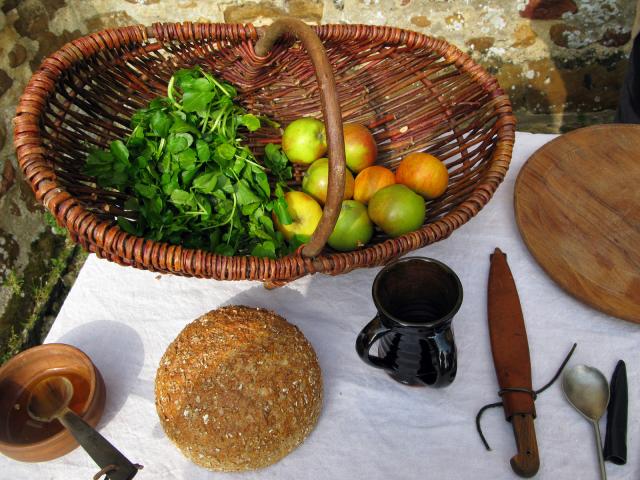
The best offerings to the ancestors are ones designed for them personally. The traditional offering is food or drink that they would have liked, but if you want to go further, donate time or money or resources to a cause that they would have approved of. This is easier for relatives who died during your lifetime, and who you knew personally - just think of some organization they would have approved of, and give to that group in the name of your relative. When it's people who are many generations dead, or perhaps so far back as to be nameless, it's more difficult. Start with their ethnicity - is there an organization for people of that ethnicity who need help, perhaps in countries other than their original homeland? Barring that, is there a harsh issue that is troubling the descendants of your ancestral people who still live in their own country? Could you donate to an organization who is trying to help? Imagine them looking down at all their modern descendants - who would they be most worried about? That's a good place to start.
Make offerings, and pray to our beloved dead. These include those we knew and loved in life, those we never knew but who survived that we might one day live, and those who did not share their DNA but inspired us to a better existence.
Make offerings, and pray to our beloved dead. These include those we knew and loved in life, those we never knew but who survived that we might one day live, and those who did not share their DNA but inspired us to a better existence.
Subscribe To


 Posts
All Comments
Posts
All Comments