Wight of the Nine Worlds

welcome

I welcome thee free spirit, which thou shalt come with an open heart, open mind and an open soul, for what you are about to read can only be understood by the wise who are eager to learn and to embrace the roots deep and forgotten in the hearts of the free people of Europe, by accepting who you are and where your roots lie, is half way into the great road of life. We will journey unto where our spirit takes us with the knowledge we gained. Learn and teach.
Showing posts with label Winter Nights. Show all posts

Vetrnætr / Winter Nights - 15th of October


This special season of the month of October is known by the name of Vetrnætr or Veturnætur in old Scandinavia, which can be translated as Winter nights, as it is most commonly known, or by Vetrarblót or Vinternatsblót, refering to the celebration it self.

You might get confused, because some people celebrate Winter Nights at the 31st of October to the 1st of November, or because the name it self is about winter and we are still at autumn, but in the old times there wasn't such thing in Scandinavia or to most of the Europeans, a season called Autumn, there wasn't the precession of the existance of the transition from light to darkness which is so typical in this month, there was just Spring, the Summer and when the days became colder, with leafs falling, the rain and thunder and the first snowflakes, it was the coming of winter and that's it. This celebration was started at the 14th of October by night, so its full day was the 15th, as the name indicates, it was the night of winter or the day where all the preparation for the coming of winter started, before the deep winter times, people gathered their food, wood, coal, fruits and roots, storing these in safe places to survive the severe winter. It was also the beginning of the month of hunting, called gormândhr, slagtmanad or blotmanad, which can be translated as, time of killing or of slaughter, because at winter, hunting was the only way of sustenance if the stored food was gone, taken or spoiled, and there was some people that lived only from the wilds and did not harvest or had cattle, and when winter came, the ice and frost killed every plant and leaf, and eatable roots or mushrooms were hard to find, and those people were forced to hunt if they wanted to live through. But for those who had cattle and owned farmland, this celebration was the piriod of two days, that marked the coming of winter, time to bring the cattle in doors from the pastures, to maintain the breeding, slaughter the remaining and preserve their meat to provide food, this is why the celebrations of this season are known as sacrificial feast, in which gods, elves, ancestors etc were always welcomed. Friends, relatives and other honorable guests, would gather at the farmstead halls for the feast, play games at the icy lakes during the day, and eat and drink during the night. The animals were killed in a ritual manner and their blood given to the gods, especially to Freyr, the god of agriculture, fertility and lord of all living animals who teaches the people to respect all the animals and treat them the best possible as long as they live, and how important they are in the cycle of life. Part of the meat was also given to the land spirits and to the ancestors, back to nature where it started and lived and where it must rest, to give life and sustenance, nourishment, to others.

This is an important celebration to remember, that all animals have their role in this world, to remember that we must respect them and treat them well, and that we dont need to eat meat everyday, but only in special occasions, once in a while, when the need is great, just as in the wilds some animals give sustenance to others, they also give it to us, it is the cycle of life, but that doesn't mean that we must eat them everyday in the uncontrolled way that we do nowadays, and the slaughter of thousands of animals each day that are treated in a dishonored way, with no respect, animals that will never see the light of the sun or a bit of grass, treated worse than slaves, beaten for the sport of cruel Men.

Winter Nights 31st October - 1st November


Note: This was a scheduled Post.

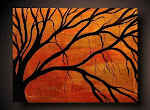
Note2: The Drawing was made by me and you can watch my works at my Deviantart


"A sacrifice was to be made for a good season at the beginning of winter…"

In pre-Christian Scandinavia, Veturnætur, Winternights, was a period of two days around the middle of October which marked the beginning of the winter half of the year. At this time the cattle would be brought in from the pastures and, as there was only fodder enough to see the breeding stock through the cold season, the remainder would be slaughtered and the meat preserved to provide food for the farmers throughout the harsh winters. This necessary yearly cull provided an excellent excuse for a big sacrificial feast at which gods, elves and ancestors were welcomed. Friends, relatives and honoured guests would gather at farmstead feast halls decorated with festive tapestries. Descriptions in the Icelandic Sagas suggest that they would play ball games on the frozen lakes during the day and eat and drink to excess during the night.
Also there was and still are two rituals that are held during this festival, álfablót and Dísablót, which i will talk in a later post when the time comes.
This is also a time to remember the dead ones, the ancestors, the importance they had in our lifes and still have as a memorie and their presence still lurk in the other world to this one, also it is the time to remember the female strong power and love, guidance and kindness, mortals, dead ones and Goddesses, but taht is a subject that belongs to Dísablót.

Also
there is a similar celebration in the celtic wheel of the year, Samhain the harvest festival or the end of the harvest, when the christianity came into Europe, these pagan festivels, were turned to be a diferent celebration, All Saints' Day or Souls day, it still has this only connection to the pagan roots, the dead, but nothing more, because Winter Nights or Samhain is also a day to celebrate the coming of winter and how good it was all the harvest till this day, to ask for protection, shelter, food and health, happiness and love for the coming winter, the harsh winter.
Dont forget that we are connected to all our ancestors. and they are a part of us, we in turn will be a part of our descendants, as i've told in a earlier post about the ancestors, they continue to play a big part in the role of our lifes.

This is also the time of the wild hunt, when Odin in the Norse mythology comes with the valkyries and the dead ones, and they can be seen in the sky in their wild hunt, hunt for other to join them, ridding in extasy, in trance, this is a great day and and
opportunity, or in the Celtic Mythology, Cernnunos the Horned god, i had an experienc in this day, you can read all about it in a post in "Personal Thoughts and Experiences" for this is the day where a tiny gap is opened between this world and the other and the dead ones, the spirits, the gods and so many other beings can visit us and we communicate with them. Unfortunately this day is also called Halloween and it is simply celebrated by wearing costumes of monsters and other scary beings, and people have forgotten their roots and the real celebration, but this has a bit of the old traditions, for the Celts in this day, wear costumes ans masks to be mistaken in the midst of the dead ones, the souls that could come into the world of the mortals, and so no mortal nor spirit would be scared of one another and could celebrate togheter.

For a Shaman, this day can be an easier day to "work" but i leave here and advice, do not let yourself be troubled by this mystical day, the magic and mystery of it, let your mind flow and let your dreams take you away in a difterent journey that may change your life, dont struggle against this and do not be afraid.

Have good celebrations! Farewell!