Showing posts with label Yggdrasil. Show all posts
Showing posts with label Yggdrasil. Show all posts
Yggdrasil the Axis Mundi
You can watch the video about this subject in here: Yggdrasil the Axis Mundi
It was common in ancient civilizations the belief in an axis mundi, a central point around which the world existed, a connection between the heavens and the earth, the source of all life and also a connection between different reality planes. The very thing connecting the realms of the divine; the sky, the earth and the infernal. Infernal not in a Christian sense, related to Hell, because pre-Christian or pre-Abrahamic religions had not the concept of an infernal realm for punishment; infernal rather in a sense of an inferior realm, underworld, just like the world above is called supernal (celestial).
To the Scandinavians and other Germanic peoples, this axis mundi was Yggdrasil, the world tree. Now, we have to take in mind, that the oldest documentations we have about Yggdrasil, are from the X century, and we have to be careful with this, because this was already a period in northern Europe when paganism was coming to an end, and since the IX century Christianity was already a force to be reckoned with in the north. And such polytheistic accounts were registered by Christians who perhaps had lost the true meaning of the pagan folklore, because they wrote such accounts many years after the conversion of the countries, and also, the Norse beliefs at this time had already a lot of influence from the new religion - Christianity.
Speaking of this, let's take a closer look into two of the most important sources to understand Norse mythology - The Poetic Edda and the Prose Edda - which date from the XIII century. The Poetic Edda is a combination of poems that date far back before the coming of Christianity, but from oral tradition, and there's no telling how much these poems have changed with time. The Poetic Edda is the medieval version of such accounts. And the Prose Edda, written by Snorri Sturluson, is a manual of Skaldic poetry using periphrases or metaphors of mythological references. Snorri Sturluson turned to folklore, to poems contained in the Poetic Edda and other poems which survived in oral tradition to create this work. This work by Snorri Surluson is a synthesized and simplified view of the Norse mythology, in contradiction with other sources and influenced by Christianity since Christianity was the official religion in Iceland in Snorri Sturluson's time for two hundred years already. But about these sources I think it’s best to write another article, so let’s go back to the subject.
We shall stick with the version we know from Yggdrasil, being the world tree. The term “Yggdrasil” comes from two elements: Yggr, which is one of the names for the god Odin, meaning “terrible” as in Odin being The Terrible/The Fearful/The Dreadful. And the term drasill, which refers to “the one who walks” something, “the one who rides” something, and it's also a poetic term for a mount, a horse. So, as you might rightfully guess, Yggdrasil is Odin's mount, vehicle, or horse. Meaning that this deity used the World Tree to travel between worlds; he uses this cosmic axis to journey into different worlds. But the term drasill can also be connected with the gallows, or hanging as a form of execution, which was compared, for some reason, with the horse. For example the XI century poem Háleygjatal, from Eyvindr Finnson, which refers to Sigarr's horse (a legendary Scandinavian king) as also being his gallows. This gives us the connection of Yggdrasil being the very thing Odin used to hang himself, kill himself, in order to be able to free himself to pursue the knowledge he so deeply wished for. We can see in here an old shamanic tradition of freeing the spirit from the body to reach the world of the spirits and gain knowledge, and communicate with the spirits and gods.
There might be another possible explanation for the name “Yggdrasil”. It’s also referred as askr Yggdrasil, or “The ash-tree Yggdrasil”, meaning that Yggdrasil is an ash-tree, which might mean that this was the tree where Odin strapped his horse or where Odin tied a rope to hang himself. Well, after all, poets play with multiple meanings and what might seem to us a tree, it might be a metaphor for something else.
This interpretation leads us again to a shamanic comprehension in how to reach the world of the spirits, through a symbolic but painful death, perhaps a ceremony around a great pillar, symbolizing the centre of the world, and maybe that pillar being made from the trunk of an ashtree, being a tree with magical properties and with a symbolical meaning to our ancestors that go far back since they began to have their first spiritual thoughts. Charlemagne, for instance, in the VIII century destroyed the great symbol of the Saxon faith. It was called Irminsul, and we still don’t know if it was a tree, or a great pillar, or some sort of idol. It was something big and vertical, possibly the remnant of this tradition of an axis mundi. So maybe Irminsul for the Saxons might have been what Yggdrasil was to the Scandinavians, “a great pillar”, a symbol of their faith and the connection between all living things from our world and the world of the spirits. The remnants of a spiritual shamanic tradition.
This world tree isn't just the symbol of the shamanic techniques used to reach the world of the spirits, or a symbol of the very connection between worlds. Yggdrasil is also the symbol of that which gives life. In the poem Grímnismál, deer eat from the foliage of Yggdrasil, a great eagle lives on top of it, on the very bottom Nídhöggr gnaws upon its roots and that's where snakes also live, and a squirrel named Ratatoskr goes up and down the tree delivering messages between the eagle and the great serpent. This shows the amount of life a tree can give, it is the home of living creatures of the forest, a shelter and also the source of food.
Another point, is that in the poem Voluspá, it is said that Yggdrasil is an evergreen tree, which is odd because the ash-tree is a kind of deciduous tree. But the Norns water the tree from the well Urðarbrunnr, supposedly magical waters that also give life, it's the Well of Destiny and it keeps Yggdrasil healthy and evergreen. And finally, as it is written in the poem Gylfaginning, three gods created the first humans from the bark of trees, one of those humans was a man named Ask, which means Ash-tree, making the ash-tree once again the source and creation of life, invoking the beliefs passed on by oral tradition, from a past far beyond memory, when our ancestors were much more attached to the natural world than we are today, unfortunately. But they already understood the importance of nature as the source of all life and as a means of communication with the spiritual and the divine.
| Keywords: About Shamanism, Axis Mundi, European History, Gods and Mythology, Irminsul, Mythology, Norse Mythology, Odin, shamanism, Video, World Tree, Yggdrasil, Yggdrasil Video, Youtuber

Walpurgis/ Thrimilci 22 April - 1 May
The festival of Walpurgis between the 22nd of April till the nigth of 1st of May, are the nights of both merrymaking and joy but also darkness and insight. These nine nights (from 22 to 30 of April) are to remember the self-sacrifice of Odin the Allfather, when he wounded himself with his own spear and hanged himself on top of the world tree Yggdrasil, for nine days and nights. At the ninth night, Walpurgisnacht, Odin beheld the power of the Runes and their magical purposes by ritually dieing and coming back with the Knowledge of the Runes. At that same moment, all light from the nine Norse worlds/realms was extinguished and chaos reigned. It's what still happens, but at the final stroke moment at midnight, the lights returns, ever bright, and the bonfires are lit. What happens next, is something similar than what happens during Samhain/Halloween/Hallow's end. On this night, Walpurgisnacht, the dead have full dominance upon our world, it is when the Wild Hunt comes to an end. At May th 1st the festival of Thrimilci is held, it is the beginning of Summer. Thrimilci is a festival filled with joy and contentment, and also fertility, much like Ostara. However, most of the Northern World is finally escaping from the snow at this time.
| Keywords: Northern Pagan Traditions, Thrimilci, walpurgia, Walpurgis Night, Walpurgisnacht, Yggdrasil
The Triskell and Triquetra
In another post, I talked about the Fylfot symbol, a symbolism of the triade of gods and today in this post I will continue with another symbol of that same triade, and also the Norns.
The Triskell is attributed to magical work such as reading the runes and as such, it is alsp connected with the Norns, the goddesses of fate.
The first branch of Triskell (Odin) describes the essence and the ocult meaning. The second branch on the right (Vili) is the principle of movement, energy and life tendencies. The third branch of the left (Vé) reveals the materialization of these impulses in the reality of our body and the world around us.
The importance of numbers in ancient religions has always been very present, as in here we see that the number three simbolizes the wisdom we can all obtain. However, the number nine is also present in the religions of northern Europe (3x3 = 9) which symbolizes that which is beyond our understanding, this is the number that symbolizes a consciousness beyond our mortal body, symbolizes the initiatory process of traveling to the other world as Odin did in his sacrifice hanging on the world tree Yggdrasil.
An older spirituality, the number three symbolized three different worlds, three realities or different planes of consciousness, the upper world, the middle world and the underworld, the foundations of a spiritual work, the foundations of shamanism. We also note this triade with the three types of guardians in the Norse mythology, Heimdall guards the Bifrost Bridge, Modgud the bridge that connects Helheim and Thor protects Asgard.
Retreating further into the origins of life according to the Norse mythology, also in the beginning there were only three planes. Niflheim and Muspelheim and Ginnungagap which was also a form of primeval life. Only then was it possible the appearance of the first signs of life through Ymir and Audhumbla.
Thus we see that the number three instilled in the Nordic symbolism, give us the understanding that this number is the number creator of all life forms, an energy catalyst.
The triquetra is also a Norse symbol closely connected with the Valknut and the Triskelion Horn. There are thousands of artifacts with this symbol in ornaments which have been found in Gnezdilovo ( in Russia ) all the way to York ( in England).
Initially this word designated any three-cornered figures, but now it is applied to the shape formed by three interlocked semicircles at the place where three circles would overlap.
The Triquetra was also used by the Christians to convey their own religious content. As an example, the Triquetra that was struck on the coins by the Christian Norse kings of York, was probably already reinterpreted by York Vikings in the Christian perspective. The same may apply to the silver penny issued by Harald Hardrade (king of Norway from 1047 to 1066).
Note: If you have any questions for me or if you want to see my artistic works, check out my Facebook page and make a Like if you can by following this link --> http://www.facebook.com/ArithHarger
| Keywords: Audhumbla, European History, Ginnungagap, muspelheim, Niflheim, Norns, Norse, Northern Pagan Traditions, Odin, Symbols, Triquetra, Triskell, viking, Yggdrasil, Ymir
Asgard - Home Of The Aesir - 3rd Part ( Valhalla )
Following the previous post, I will continue with the sites of greatest importance in Asgard.
Let's start with Valhalla.
Valhalla is the most famous place of all the Nine worlds and the Norse history, everyone has heard about it at least once, nowadays it became even more famous with movies, music and games. But do people really know what Valhalla really is?
Valhalla is the home of the Einherjar, the warriors who fall in battles and are chosen by Odin. Valhalla is both the fortified town and the great hall. The hall is made of giant wooden spear-shafts and the roof covered with many colored battle shields. Near the western entrance a carved figure of a wolf is "guarding" the door, and the eastern side it is the figure of an eagle.
Inside the Hall there are at least five hundred and forty doors (this is one of the biggest halls of all of Asgard) and of course, behind each of these doors are rooms for eight hundred warriors. Strangely enough, Valhalla (the hall) isn't full, but it has enough people to form a small city.
Valhalla isn't just a place for warriors, not is it just a place to fight and learn how to fight, and prepare for battles and such things. Valhalla is also a place of learning, it also has a great library, places for spiritual purposes, leisure, the inner chamber for the feasts etc. thing of it as a great university.
Valhalla is not for the faint hearted, for the lazy or for the weak minded and are used to have an easy life, however, even those might enter to become better individuals, expand knowledge, grow spiritually and mentally, but this does not mean that they are able to remain there for a long time, or in some cases, by the time they are set to stay. All those who enter there are chosen by Odin.
It is true that on the roof of Valhalla an enormous goat and a great stag wander around grazing on the thatched roof. The goats name is Heidrun and she is milked twice daily. The stag is named Eikthrynir, as the name suggests, it is old norse for "Oak thorn", along with his companion, the goat, they nibble the bark of the enormous tree that grows beside the roof. This tree also has a name, Laerad they call it, and it is a sapling of the world tree Yggdrasil.
The main route into the hall is through the great double doors, but they are heavily guarded of course. There is a back way into Valhalla an it is through the kitchen, where the cook Andhrimmer works.
Andhrimmer has a giant magical kettle, named Eldhrimmer, in which he cooks the stew for the million starving warriors upstairs. The myth tells us of one enormous resurrecting boar, Saehrimmer, which is slaughtered every night for the feast and revived again the next morning with no memory of what happened.
Odin's Valkyries work in the hall. All of them are tall and strong, fierce, they are referred to as shield-maidens. They can change into various birds such as ravens and swans, usually dressed in armor when on duty, being one of their first duties the picking up of anyone fallen in battle that Odin feels that it may be the appropriate character to enter Valhalla, a person worthy to be part of his troops. The Valkyries may have a human appearance, but they aren't humans, far from it.
The Valkyries who are in charge of making sure that the Einherjar get fed are named Herfjotur, Goll, Geirahod, Geirdriful, Geirolu, Geirromul, Geirrondul, Geirskigull, Geiravor, and Skeggjold. Two more, Hrist and Mist, are Odin's personal dinner-servants and serve only him. The three most important Valkyries are Gondul, Hildr, and Skogul, who are in charge of deciding which warriors is taken on to the battlefield. The three of them tend not to ride straight onto the field, they are generals who watch from the sky. They are mistresses of war and magic, and can be invoked for aid and to teach battle-galdr. They will only teach those who are sworn to Odin, unless he instructs them to teach someone else. One may also encounter human women who are claimed by Odin as his Valkyries and who occasionally visit Valhalla as well.
There are other Valkyries that we know of , they are so called Halmthrimull, Herja, Hervor, Hildeberg, Hjorthrimul, Holukk, Hrund, Kara, Kreimhildr, Olrun, Ragridr, Rangnid, Reginleif, Sanngridr, Sigrdrifa, Sigrun, Skamold, Svava, Svanhvit, Sveid, Svipull, Tanngnidr, Thogn, and Thrima. Eir occasionally rides with the valkyries as well, though her function seems to be that of a battlefield healer, she may bring a merciful death to some of the fallen.
Valhalla is the home of Odin, however he isn't there all the time but visits it often. When he enters Valhalla, his spear, Gungnir, is hung over the outside doorway as a sign that he is within.
During the Yule, it is from Asgard that the Asgardsreia beings and people who visit Valhalla during this time might get the chance to see it or even participate in it. This festival is the wild hunt, various deities also participate in it, wights, some of the Einherjar, other spirits and so on.
Note: If you have any questions for me or if you want to see my artistic works, check out my Facebook page and make a Like if you can by following this link --> http://www.facebook.com/ArithHarger
| Keywords: Aesir, Andhrimmer, Asgard, Asgardsreia, Eikthrynir, Einherjar, Eldhrimmer, Gungnir, Heidrun, Laerad, Odin, Saehrimmer, The Nine Worlds, valhalla, Valkyries, Yggdrasil
Asgard - Home Of The Aesir 1st Part
Asgard is possibly the most famous of all the nine realms of the Norse cosmology. It is to be expected, it is the place where the most famous deities live and it is also the place where Valhalla is, the great hall of the fallen warriors, which is the source of many epic sagas and wonderful tales.
Asgard is the most well guarded realm of all the nine, a realm on top of the great world tree Yggdrasil. Geographically speaking, it is the northernmost realm.
This realm wasn't at first what we know about it from the myths, shamanic/spiritual work nor from the written sources given to us. Asgard was only created or inhabited after the war of the Aesir against the Vanir. Prior to that, the Aesir lived in a place called Manheimur or Mannheim. No one knows were exactly that is, some say it is out of Asgard, others say it was a place inside Asgard, a tiny kingdom poorly fortified, or it might have been the name given to Midgard, not ours, but the very Midgard in existance in the spiritual world. This indicates that the Aesir once lived among the human folk. Suffice to say that the first dwellings of the Aesir is shrouded in mystery.
Mythology tells us of how Asgard was created, from the neckbones of Ymir the great Jotun. Odin, Vili and Vé created it in their great labors of worldmaking. It had a great wall around it, but it was demolished by the Vanir during the great war between the two races. However, it was repaired bu a frost Jotun called Hrimthurs with the aid of his magical horse Svaldilfari. The price for the work if it was done before summer's end, was the hand of the Vanir goddess Freyja. However, Odin sent Loki to disturb Hrimthurs' work and delay it, so he could never be paid. The giant discovered the scheme and burst in rage, the perfect excuse for Thor to kill him, and so he did. It isn't clear if the body of this giant was turned into stone or if a great stone was erected in homage to the giant and his great work, for the stone remains to this day outside the great white walls.
Asgard is much similar to Midgard, in terms of weather, seasons, the times of the day etc. but longer. During the summer the days are very long and bright, the realm of Asgard is filled with light. It has a warm weather, this might be because of the fact that Asgard is the favorite place of Sunna.
The winters there are still dark and chilly but with little snow, and long winter nights, too long.
Asgard is the smallest realm of all the nine, but even so, it is an immense land which seems endless, a vast continent, but comparing to the others, it is the smallest indeed. Asgard is filled with hills, valleys and a few flat plains as far as the eye can see. To the north of it, and immense mountain chain that goes all the way into the east closer to the end of this realm by the sea. To the west lies the coast which is the border between te ocean of Vanaheim. In this western coast there is great bay where Njörd's Halls and Ships lie. The greatThund Thvitr river which is large and deep, comes from the Northern mountains of Jotunheim to the east and serves as a border between Jotunheim and Asgard. The river flows to the south and meets with the borders of Alfheim and then it finds its way into the ocean.
The white walls of Asgard can be seen in the distance once already inland. It's main gate made of iron is called Valgrind. Asgard isn't a realm filled with cities, instead, there are many great Halls with their respective courts with houses, much like big villages. Valhalla, Valaskjalf and Fensalir follow the same pathern pattern. It is known to us that there are at least sixteen geat Halls belonging to major deities and a few minor ones scattered, which belong to other deities.
There is a great plain called Vigrid, it is the largest of all the plains of Asgard. No one lives there, and much like most parts of Asgard, because of the weathern being warm and long bright summer days, there aren't many plants and the lack of flowers because of the fast passing spring time doesn't give the natural beauty that the land deserved. It is said, that it is in this vast brown-dust plain, that Ragnarök will take place, this will be the battlefield.
Near Asgard there are two small realms called Andlang and Vidblain. Little is known about these places, but they are part of Asgard.
Asgard may not have many flowers or other plants and trees that might enhance the beauty of this realm, but in terms of fauna, it is filled with birds of all sorts that crowd the roofs of the trees.
Note: If you have any questions for me or if you want to see my artistic works, check out my Facebook page and make a Like if you can by following this link --> http://www.facebook.com/ArithHarger
| Keywords: Aesir, Andlang, Asgard, Fensalir, Hrimthurs, Svaldilfari, The Nine Worlds, Valaskjalf, Valgrind, valhalla, Vidblain, World Tree, Yggdrasil
Midgard
Midgard is one of the most heard words when it comes to talk about the nine cosmic worlds of the Norse cosmology, as Yggdrasil is the spiritual connection between out world and the next, so is Midgard.
Midgard is often refered as being our very world, the plane we inhabit, which isn't incorrect because from an ancient point of view, our world was indeed thought to be in the very center of the universe and all the other spiritual worlds and physical worlds were scattered around our very own.
After some years of research, anthropological work with Norse/Germanic shamanic cultures still around and also after a lot of shamanic/spiritual work, we know now that Midgard is also the name of a spiritual world which is included in the group of the nine cosmic worlds of the norse spiritual beliefs. As I have said before, the spiritual plane is so vast that shamans believed to be divided in many worlds because when they came to one place to work with the spirits the landscapes were so different of the ones of the other places they visited, and seldom there is the chance to travel from one place to another in the spiritual world because of its vastness, but in truth it is one huge spiritual realm and Midgard lies in it. So now we will have to leave behind the historical concept we know about Midgard and focus on the spiritual Midgard, that is what I will be writing today.
The spiritual world of Midgard is very much like our own was many centuries, I even dare to say a few millennia ago. It is a vast plane in the spiritual world with the seasons similar to ours, in fact the seasons vary depending on the place you are on that continent as you might imagine. Think of it as traveling from the Northern parts of Europe to the Southern parts in the mediterranean and going all the way to the east to the end of Siberia, as you might know, the weather varies a bit bit still, in winter there is snow and it is very cold especially in mountainous terrains and at the summer is hot, but in some places its hotter than others. The spiritual Midgard is a place where people some times make a spiritual journey without even noticing it, and it is some much similar with our world in terms of weather, nature, atmosphere and landscapes that it will be even harded to know if we are indeed on another world by means of out of the body experience. Most of us if not all, have spiritual journeys, some more than others, it might only occur once every year, but in truth we have, and it is because of the similarities between Midgard and our mortal plane, that we may easily travel there unconsciously than traveling to anyother spiritual continent/place/realm.
Midgard is surrounded by a vast ocean receiving the waters of the many rivers that exist in this continent. To reach anyother realm, be that Asgard, Jotunheim etc etc, from Midgard the journeys are only made by sea, there isn't any part of the continent that is connected to the other realms by land. However, the ocean surrounding Midgard has a lot of small islands. To the north-east of Midgard the division between Midgard and Jotunheim is narrower and the ocean enters into that passage creating the Great Salt River of Elivagar that runs to the south, creating the eastern boundary of Midgard with Jotunheim. To the west lies Vanaheim and in the south after passing the cold ocean one might reach to the shores where the dark forest of Myrkwood lies which is part of Midgard and the boundary to Muspelheim.
No one is certain if Myrkwood really belongs to Midgard or if it is part of Muspelheim since it lies on that flaming continent.
Myrkwood is a dangerous place, a vast dark woodland where a lot of feral creatures live.
In the introduction of the poem Völundarkviða, it tells us about a place called Ulfdalir and the brothers
Slagfiðr, Egil, and Völund lived there in a house near the shores of the lake Úlfsjár, some people who travelled to the northernmost parts of Midgard tell us of a place called Ulfdalir that also has a lake, another dangerous place where outlaws and outcasts live, but in my opinion those people might be guarding this place because it is said that in Ulfdalir lies an entrance to the realm of Helheim, if this is true, I know not.
There is also a fortress called Ysetur near the borderlands to the North-east between Midgard and Jotunheim. A fortress built by the Aesir to keep an eye on the Jotnar, but I think it might have been abandoned, or it might be the house of other folk because the Aesir gods no longer have any member there. It is said that Thor lived there for a time.
Note: If you have any questions for me or if you want to see my artistic works, check out my Facebook page and make a Like if you can by following this link --> http://www.facebook.com/ArithHarger
| Keywords: Elivagar, Gods and Mythology, Midgard, Myrkwood, The Nine Worlds, the world tree, Ulfdalir, Völundarkviða, Yggdrasil, Ysetur
Yggdrasil the symbol of Initiation
Initiation in shamanism usually means the passage into a normal mundane state of life into a higher state of mind when one is more connected with his/her own spirit and is able to live between this world and the world that can be seen through an altered state of consciousness, experiencing "death" through self-sacrifice. This also means achieving greater knowledge, it does not require any exchanges, only full sincere devotion of the individual. A search of the true spiritual sense, freeing the mind of the condition of being a human being limited in their ability to act towards what seems elusive, untouchable and unknown, opening the door to another reality and very much alive, completely destroying the meaning of the earthly world being the only possible reality.
We can see this kind of self-sacrífice in Odin, one of the most famous shamans, and all the symbolism contained in his history, being a metaphor to release the mind to the world of spirits, in Yggdrasil, the world tree, the symbol of life, houses everything that has life and has conscious. Odin wounded himself with his spear Gungnir to precipitate delirium which comes in many ways, one of which is near death from blood loss, hanging in the great Ash tree upside down in complete fasting and sensorial abstinence, the most ancient manner to induce trance by shamans, through a series of brutal acts against the body to reach the state of near death and hallucinate. By doing this, Odin was able to leave his body, and earn the knowledge of the sacret language, the Runes. Many shamans used such ways to enter in trance in the most primordial times of humanity, in search for aid and answers from the spirits, visiting the spiritual world for knowledge and such knowledge was shared amoung the communities and thus learning from the shaman and from the spirits, people would understand better the world around them and life itself. This also facilitated communication between mortals with the deities and natural forces of our world and the spirits of each living creature. The story of Odin seeking knowledge of the Runes helps us understand how shamans acted when seeking knowledge beyond what could be seen in the normal world we know, not only by the way the trance was induced but also the symbolism of riding into a spiritual journey to another world, just as the shamans rides his/her horse that might be the drum of a animal/spirit/deity in the other world, so did Odin rode in his journey, the meaning of Yggdrasil is the very channel that connects us to the world of the spirits, being Ygg one of the names of Odin and Drasil means Horse, so it is literally the horse of Ygg, the passage that might take us beyond the thin veil that separates this world from the world of spirits.
Note: If you have any questions for me or if you want to see my artistic works, check out my Facebook page and make a Like if you can by following this link --> http://www.facebook.com/ArithHarger
Ratatoskr
We often hear about the animal spirits that live in the great world tree of the Norse Mythology, Yggdrasil, the Eagle at the top, the Dragon at the bottom and in the middle the Squirrel named Ratatoskr/Ratatosk, which is said that he carries messages and ocasional insults between the Eagle and the Dragon and to many other inhabitants of the area and also to the rest of the Nine Worlds.
Ratatoskr knows all about Yggdrasil and its surrondings, and also knows about all the hidden places in the Nine worlds, all the passages from one realm to another. This animal is a powerful symbol in the Norse Shamanic practices of old, it is the symbol that links each sacred being in the Norse mythology by peaceful means, avoiding trouble, avoiding unecessary danger, he is also the symbol that links each realm, just as the Squirrel moves from one tree to another, silent, watchful, without drawing attention, discreet, always with eyes open, so too the Shamans of the Norse/Germanic peoples must do that when travelling between the Nine worlds, but also a lesson to take by all the others who must travel in this mortal realm, searching for food, a place to live, hunting, or whatever one must do into places he or she doesn't know and where extra careful is necessary, always attentive, alert, for possible dangerous threats.
In ancient times people often adopted the behaviours of animals so that they could better adapt to the dangers of living in the wilds, and the Squirrel was one of these animals, having the ability to avoid trouble, hid, blend in the surroundings, a constant struggle to survive, always watchful.
Also Ratatoskr represents a guiding spirit who helps shamans and shamanic practitioners to walk between the Nine realms, teaching to think first before acting, when people are in places they don't know of, its best to assume that it is a dangerous place, and the best thing is to be attentive, avoiding any kind of trouble whenever it is possible.
Note: If you have any questions for me or if you want to see my artistic works, check out my Facebook page and make a Like if you can by following this link --> http://www.facebook.com/ArithHarger
| Keywords: About Shamanism, Gods and Mythology, Ratatosk, Ratatoskr, Squirrel, World Tree, Yggdrasil
Nidhogg
Since childhood many of us have heard great stories about dragons, how powerful they are, magical, mysterious, they can be both friendly or terrible fows! Stories that still gives us inspiration and we continue to dream on as if we were flying on the backs of these great wyrms... and so in this post i will write about the most famous dragon in the Norse myths, the thirty-foot wingless earth-dragon Nidhogg!
The great world tree, Yggdrasil, has its longer roots in the lowest worls of Niflheim and Helheim, on of those roots is at the great well Hvergelmir in Niflheim and all the rivers of the nine realms flow from its depths. Near the well lies the third root of the great world tree, so huge that goes over the boundaries of Niflheim and Helheim like a wall, as if it was a small mountain. Nidhogg the great wingless earth-dragon goes to and fro over the wall to gnaw at the great root. When Nidhogg is not sleeping or just in a watchful rest in the lowest root, he crosses the wall into Helheim and visits the shore of the dead. This specific place is where the sun never shines, or at least throughout the year it it is seldom seen in this shore, at last no one has ever been there in anytime that the sun could possible been seen, so the waters of Helheim's ocean are very dark. Corpses and shed skins of serpents decorate the shore. Nidhogg comes down periodically in her task ( yes Nidhogg is female ) as carrion-remover and eats the corpses. It's natural for many to be afraid of her because of her job, but like all natural things, there must be a cycle and a natural balance, and Nidhoog is an important part of a cycle. Nidhogg is the representation of the natural cycle when something dies and rots to feed other beings or the earth it self, nutrients and minerals of the dead will give life again. We are used to be disgusted when we see worms and insects that live by eating rotten things or the wastes of the body, we tend to clean that from our memories and from society and build a beautiful picture of the natural world, but we have to understand that theses creatures live in a natural cycle of life and nature, that is how nature works, for all the wastes of the world will be turned into rich soils that will give life, where plants will grow again to feed animals and animals will give birth to others and nourish them with the same fertile soil, and yet again those same animals will be the food of others and what is left behind, both skin, fur, bones or what comes from the body wastes, will be put into the earth again and the same cycle begins. This is what Nidhogg shows us, that this natural cycle of life led her to have a terrible fame because in the human society, these things we put aside, in shame, disgust, trying to ignore the existance of such things because we don't understand how it works and it is actually a very magical part of nature, when death gives life.
When someone sees Nidhogg by this shore, she is sometimes with her brood of serpent-children, among them are the famous Goin, Moin, Grafvollud, Ofnir and Svafnir. They are usualy at Nastrond, the Hall of Serpents, but they will not attack anyone outside the wall, by Hela's orders, but they might come to you, so do not show any signs of fear, act as if they were human, be calm and courteous, be polite.
It is interesting to see that the great world tree and a dragon at its base isn't just a myth from the Norse cosmology, but also from other different cultures around the world. Often people ask why is Nidhogg gnaws the roots of the great tree, it is simple, the world tree cannot exist or perform all its natural functions without the natural cycle of nature, and Nidhogg once again performs the same important job as i have written before, she gnaws on the tree to remove the dead wood to stimulate the new growth, gnawing away the dying parts of the tree, so new branches and leaves might grow in the rest of the tree. This shows us that we must appreciate and give creadit to all of the creatures who do the same job in the natural world, for they too are a part of a great cycle in which we all take our place. Also we seem to forget the importance of those ( speaking of us humans ) whose job is cleaning up the environment and all the waste we leave behind, those whom society likes to hid.
| Keywords: dragons, Gods and Mythology, Hvergelmir, Nidhogg, Working with the Gods, wyrms, Yggdrasil
Working with the Gods : Odin
Odin
First, don't invite Odin without having some good quality alcohol on hand - mead or a nice wine. That's just courtesy. He also loves aquavit; some say that it's his favorite. In general he will drink a lot and not be drunk, so keep the mead, wine and aquavit coming. An attendant might gently remind him to take the alcohol with him. He likes tobacco, but prefers it in a pipe, so finding him a nice pipe and some good-smelling loose tobacco would be useful. He likes red meat, especially beef, and spearlike vegetables such as leeks, asparagus, and garlic. His preferred colors for clothing are blue, grey, and black.
Odin likes to talk, to counsel, and to solve disputes. Don't mention Baldur, or Loki's chaining, or that whole political debacle - it's a sensitive subject and he's not likely to want to discuss it with you. He has a terrifying side, which can inspire utter cowering fear or complete berserk, but he won't do that side at a gathering. That's saved for initiations of his chosen ones, usually somewhere in the woods where a painful ordeal is imminent, and then you might see Odin Yggr, the Dead Man.
Make him a throne where he can sit, with furs on it if possible.
Odin's attendants can also be either male or female, and should ideally be people sworn to him - there are enough Odin's men and women around that this shouldn't be too much of a problem. He has also had the habit, in the past, of turning his attendants into wolves or ravens, two apiece. This tends to happen when he is given attendants who are skilled at astral shapeshifting and/or have a strong affinity to one of those creatures. He also likes to have other members of his family present, if possible; negotiate it out first if you only have room or staff for one.
One thing that Odin has done while horsing is to threaten people with his spear (yes, it's politic to have a spear nearby for him, even if you're worried about him doing such a thing) by placing it against their hearts. It's a flinch test that he generally only does to warrior-types, or those who think they're really tough. So far he has not actually injured anyone, although I wouldn't push it. The right thing to do is to stand strong, neither flinching nor being arrogant and leaning into it.
Yggdrasil: The World Tree Part 2 ( History and seasons )

Note: The Drawing to illustrate this part was also made by me, and because the first part was so extensive, i decided to make a second part about this history and the seasons arround Yggdrasil.
Before i write, we must see how Nature works, how a world/worlds are done in the natural way of things, and we all know it is from the forces of fire and frost, and all the atoms colliding with each other, we all study that in fisics, history, geology and biology, so we have to see beyond the myths, but what is realy interesting, is that we have learned this in times not so long ago with the help of tecnology, and the ancients knew it well, better even, thousands of years before Christ has even borned, but they have turned it into myth, so we could understand everything about the natural course of life and the universe, be glad with that and have motivation to know more and be amazed.
Before i write, we must see how Nature works, how a world/worlds are done in the natural way of things, and we all know it is from the forces of fire and frost, and all the atoms colliding with each other, we all study that in fisics, history, geology and biology, so we have to see beyond the myths, but what is realy interesting, is that we have learned this in times not so long ago with the help of tecnology, and the ancients knew it well, better even, thousands of years before Christ has even borned, but they have turned it into myth, so we could understand everything about the natural course of life and the universe, be glad with that and have motivation to know more and be amazed.
History: In the beginning there was the Void, and the Void was called Ginnungagap. That eternal nothingness, where there is neither existence nor nonexistence, lies at the beginning of many creation myths. Then, somehow, the Tree came into existence, and around it spun the first three worlds that came into being: Niflheim, the world of ice and frost and mist, with the great well Hvergelmir, the Roaring Kettle; Muspellheim, the world of fire, and Jormungrund, or 'Giant-Land", the underworld that lay beneath these two. (This last world is rarely mentioned, and it is not the same as Jotunheim, which came later. It was the land of the Dead.) Surt the Black was apparently already living in Muspellheim; whether he was there alone is unknown. This would, however, make Surt the oldest living creature in the Nine Worlds, a fact about which he is silent.
Niflheim and Muspellheim drifted in and out of each other's orbits. Finally, they drew close enough together that melted ice from Niflheim flowed out over the gap and formed the river Elivagar, whose every particle held a shard of ice-poison. This ice piled up into an iceberg, but it slowly melted as Muspellheim grew closer. As it melted, it revealed the body of a sleeping giant, Ymir. Ymir was an enormous mountain-sized frost-etin, without much of a brain; he mostly lay there semi-paralyzed and mewed.
Also thawing out of the ice was a great cow, Audumhla. Ymir suckled on her udders and found nourishment; she licked at the salty ice for her own food and uncovered yet another creature, a much smaller creature named Buri, who would be the ancestor of the Aesir. Meanwhile, as Ymir slept, his sweat gave rise to a male and female etin, and his two legs rubbed together and gave birth to yet another male giant. Meanwhile, Buri grew up in the company of various giants. (There seems to be some discrepancy about how many giants were actually created; it may be that there were already some about before Ymir, or that more than just three were created. Like all creation stories, the reality of it was lost in the mists of the previous generations.) After many generations of giant-breeding, Buri had a son named Bor by an unnamed giantess, and Bor eventually sired three sons by another giantess named Bestla. These sons were Odin, Vili, and Ve, and they began all the trouble by taking it into their heads to kill the enormous, helpless Ymir.
Up until this point, the two worlds of Muspellheim and Niflheim were separated; the great void that lay between them was called Ginnungagap. It was apparently possible, with difficulty, to pass from one to the other across the Gap. Some giants had already done so, living under the leadership of Surt the Black, and were busily evolving into fire-etins. The sons of Bor apparently felt that more useful land was needed, so they killed Ymir and used his corpse as a variety of magical anchors to create new worlds. Some pieces floated off and created worlds by themselves - Svartalfheim, populated by duergar who also sprang from Ymir's body, is one example, Jotunheim is another - and some, like Asgard and Alfheim, the sons of Bor created themselves, for Bor's people and the otherworldly Alfar.
The problem was that Ymir's blood gushed out and caused a huge flood, washing away most of the unwarned denizens of the two worlds. It was so great that it actually put out the fires of Muspellheim for a time, and plunged the world into darkness. The sons of Bor worked fast to triage the damage; Ymir's body was placed across the gap to form a world-bridge, but it fell apart. They grabbed for whatever pieces they could get, and anchored them to the Tree. Meanwhile, Bergelmir the leader of the frost-etins shoved his wife and whatever of his people he could find into a lur, a hollowed-out tree trunk that could serve either as a boat or a coffin. They washed up on the piece of Ymir's back that would become Jotunheim.
The sons of Bor continued their world-building, creating skies and solid ground, anchoring worlds to the Tree, and making stars out of sparks from half-drowned but still-sputtering Muspellheim. Ymir's broken bones made mountains, his teeth rocks and boulders, and when the final flood of his blood went down, the remaining fluid made the rivers, lakes, and oceans of the various worlds. Ymir's brains were flung into the sky, where they became clouds. The sons of Bor then called into the world by some arcane process the Four Guardians of the directions, whom they charged to guard the four corners of the World Tree.
There are conflicting stories about the creation of humans. One says that after having finished their world-building, the sons of Bor were walking along the beach and came upon two washed-up logs. These they breathed life into - Odin giving them breath, Vili giving them movement, and Ve giving them identity - and the race of humans was born from these first two human, Ask and Embla (Ash and Elm). On the other hand, there is a conflicting account that states that Ask and Embla were actually called into this world before the great flood, and that they were saved by the giant Bergelmir, who stuck them high in a dead tree that he hoped would survive the flood. With this other account, there is no knowledge of who actually called them into the world; both the sons of Bor and the giants take credit for it. At any rate, Midgard was created as a place for them to live.
Time And Seasons: Yggdrasil itself is suspended in space, in the black nothingness of Ginnungagap. It has no seasons per se; the Sun and Moon-chariots pass from world to world around its trunk, but outside them, there is no discernable seasonal change. As the worlds rotate around Yggdrasil, however, each of them comes close to our world and then draws apart. Midgard is always close, for some reason, which is why it is referred to as our "sister world". It is possible to visit any of the worlds at the time of (our) year that they are furthest away, but it is simply easiest to do it when they are close. Sometimes, during that period, they come so close that things "leak" over. For example, "interference" from the Elves on Beltane has a long and legendary history.
Yggdrasil itself is a source of light, as is the land of Muspellheim, and these were originally the only source of light. However, when the last worlds were built, the Aesir decided that there needed to be a more regularized and brighter light source, and they recruited (some tales imply a nonconsensual draft) certain etins to eternally ride the skies, bringing greater and lesser light to all things in turn. The Sky-Etins are not a specific variety of jotun; rather, they have created their own tribe and culture out of necessity. They are a close-knit clan, and while they are interested in the problems of those below - and who wouldn't be, with all that perspective and vision during every day? - they will not brook interference with their schedules, because they know that granting it to one would mean granting it to all. he Sky-Etins
Before the Aesir set up their day-and-night technology, the three ancient worlds were lit by the pale greenish light of the tree, and the glowing fires of Muspellheim. This gave a permanent twilight to Niflheim and the underworld. After the flood, Jotunheim was formed, and as it was closer to Muspellheim it got more light, a dull orange glow seeping through the world-barrier. When the Aesir set up Asgard, they put together a system whereby the Sun and Moon roll through the sky of each world on a set path.
The gods of the Sun and Moon are Sunna and Mani, respectively. They were originally the children of a giant named Mundilfari, who was known as the Turner of Time. They were snatched up by the Aesir to forever ride the sky in turn. Their track takes them through all the Nine Worlds; while Mani is over one world, Sunna will be over another one. This strange schedule reminds us that these are actually separate worlds and not just regions of a single world; although they may share an artificial sun and moon, they do not exist in the same space together. Sunna can be over Midgard for fourteen hours, and then pass through eight other worlds with varying day-lengths spent in each one, and then be back in Midgard ten hours later. This is due to the time dilation that occurs as she passes through the world-barriers. One circuit for her may be several days' worth of ride, yet each world is only in darkness for the length of its night. It's one of those things that make your head hurt if you think about it too closely.
Sunna is tall, golden, and beautiful, and has been called All-Bright, Everglow, and Fair Wheel. Her personality is impulsive and fiery, almost childlike in her innocence and enthusiasm. She is married to a fire-giant, one of the sons of Surt, whose name is Glow. Since her job never stops, he generally visits her in the chariot. (One assumes that she gets the day off occasionally.) He cares for their young daughter, who is being groomed to take over Sunna's dangerous job should something happen to her (such as Ragnarok).
Sunna charges across the sky every day with wild abandon, never swerving from her path in the sheer love of chariot-driving. Her Sun Chariot is drawn by two golden horses, Allsvinn (All-Swift), and Arvaker (Early-Waker), who pull the sun behind them. Its heat would be too much for them, except that Odin created a talisman called the Isarnkol, which hangs above their shoulders on the double yoke and constantly spreads cool mists, protecting them from heatstroke. Ahead of Sunna, as a herald, travels Daeg, or Day, a sky-etin who rides the red-bay horse Skinfaxi. The horse's mane sheds light as it goes.
Mani is calmer and more thoughtful than his sister. He has a compassionate heart, and is struck by seeing those in need, especially children who are being abused, and he is often prayed to in order to protect specific children. He is known to have rescued two children, Bil and Hjuki, snatching them up from the earth and sending them to live in Asgard. He is also a god of calendars, mathematics, and other rational thought that requires counting and numbers. He plays a flute as he walks, and is especially revered by the Dark Alfar and the Duergar. Those who work with Mani say that his moon-cart is pulled not by horses, but by large dogs, and sometimes he simply walks, being a patron of travelers and walkers in general.
Mani is preceded and heralded by Nott, a Jotun goddess who rides a black horse named Hrimfaxi. The dew drips off of Hrimfaxi's bit as he passes over the worlds. Nott's father Norfe was the first architect of Jotunheim, and designed many of the great halls, including the halls of Thrym and Utgard-Loki. Nott herself is a very old giantess, one of the oldest from before the flood, which she survived by being in the realm of the Dead at the time. She has been married three times (that we know of) and had numerous affairs. Her first husband was named Nagifari and to him she bore a son named Aud; her second was a cliff-giant named Annarr who sired on her the earthy etin-bride Jord, eventual mistress of Odin and mother of Thor and Meile. Her third and current husband, Delling ("Dawn") gave her a son who later become Dag, the god of Day and Sunna's herald. She also had an affair with the old Vanir-god Frodi, and bore him Njord the sailor-god before leaving him with the infant boy. Nott is not known for being maternal; she tends to be a wanderer, leaving her various children to be raised by their fathers.
To make sure that the Sun and Moon chariots ran on time, the Aesir made a deal with two fierce Jotun werewolves, Skoll and Hati, sons of Fenris by an Iron Wood giantess. They gave them the power of flight, which they can use only to chase the sun-chariot or the moon-chariot. The truth is that neither of them spend their entire time chasing chariots; they are simply on call if something goes wrong and the moon or sun are not on time. Sunna is almost always on time; if anything, she tends to be early in her enthusiasm. She treats Skoll, the wolf who is in charge of chasing her, like a fun, competitive game, and enjoys racing him. Mani, on the other hand, is much more interested in what is going on down below, and as such has a regrettable tendency to stop and watch, or even interfere. Hati, the greater of the two wolf-brothers (also referred to as Managarm), will eventually show up and chase him back onto his scheduled path. Mani despises the wolf, and hates being shepherded in this way. He is also well aware that should Ragnarok start, the two wolves will attack and kill them. (Sunna seems to have a "let 'em try to catch me!" attitude about that.)
The amount of time that Sunna and Mani spend in each world varies wildly from world to world. Asgard gets the most light, with some days as long as summer-solstice days at our Arctic Circle, without the accompanying long nights during the rest of the year. This is one reason why it is the "Shining Realm". Ljossalfheim also gets a great deal of light, and Vanaheim somewhat less but still more than Midgard.
Yggdrasil: The World Tree

In order to understand the geography of the Nine Worlds, it is crucial to start with Yggdrasil, the World Tree. Conceptions of the World Tree have been found in tribal societies from Siberia to Polynesia; they differ in some aspects, but generally come with some kind of upper world in the top branches of the tree, some kind of ancestral world of the Dead at the roots, and various other worlds in the middle. It has been theorized that they are different trees on the same model, or that they are the same tree existing in many different dimensions, with different worlds in each, from my point of view and for what i have study, seen and understand, yggdrasil is a connection, a spiritual one, that leads us to an other realm, and other place / world, see it as a channel, and where you will jorney is a vast world/place where many diferent landscapes are, which to the ones who jorney there and travel, led them to belive that there are diferent worlds, but it is just one with so many "countries" and few dont have the chance to travel from one place to an other at the same time, they just "fall" in one and come back and then "fall" into an other diferent, it is like being in a countrie in Europe and then suddenly you are in a place in Africa and then again in an other place in North America, the landscape is diferent and it comes to the mind that it is diferent worlds, but with all the studying, you actualy can understand that there is connection from one place to an other by foot or sea. At least i can almost draw a map and we can see the connection by foot from Jötunheim to Muspelheim and from Jótunheim to Vanaheim by sea passing through isles.
Now back to the subject, we refer to the dimension of the Tree explored by the ancient Norse/Germanic/Saxon peoples as Yggdrasil. Ygg is a byname of Odin, and Yggdrasil means "Odin's steed", a kenning. This doesn't mean that Odin owns or controls the Tree - he doesn't - but he was hung on it once as part of a pain ordeal, and the reference is to him "riding" the tree in this way. The Tree itself is sentient, and has been known to send messages to people (and through them), but the messages are usually long, slow, and cryptic. The Tree is not a humanlike being, and its way of knowing and communicating is much longer and slower than ours.
Yggdrasil exists in a void of nothingness called Ginnungagap. Nine worlds spin around the tree - Asgard, Ljossalfheim, Vanaheim, Jotunheim, Midgard, Muspellheim, Svartalfheim/Nidavellir, Niflheim, and Helheim. As i have told before back there, these worlds are places, realms, landscapes, vast and great in the same place. The ancient Norse, not understanding the concept of a round world, or for that matter anything larger than their own small flat piece of Earth, told of them in the only ways that they could conceive of - as countries or continents on a flat plane. They spoke of moving between worlds as one would move from Germany to France (by crossing a river) or from Denmark to Britain (by crossing an ocean), many will disagree with me, but from what i have seen and study hard about this matter, the ancient people where not so far from the truth, the world is the same but with many many realms, it would be impossibel to one who did not die yet, to see it all and walk or swim in it from one place to an other, because that is not allowed, just in shamanic journeys and trance, you can "visit" a place and be there for a while and see it, but there is not enough time to make a great journey, it is just possible for those who have all the time of eternity.
Denizens: Yggdrasil is generally pictured as an ash tree, but this may be human interpretation. On the very top of the tree sits an eagle, Hraesvelg ("Corpse-Eater"), who is actually a wind-giant locked in eagle form. He is very old, of the first generation of Ymir's kin. Winds - or rather, energy currents - blow from his wings, and are controlled by the wind-deer. At the bottom of the tree, crawling back and forth between Helheim and Yggdrasil's exposed root in Niflheim, is the great dragon Nidhogg. She gnaws on Yggdrasil's root, forcing it ever into new growth. Ratatosk, a squirrel-wight whose name means "Teeth That Find", runs up and down the bark of the tree carrying messages (mostly insults) between Hraesvelg and Nidhogg. All three of them do not generally talk to most visitors and are not very approachable.
Four deer run through the upper branches. They are the keepers of the power of the Four winds, and are named Duneyr (Rest), Durathor (Slumber), Dvalin and Dain. Dvalin was once a Duergar, the son of the great Duergar leader Dvalin the Old. Dain was once an Alfar lord. Duneyr and Durathor were both mortals from Midgard. All four agreed to take on the forms of immortal deer and control the winds that blow from world to world.
This does not mean that they necessarily control the atmospheres of the various worlds. However, there are "winds" - currents of energy, really - that "blow" from world to world, and can sweep things and beings with them. Magically skilled folk can learn to "ride" these currents, but attempting to control them for one's own purpose will bring one or more of the Wind Deer down upon you. While they do not engage in combat as such, their control of the winds means that they can sweep you quite literally off of Yggdrasil and into Ginnungagap.
The Guardians of the Four Directions are four Duergar known as Austri, Vestri, Sudri, and Nordri. Actually, it is unknown as to whether they are or ever were actually Duergar, or (more likely) whether they are divine entities who simply take on Duergar form. They are quite capable, and often do, take on other forms as well - elemental spirit-forms, birds, horses, dragons, etc. The Duergar of Nidavellir worship them as gods, and consider them to be divine entities who give the race of Duergar the honor of taking their forms. The four of them can be called on to help out if you have lost your way, as they know all the paths between worlds (and many within worlds) like the backs of their hands. They like to be invoked and poured for at gatherings and workings, but other wise do not require much in the way of offerings.
Introduction to Runes
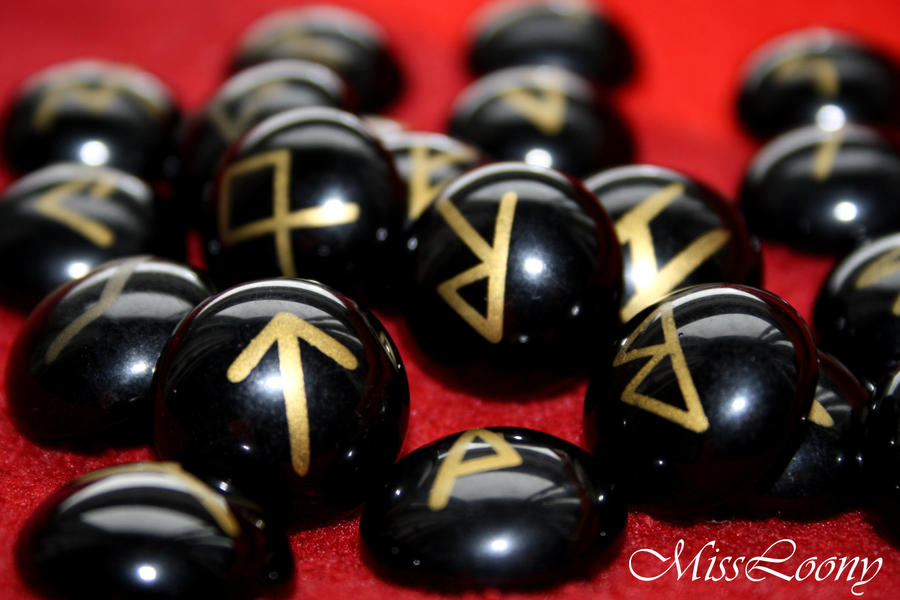
Most of my readers were expecting this subject the wednesday the 14th of September, but i couldn't do it, it was my Father's Birthday, but from now on, every wednesday i will post and talk about a new rune till it comes to an end, i hope you enjoy and learn about each rune and its healing power. This is the Introduction to them. Stay tuned, for every wednesday there will be a new rune to talk about.
The runic alphabets are a set of related alphabets using letters known as runes to write various Germanic languages before the adoption of the Latin alphabet and for specialized purposes thereafter. The Scandinavian variants are also known as futhark (or fuþark, derived from their first six letters of the alphabet: F, U, Þ, A, R, and K).
In the nordic mythology it is said, that Odin hanged in a branch of Yggdrasil for nine days and nights, bleeding, he passed into the other side ( as i've written in the Post about sleipnir ) to know the secret and magic of the Runes.
This is a brief introduction to the runes, the alphabet used by the germanic and scadinavian people, the runes were also adopted by many others throughout Europe, it has survived till today, but the runes have more to say about them and their hidden powers, that many talk about but only few realy know, every wednesday i will post and write about a rune, till it reaches an end, stay tuned if you want to learn more about the runes, thank you for your time, Farewell.
Subscribe To


 Posts
All Comments