Wight of the Nine Worlds

welcome

I welcome thee free spirit, which thou shalt come with an open heart, open mind and an open soul, for what you are about to read can only be understood by the wise who are eager to learn and to embrace the roots deep and forgotten in the hearts of the free people of Europe, by accepting who you are and where your roots lie, is half way into the great road of life. We will journey unto where our spirit takes us with the knowledge we gained. Learn and teach.
Showing posts with label mabon. Show all posts

The Autumn Equinox


Hello friends! Speaking about the Autumn Equinox, Mabon and Haustablót, always with a personal perspective on the subject. Enjoy dear friends :D


My Social Media:


The Autumn Equinox


You can watch the video about this subject in here: [The Autumn Equinox]


The equinoxes are somewhat times of equilibrium, day and night are matched. After an entire year of hard labour, not just when we speak of agriculture, but also in a kind of spiritual development, the autumn equinox is the time of repose, even in nature when the days become shorter and nights are longer. The autumn equinox marks the completion of the harvest, the waning powers of the sun, a farewell to summer and making preparations for the coming darkness. But let’s start with the Mabon celebration and then the Haustablót or FallFest. 

Mabon is often the term referring to the celebration of the autumn equinox, and to know why this name was adopted for this particular date of the year, we must understand its meaning and where it came from. The name "Mabon" was introduced by the neo-pagan religious movements and in the seasonal list of celebrations of the year. This name comes from the god of hunting "Mabon ap Modron", or in other words, Mabon son of Modron, a deity from the Welsh mythology. Mabon means “Divine Son” and he is the personification of youth. This god was kidnapped, three days after he was born, and was taken to Annwn, which is the other world, the world of the spirits and of eternal youth. We see a union here with youth and death, the beginning of life meeting the end of all things, decay, death itself, and this union is somewhat the personification of this season, letting go summer, youth, rejuvenation, light, and accept the very opposite of that which nature shows us almost in a poetic way, winter, cold, decaying of the soils and put a stop in life. 

So Mabon is the celebration of the year when the days start to grow shorter and the nights and darkness will prevail till the winter time comes. A preparation for the harsh winter, when the crops come to an end, and when people start to gather food to survive the long dark and cold days of winter. It is also a time to burn the soil and the fields where the crops were, in order to fertilize the land that will be covered by frost and snow, and at the spring time nature will do its work, and the land is ready to be planted again. The main celebration during this time consists in the need to share what the earth has given to us throughout the year, during the harvesting cycle, the fruits of the earth are shared with the community in a sort of ceremony to secure the blessings of the gods during the coming winter months. There is a similar Northern pagan Tradition at this time, called the Haust blót or Haustablót, and let’s talk about that so you can better understand the true purpose of this celebrations and enter in the pagan spirit of the season. 


I often talk about blóts, but what exactly is a Blót? I’m afraid I’ve never share that knowledge with you, so I will take this opportunity to do so. Blót was Norse pagan sacrifice to the Norse gods and the spirits of the land. The sacrifice often took the form of a sacramental meal or feast. Related religious practices were performed by other Germanic peoples. This celebration wasn't made just by the norse/germanic peoples, but also throughout Europe, the celts, and latins did it, in their own traditions. Animals and even people (mostly prisoners of war) were sacrificed. The word Blót means "to worship with sacrifice", and in this type of celebration/ritual/ceremony, the people gave their offerings, such as mead, food, animals, 
personal objects, all to the Gods and in turn people expected the Gods to give them gifts back, they asked for fertility, good health, a good life and peace and harmony between people and Nature. 

Now that you know what a Blót is, I will tell you what the Haustablot is, this specific blót in this time of the year, between the 21st and 24th of September. This is the autumn equinox, such as the Celtic Mabon, it is a time to celebrate the harvest of the crops and it's ending, it is also a time to thank and to meditate, the celebration is made with the food and drink that is made with the Corn and wheat, and also to celebrate with cakes, cookies, mead, bread, vegetables, fruits, nuts, and so on. 
It isn’t just a time to thank to yourself, your family and the Gods, for all the hard work, blessings and mutual help among the community, but also a time to thank and praise the Landvættir, who are the spirits of the land, and they protect and promote the flourishing of specific places where they live, which can be as small as a rock or a corner of a field, or as large as a section of a country. It’s important to take note that when people worship or pray to the Landvættir, or to the gods in general for that matter, people are perfectly conscious that the Landvættir or the gods will not solve anything for them, they will solve things WITH them. The Landvættir and the gods manifest themselves through us and infuse us with the power we need to do the things we must, to perform our tasks, so people didn’t ask for, let’s say, give me money, make my fields productive, clean the house for me, no, people asked for the power, the will, motivation to do things for themselves, just a little push to be successful in their hard work. 

In the Northern pagan Traditions, there was a celebration held in this time of the year, at the beginning of the autumn equinox, it’s called Haust blót, or the Autumn Sacrifice, and it is still held today by the neo-pagans who worship the gods from the Norse pantheon. As the season indicates, this is the time when the days grow shorter and darkness prevails until the winter time comes to an end. The last crops are coming to an end also, people start to gather their food and store it to survive the long and harsh winters of Northern Europe. Now, we can try to understand the pagan mind of our ancestors by looking at the natural world itself and how that influenced them. This was also a time to make festivities around the fire and praise, in a way, the Fire Element, because the world itself would take its colours, the fields are veiled by a cloth in tones of fire, dark yellow, red and oranges, the skies at dusk emit a red light that resembles blood, a warning that the days ahead will be hard, the forests and the mountains become silent, most animals also store food and hide in holes or inside old trees, others will hibernate, ravens will go to and fro, from place to place, in search of those who did not survived the hazards of the season and the harsh weather, so this is a time where everything becomes more magical and mysterious, but also the beginning of the trials that are in store for us, the ability to survive and prevail, in a way, a sort of battle between Man and nature, it’s exiting, because we humans love to be challenged, and during winter we are being challenged by the gods themselves, who manifest their powers through nature, and it’s a great honour to accept such a challenge and better still to be victorious at the end, it gives a certain feeling of being worthy.  

This is the time to pray and to thank the Landvaettir, the spirits of nature, of the soils and the land, to pray to the ancestors who still look over their decedents and protect them, and in some 
way still work the soils to provide better crops, so the family can survive in prosperity, happiness and wealth. People also prayed to the elves, who work along with the land spirits, to maintain the land fertile and the soils rich. People also pray to the God Freyr and to Freyja, the Gods of fertility, because the land itself also needs fertility, it needs to be prepared to be planted again, with new seeds, when the winter comes to an end. 

With hard work, perseverance, patience and love the land gives us so much, enough to survive and live with health, and a gift always calls for a gift, so we in turn must give something to the land, a personal object, or food, the mead that is passed amongst the folk in the drinking horn, will be poured into the land, so our ancestors and the gods, may also drink with us, giving to them what we can create with the things the earth gives us. People dance and sing, tales of old are told, to remember the deeds of our ancestors, and so we might find inspiration and strength. 

Mabon - 22nd of September


Mabon is often a term referring to the celebration of the autumn equinox, and to know why this name was adopted, we must understand its meaning and where it came from.
 The name "Mabon" was introduced in the neo-pagan religions and the seasonal list of celebrations of the year, from the god of hunting "Mabon fab Modron " in the Welsh mythology, this god was kidnapped, tree days after he was born, and was taken to Annwn.
Mabon is the celebration of the year, when the days start to grow shorter and the nights and darkness will prevail till the winter time comes. A preparation for the harsh winter, when the crops come to an end, and people start to gather food to survive the long dark and cold days of winter. It is also a time to burn the soil and the fields where the crops were, in order to fertilize the land that will be covered by frost and snow, and at the spring time nature will do its work, and the land is ready to be planted again.
There is a similar Northern pagan Tradition at this time, called the Haust blót/Haustblót or Haustablót, but a bit more complex, which i'm about to right it in here at the "Norther Pagan Traditions" folder, and in that writting, maybe you will get to understand the true porpose of this celebrations and enter in the pagan spirit of the thing.

The Thirteen Full Moons of the Year


The Thirteen Full Moons of the Year


The pagan practices bases its festivities not only on the sabbatical wheel of the year, but also in the thirteen full moons that occur throughout the year.

January - Wolf's Moon

With
the deep snow of winter, hungry packs howled near the villages, this is why the full moon this month was known by this name. It was also known by the moon after Yule. We can associate these wolves with the  furious horde of wolves that came with the god of the wild hunt.

February - Snow's Moon

Usually the heaviest snow fell in February and hence its name, but it was also referred to as "full moon of hunger." So at this time comes the first festival of light of the year in the  Pagan Calendar , Imbolc.

March - Raven's Moon

The Ravens announced the departure of winter, which was at the beginning of the thaw, this was the reason that it was also entitled as the full moon's crust, as the snow thawed during the day and returned to form a crystalline crust overnight. Celebrating the arrival of spring in its equinox, Ostara.

April - The Moon of the Rose

This full Moon  owes its name to the pink colored-moss, one of the first flowers to bloom in early spring, but the April moon was recognized as the frog's moon or planter's moon.

May - The Moon of Flowering

Because May is the month that begins with Bealtaine and because the flowers reach their maximum brightness, color and fragrance this time of the year, this full moon is well known by this, or as the full moon flowers.

June -
Moon of strawberries

It has this name because it is the season where people wanted to reap the fruits, in Europe it is known as the moon rose, since the roses reach their maximum splendor in this month. Litha is celebrated, or summer solstice.

July - The Thunder Moon

July brings heat and thunderstorms, showers and heat, being one of the months that have more climatic variations. However, this full moon is also nicknamed the blood moon because of the sacrificial rites that took place at this stage of the year.

August - The Red Moon

At the peak of harvest, the full moon appears in the sky with red tones, reflecting the light of the indomitable August sun. Reminds us of the sacrificial rites of the oak god in  Lughnasadh.

September - The Harvest Moon

In the month of threshing corn and early harvest, this is the most appropriate name to the full moon of September. Mabon is celebrated and all the good things that the  land gave us.

October - The Moon of the hunt

Since the peak period of harvest, and since the light of the sun was maintained to a late time, people began hunting in the woods. On the last day of the month it is celebrated Samhain, the beginning of the pagan year, announcing the wild chase of  Winter.

November - The moon of the Pig

It was
in this month of the year, when people killed the pigs and began to
to replenish the flue as a way of ensuring subistencia in winter.

December - The Icy Moon

Also known as the long night moon, is closely linked to the winter solstice, the longest night of the year. Yule is celebrated and the full moon was also known as the Oak Moon.


If you need more information or if you want to check my works, take a look at my Facebook page and make a like at --> www.facebook.com/ArithHarger


Haustablot or FallFest 21st-24th September


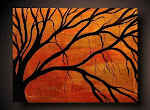
Note: The Drawing was made by me to ilustrate the celebration i am about to write of.
You can watch my works in this [Link]
at my gallary.

To begin with, i will tell you what a Blót is.

The Blót
was Norse pagan sacrifice to the Norse gods and the spirits of the land. The sacrifice often took the form of a sacramental meal or feast. Related religious practices were performed by other Germanic peoples. This celebration wasn't made just by the norse/germanic people, but also throughout Europe, the celts, and latins did it, in their own traditions, often animals and even people ( most prisoners of war ) were sacrificed, the word Blót means "to worship with sacrifice", in this celebrations, the people give their offerings, such as mead. food, animals, personal objects, all to the Gods and in turn, people expected the Gods to give them gifts in turn, they asked for fertility, good health, a good life and peace and harmony between the people and Nature.

Now that you know what a Blót is, i will tell you what is the Haustablot, this specific blót in this time of the year, in 21st to 24th of September, it is the
autumn equinox, such as the Celtic Mabon and Alan Elfed, it is a time to celebrate the harvest of the crops and it's ending, it is also a time to thank and to meditate, the celebration is made with the food and drink that is made with the Corn and wheat, and also to celebrate with cakes, cookies, mead, bread, vegetables, fruits, nuts.
It is not just a time to thank to yourself, your family, the Gods, and all the hard work, but also a time to thank to the
Landvættir, who  are spirits of the land and they protect and promote the flourishing of the specific places where they live, which can be as small as a rock or a corner of a field, or as large as a section of a country.