Showing posts with label paganism. Show all posts
Showing posts with label paganism. Show all posts
The Cult of Odin
You can watch the video about this subject in here: [The Cult of Odin]
I will divide this short essay into three parts. First I’ll talk about Odin historically, his introduction in the old societies and the meaning of his name. Then, some of Odin’s aspects as a god of war, nobility and shamanism, focusing on certain characteristics. And finally, on the third part, I will talk about the Cult of Odin. I think the last part is the one you will like the most. So much blood and sacrifices.
Odin is one of the most complex deities of the Norse pantheon, perhaps because his cult was spread throughout so many different social and religious realities that this deity ended up being introduced in every pre-Christian religious cult of Scandinavia, and absorbed the functions of other gods.
But first things first:
Odin is the ruler of the tribe of gods called the Aesir. He is a god that often goes into journeys, wandering throughout the nine cosmic worlds seeking for knowledge, in a relentless selfinterested pursuit for wisdom. And because he is a god so committed to obtain wisdom, he doesn't care how he obtains it, so he is often depicted as a god with no regards for values, justice, law, fairness, respect and even the safety and well-being of others. If he has to ruin lives or even kill for wisdom, he will do it.
He is a god associated with war and death. A god associated with nobility, poetry, wisdom, spellcraft, sorcery, magic in general and much like Loki, Odin is also a master of disguise and trickery and shapeshifting.
He's a god associated with so much stuff and often things that contradict themselves and have no connection, that we often wonder how is it possible for one single deity to embody all of the qualities and fields of expertise, I've just mentioned, all at once? Well, he was a god worshipped for many centuries all over Scandinavia and Continental Europe, mostly central Europe. So it's normal that this deity took the "job" of other local deities when he was introduced into local cults. And to better understand this, let's take a look at what his name means.
Wodan is the elder form of the name of this deity, associated with several shamanic functions. He is associated with the dead and those who are slain (especially in battle). He appears as a wild rider at the head of an otherworldly pursuit, the leader of the Wild Hunt, and also a god associated with storms and strong winds.
The name Wodan comes from Old High German wuot, insane.
From wods, angry, obsessed.
Old English wod, raving. Wod also means sound, voice, poetry, and odr – poetry.
And in modern German, Wut, meaning anger, rage, fury, wrath.
So the concept of his older name is associated with madness, obsession, and ecstatic frenzy. But the name Wodan has other variations, such as Wode, Wotan, Woide, Wods, Wuotes and so on, apparently all linked to either shamanic trance or the brain condition necessary to enter in a trance state, through madness, insanity.
Now, the Germanic Wodan is not like the Norse Odin, the chief of the gods. The continental god leads the wild hunt, a horrific, ghostly cavalcade of spirits, elves, some deities and the dead.
Wodan is a god of rage and ecstasy, a god who made warriors enter in a state of madness while in battle, turning his chosen warriors into wolves or bears, and us such he became the favourite and most important god among many war-like tribes. These tribes invaded Scandinavia. As conquerors, they installed their order and their god became the chief deity, king of the gods, and the father of all. And just like this, Odin was introduced into Scandinavia and a new god was born there. Odin.
Now, before Odin, Fricco, or Freyr, was one of the most popular and highly worshipped deities in Scandinavia, especially in Sweden. He was the chief god of the old Swedes before invading tribes introduced the cult of Wodan. In the process, Woden lost the W and became Odin, while Freyr lost much of his importance and became a minor farmers’ god while the nobility worshipped and sacrificed to Odin.
In Scandinavia we see Odin with many names, many titles, such as Hertýr, god of the army, Valgautr, god of the battle-slain, Hrafnagud, ravengod, Grimnir, masked one, Báleygr, flame eye, and so on. A variety of names meaning completely different things and others which we still don’t know the meaning. It’s a long, long list. Which shows us that many independent local gods were integrated in the cult of Odin.
Odin remained with many of his old continental characteristics, along with new characteristics from Scandinavia and through time he still remained so important in the Scandinavian societies that even during medieval times he continued to be associated with other things. According to the social reality of each period in history, he became associated with more stuff. For instance, in continental Europe he was associated with the dead and spirits, but to the Germanic tribes there was no concept of a warrior-heaven.
A place in the after-life solely for warriors is a concept that few European cultures had, only some Celt-Iberian tribes and the Erulians had this concept. Valhalla was something new introduced in this cult. To the Germanic tribes there was no need to have a heroic death in the battlefield.
Another example, in Iceland during medieval times Odin became associated with magic, spell work, sorcery, even Seidr. We must not forget that in the old Scandinavian pagan societies, seidr was seen as the province of women and it was not honourable not even manly for a men to practice Seidr, men who practice seidr were considered effeminate and it was an insult, they were called Ergi, unmanly, effeminate. But all of a sudden Odin becomes associated with such practices, a male god, he gains prominent effeminate qualities that would have brought unspeakable shame to any ancient Norse warrior. Well, in medieval Iceland this was no longer a social problem, and since Christianity didn’t let people practice magic, people needed a patron god of magic, and thus Odin being the most famous deity of the old gods, he also became associated with sorcery, witchcraft.
So, recapitulating, the mainland Woden was an important deity, but not a patriarchal chief of the gods such as the Scandinavian Odin. He changed from a storm god, Wode, to a god of ecstasy and rage, Wodan, to a god of rulers and warriors, Odin. And kept on changing, and I dare say that he will change again to assume a form that fits in our time and our present realities.
After this introduction, let's take a look at some of Odin's fields of expertise, and I'll try to be brief on that.
As a god of war, he encourages the process of war, he inspires people to do war. He needs people to do war because that's how he obtains warriors for his personal army. Dying gloriously in battle is the only way to go to Odin in the literal sources. However, he isn't a god that concerns himself with every warrior. Only those who he deems to be worthy, he will help and bestow his blessings to them, mainly legendary heroes, people that stand out and become really good at killing and in the arts of war. But he also maintains a close connection with shamanic-warriors, such as berserkers. Warriors who combine fighting techniques with spiritual practices, achieving a state of ecstasy, but focused solely on the cult of Odin, which also includes working with animal totems, mainly bears and wolves, which are the animals associated with Odin, and as I've told you, the remnants of the continental characteristic of this deity. As a god of war, he isn't like Týr, concerned with the war itself, the reasons behind a conflict, or even the rules, honour and the deeds involved. In terms of war, Odin is concerned with the chaotic battle-frenzy, the very force, essence, state of mind, achieved through the madness of battle, through violent acts, uncontrollable rage and fury bringing out the beast in us.
As a god associated with sovereignty and nobility, he is the divine archetype of a ruler. As I've told you before, since he was the main god of the invading Germanic tribes, he became the god associated with power. This is an interesting aspect, because when Christianity came along, the first to be converted were the rulers, chieftains, kings and emperors, the high power of the society, while the people from rural areas, the countryside, practically forgotten by such high powers, continued to be pagans. This is exactly what happened in ancient Scandinavia. The high powers adopted Odin as the main god, chief of all the gods, the “Alfather”, while in rural areas people maintained their older gods, such as Freyr which became associated with agriculture because of that. So even in the ancient pagan societies, pagans adopted another sort of paganism while in the countryside people remained more pagan than the pagans.
The Norse society, much like many ancient societies, was socially and politically divided into three groups. Rulers, warriors and farmers. So the gods were also divided into these three groups. And Odin being the god of nobility, obviously he was set on the top of this hierarchical society. So he became the king of the gods. Odin in Scandinavia became linked to the nobility, and as such he became the legendary founder of numerous royal lines, and the Scandinavians tried to pass this into their mythologies, introducing Odin as the creator of the first humans, along with his two brothers, or these three characters being three different aspects of the same deity.
As a god associated with wisdom and shamanism, it's quite interesting:
The wisdom aspect is one of the things that differentiates him from being the all-powerful-god. You see, many people nowadays see Odin almost as the only god that matters. Many people in Asatru practice Odinism, focusing only on this god almost to the point of turning Polytheism into a monotheistic religion. But what happens in a monotheistic religion is that the only existing god is the all-knowing and all-powerful, while Odin show us that he himself has limitations. That's the beauty of Polytheism, the gods much like us, in their own individuality have limits, and that's why Odin is always seeking for knowledge, to overcome his limitations on every field, obsessed with obtaining wisdom because he is restless when a problem comes along and he has no power. He sets out in a relentless and ruthless quest for more wisdom, more knowledge, more power, and whoever stands in his way, he immediately takes them out of the game. And well, most of the knowledge he gains is usually of a magical sort.
And of course, as you know, he sacrificed an eye for wisdom and at a certain point he sacrificed himself, hanging on a tree and stabbing himself with his own spear. To achieve the knowledge of the runes. An old reminder of ancient shamanic practices and techniques of inducing an altered state of consciousness through a violent ordeal, through a near-death experience.
In terms of shamanism, along with the goddess Freyja, he’s one of the two greatest practitioners of shamanism amongst the gods. He learns this art from Freyja herself, which reminds us of the social stigma of only women were allowed to practice seidr, a form of shamanism, in the ancient Scandinavian societies. And in many accounts we have hints of Odin's shamanic journeys, especially when he uses his eight-legged horse Sleipnir. An eight-legged horse is a typical symbol of northern Eurasian shamanism.
Also, when we deal with shamanism, almost every time we will come across shamans who are accompanied with familiar spirits, not just animals and land spirits, but other beings. Odin is always closely associated with wolves and ravens, animals who are his companions all the time, and also other spiritual entities associated with him, such as Valkyries. And as I've said before, I've already talked about shamanic-warriors, which was the type of shamanism socially acceptable for men in Germanic societies.
As a god of Poetry, in the Ynglinga Saga for instance, Odin is celebrated as the inventor of poetry (skaldskapr), and also experienced in Galdr or Galdar, spells, incantations, and of course, and also, the master of runes.
Odin is a master of poems and he grants this gift to others he deems to be worthy. And the story of how he became a master of speech, and mind that this is closely associated with Galdr, the power to persuade through words of incantation, well, the story his quite interesting because he obtained the mead of poetry, and in old Norse the name of this mead was Odroerir, closely associated with the word Odr, which not only is one of Odin's names but also the very word connected to ecstasy, fury, inspiration. This Mead of Poetry might be an old reference to an Intoxicating drink which helped to alter the state of consciousness, to achieve ecstasy, inspiration and obtain knowledge.
In terms of being a god associated with the dead, he is a divine figure who guides those who have just died and go to the underworld. And this aspect might be older than his aspect of being a god of war. As I've told you, Valhalla was a later concept, and unknown in continental Europe, which was later introduced, meant to motivate warriors into suicidal fighting rages.
Odin continued to be associated with the dead even during medieval and modern periods in Scandinavian history, quite possibly an old characteristic of this god because he was already associated with death and the dead before his cult was introduced in Scandinavia. And we also have notes of him communicating with the dead, raising the dead, so he seems to have been a powerful necromancer.
Now let’s talk about the cult of Odin or the perception we have of it in archaeological findings and the study of the written sources.
The cult of Odin in the north involved sacrifices, mostly in times of war, and the victims were always humans, either volunteers or prisoners. This doesn’t mean that animals weren’t also sacrificed, they were, but humans were always sacrificed to Odin while animals were sacrificed occasionally or were mostly used as sacrifices to other deities. However, I must add, the number of examples we have of human sacrifices to Odin, are small. I mean, there are a lot of examples but they seem small compared to the span of time during which Odin was considered the major deity. But anyway, in all the examples we have of sacrifices to Odin they are always human sacrifices. Let me give you at least 4 examples:
King Vikar, in order to win against a neighbouring enemy, a priest of Odin was sent out into the forest to seek the answer from Odin. Through divination and in a vision, Odin tells the priest that he requires a man out of their company in exchange for his blessing to ensure victory. Odin choses King Vikar himself and instructs how he is to be sent to him. Hanged and stabbed. King Vikar was Hanged and stabbed and thus he was given to Odin. This sacrificed ensured King Vikar’s army victory, although he wasn’t around to celebrate it.
Aun, King of Sweden, sacrificed one of his 10 sons every few years. He lived long indeed because out of those 10 he sacrificed 9.
During the reign of Ólafr Trételgi, there was a famine and people attributed that to the lack of sacrifice made by Olafr. They burnt him in his house and offered the sacrifice to Odin so they could have plenty. Sure enough, the famine was over.
King Haraldr was also a king plagued with a famine during his reign. Through divination it was found that the gamine could be stopped by the sacrifice of the noblest youth in the land. The son of a noble was required, Angantýr son of Heidrekr. Now this one is interesting, because Angantýr is very similar to Hangatýr, which is one of Odin’s names, meaning God of the Hanged. Anyway, Heidrekr refused to give away that son, so he gave his other son Halfdan and to compensate the fact of not giving the one Odin required, he also gave all the host in Halfdan’s commend, as a sacrifice. The temples were covered with the blood of the ones who were sacrificed.
As you can see by these four example, it always involved the sacrificed of humans and from the nobility, since Odin was worshipped by the nobility, being a god associated with this social class. Also, Odin didn’t want a nobody to be sacrificed to him, he chose those from nobility which he required, and indeed in archaeological findings and in the comprehension we have of the ancient Scandinavian beliefs, we see that only warriors who died in battle and nobles, were allowed to go into Valhalla.
In addition to sacrifices of this sort, there were 3 great annual sacrifices in ancient Scandinavia.
At the approach of winter, a sacrifice for plenty. At midwinter, for increase of the crops. And at the beginning of summer, a sacrifice for victory, sigrblot. Quite possibly these 3 sacrifices were made to the three major gods of Scandinavia at that time. The sacrifice from plenty was to the god Freyr, the sacrifice for increase of the crops to Thor, and the sacrifice for victory to Odin, because of the constant references to him as the god of victory and sacrifices and vows were made to Odin for victory in times of war.
There were also sacrifices in great scale every nine years at Uppsala, at which sacrifices of men and various animals were offered. These sacrifices took place about the spring equinox, coinciding with the annual sacrifice for victory. Both men and animals were hanged in the grove close to the temple. Of the animals hanged, most were not edible ones, such as dogs, horses and hawks. Nine male animals hanged with humans. Of course, speaking of edible animals, in Scandinavia horse meat was also consumed, but it’s quite different. Edible animals were sacrificed to Freyr, while Odin required nobler animals, animals that were used by nobility and were to be taken with the sacrificed people into Valhalla, to serve them there, hence, dogs for hunting, horses to ride, and hawks for hunting but also as animals linked to activities performed by the nobility.
Several cases of hanging occur in the cycle of stories involving criminals. It was customary to sacrifice prisoners to Odin on the battlefield. The sacrifices at Uppsala were sacred, so most likely the sacrificed ones were of noble birth and no criminals, neither prisoners nor slaves were sacrificed there. But in a battlefield, or any other place when victory was needed, criminals were sacrificed to Odin.
You might be asking if hanged people were really just sacrifices for Odin. Maybe it was for other deities?
There are no other evidences of hanging people and offering them to other gods. Hanged people were to Odin and Odin alone. For instance, there were human sacrifices to Thor, but these appear to have been put to death by being felled with a club. Yes . . . beat them to death with a club.
Odin is constantly being associated with the gallows, as we can see by some of his names. Galga Framr, burden of the gallows, galga gramr, galga valda, Hanga Drottinn, Hangatýr, Hanga gud, Lord or god or the gallows of the hanged.
It is possible that the slain victims to offer as a sacrifice to Odin were not criminals and or slaves. Because when sacrificing to Odin, people would automatically go to Valhalla and to go there they needed goods and animals of valour. Thats why nobility was chosen. But of course, once in a while criminals would be sacrificed but on another context, and slaves were often sacrificed with their masters. Sacrificing slaves separately was most certainly as offers to Thor, because it is to Thor’s Hall that slaves will go, to be servants in his hall.
Also, there are references of criminals being sacrificed alongside wolves, and not dogs. Dogs had a purpose, they were useful and were used in the afterlife by the nobility. So hanging wolves was with criminals was a way to socially show that those hanged there were not nobles, and the people hanged couldn’t use those animals in the afterlife, and also wolves instead of dogs were sacrificed with criminals in order to disgrace the victims on their arrival into the other side, maybe so Odin might now that those cannot enter Valhalla.
The sacrifices of Odin often involved hanging but there was also stabbing, although both at the same time was not common, or, stabbing and hanging at the same time was the ritual in important sacrifices to Odin. But few are the accounts of both at the same time. Although stabbing as a sacrifice to Odin was a reality, especially with a javelin, and we have many references in the myths, such as Odin’s weapon which a lot of people refer to as a spear, but it was a javelin. Odin throws his javelin over the army who is going to perish, Odin stabs himself with his javelin, and there are references of dying people and others with perfectly good health, being marked with a javelin, as a mark to be sent to the gods. So hanging might have come later.
Marking the victims with a javelin might have been a form of dedicating the victim to Odin before the sacrifice, which was hanging. Both at the same time might have been the ordinary ceremony of sacrifice.
In terms of funeral rites, and I promise I’ll be brief because this video is already too long and I’m afraid I’m losing your interest. Well, for instance in the Ynglinga Saga we have references of funeral rites dedicated to Odin, or how they should be conducted in order to send the dead to Odin.
Burning the dead in a pyre along with their earthly positions, to take them into Valhalla, and also what the deceased during life buried in the earth, mostly treasures, which could also be included as earthly goods to be taken into the other side. The items thrown into the pyre included weapons, jewellery, animals and occasionally servants. The animals also included those owned by the deceased. There are accounts of horses being taken into the burial mound and sacrificed there and placed in the burial mound.
Well, I’m getting ahead of myself. I’m speaking about burial mounds because after the deceased was cremated, the ashes were either thrown into the sea or buried down in the earth, and a mound was to be raised as a memorial to noblemen, and people who achieved any distinction during life, a Bautasten should be raised, a reference to a Scandinavian menhir which probably gave birth to the rune-stones in memory of people who during life achieved something great.
| Keywords: cult of Odin, European History, Gods and Mythology, Heathenism, Northern Pagan Traditions, Odin, Pagan Gods, paganism

Ragnarök in the Bible?
You can watch the video about this subject in here: [Ragnarök Video]
Let’s start with the most obvious question: What is Ragnarök? If we want to have a shallow idea of what it is, well, it’s simply the end of the world as we know it. But of course I’m not here to give you a simple explanation.
For some people Ragnarök already happened, if we understand that after this chaotic event, a Golden Age will begin, an age of peace and compassion, the rebirth of the earth and a new prosperous world. More or less 10.000 years ago the Ice Age finally came to an end, and we progressively stopped being hunters and gatherers and began to tame the land through agriculture and pastoralism. Controlling the earth and flora and the domestication of the fauna, was a great step to the so called progress of civilization, and our dominion over the earth is leading to its destruction and the extinction of many species. In the long run, this is Ragnarök, a battle of more than 10.000 years. Humanity versus nature, and we are actually winning and accelerating our doom, but intelligent as we are, we are finding better solutions to reduce the stain upon the earth that we left, so in other words we are now progressivity walking towards a Golden Age.
This is just one perspective of what Ragnarök might be if we take a look at our nowadays reality.
Due to the popularity of Norse mythology and the history of the Viking Age, today in the movies, television, literature and games, many people who until then did not know the myths, or knew little about it, became more interested in the subject. So before I jump to something a little bit more complex, I'll first try to give you a simple and straightforward comprehension of what Ragnarök is.
First things first, Ragnarök is a myth of Nordic origins, created by the peoples of medieval Scandinavia. It might be a myth with older origins, but as it reach us today, the whole concept seems much more medieval than prehistoric. In the middle Ages, between the V and XI centuries, between the Vendel Period (V-VIII) and the Viking Era (VIII-XI), the Norse mythology took shape and was developed into the perspective we have on the written sources. The Medieval interpretation of Ragnarök refers to future events in an unspecified period of time, in which catastrophic events will occur that will profoundly change the world as we know it. All stories must have an end, but just like in every mythological account and also religious interpretations, Ragnarök isn't the end of time, rather it's an event with a purpose, a period of change.
We must not forget that the written sources we have to read about Ragnarök, were sources written in medieval Iceland during the thirteenth century, a period in Iceland's history already greatly influenced by Christianity, and the entire idea of Ragnarök seems a lot like the "End of Times" Prophecy as it is written in the Bible. So let's take a look into some similarities:
Before Ragnarök actually happens, there will be a great winter that will last three years. In here we can see the Icelandic perspective of things. A great portion of mythological accounts are shaped by the geographical realities people live in. So a world of Ice and frost is a harsh reality for Scandinavian peoples, especially during medieval times. Iceland itself all around is filled with glaciers and volcanic activity, so fire and ice is the perfect combination for the end of times in an Icelandic perspective.
But after this long winter, humanity shall rise up and fight each other, great and terrible wars, in the Bible that’s what happens before the end of days - War on a large scale (Matthew 24:7; Revelation 6:4.). If you study military medieval history, you know that the greatest fear of war during medieval times wasn’t the war itself but famine which led to an increasing of crime (Famine: Matthew 24:7; Revelation 6:5, 6.; Increase of crime: Matthew 24:12.) Before Ragnarök the survivors of the great wars will only have morning dew to feed on (Vafþrúðnismál). During this time the Prose Edda speaks of incest as one of the things that will occur, “siblings do incest”, and also in the Völuspá speaks of the sons between brothers and sisters that will stain kinship, as we also have in the Bible during the “end of days” – “Breakdown of the family, with people who have “no natural affection”” (2 Timothy 3:2, 3.). Then we have great earthquakes also in the Bible (Luke 21:11.) and in the Prose Edda as I will quote: “The whole surface of the earth and the mountains will tremble so that the trees will be uprooted from the ground, mountains will crash down”. In the Völupá a fear will quake all when Heimdall blows the great horn Ghallarhorn, and Yggdrasil itself shakes. We also have this reference to earthquakes in the Poetic Edda. I could go on with more similarities between the Bible’s “End of Days” Prophecy and the Norse Ragnarök, like that part when the dead will walk the earth again as it says in the Bible, and during Ragnarök the great ship Naglfar will come, built with the nails of the dead, and possibly bringing the dead along, because the dead from the realm of Hel will also be in great activity during these catastrophic events. And as I’ve said, mankind in its process of civilization and the attempted to control the earth is destroying the earth itself, it’s a point which isn’t referred in the Nordic sources but it’s referred in the Bible - The ruining of the earth by mankind (Revelation 11:18.).
All this to tell you that the perspective we have of Ragnarök was greatly influenced by Christianity, when the old pagan world started to be forgotten and a new spiritual reality was being formed, adopted by the pagans, and in most cases forced by the social, political and economic circumstances of Medieval Europe.
We humans are prone to see patterns in everything, but I must tell you, even if there are clear influences of another religion into pagan mythological accounts, we must take into account that this is a tale that was around before Christianity and even before the written word. In Christianity mythology the world will be destroyed once and for all and historical time is abolished. But in the tale of Ragnarok we see a very different message.
The accounts of the destruction of the world in the Old Norse primary sources are immediately followed by accounts of its re-creation. There is no end of the linear history. What Ragnarok describes is a cyclical end of the world, after which follows a new creation, which will in turn be followed by another Ragnarok, and this will keep happening forever. This specific point makes all the difference between the two religious realities. Christianity that does not accept reality and there must be an end and it's all over, and the Norse paganism that accepts reality and that life will go on no matter what, but there always must exist a balance, order and chaos, creation and destruction, life and death.
The Autumn Equinox
Hello friends! Speaking about the Autumn Equinox, Mabon and Haustablót, always with a personal perspective on the subject. Enjoy dear friends :D
My Social Media:
| Keywords: autumn equinox, European History, haustablot, mabon, My Youtube Videos, Other Pagan Celebrations, paganism
Dísablót- in honour of the Dísir, female spirits
You can watch the video about this subject in here: [Dísablót]
The Dísablót is a blót or a festival (sacrificial holiday) which is held in honour of the female spirits called Dísir. There isn’t a specific day for this celebration. We know that it was held during winter. In some accounts it was in the beginning of winter, during the time of the winternights, but in some places this holiday was by the end of winter, to celebrate the revival of nature.
Suffice it to say that this celebration was held at some point during winter – the exact timing differed widely across Germanic and Norse lands. In Norway and Iceland, for instance, this festival was known as Dísablót, “a sacrifice to the Disir,” and took place at the beginning of winter. It could be held in either a private house or a formal temple, and unlike Álfablót, this was a public celebration. In Sweden, the Disting or dísaþing, which means “Disir-Assembly”, was held at the beginning of February. To the Anglo-Saxons it seems this celebration was called Modraniht or “Mother’s Night”, which took place around the New Year and probably has connections to the Germanic and Celtic “matron” cult. The “matrons” are female spirits who are very much like the Disir; fertility spirits, guardian spirits, warriors, and so on.
But what exactly is this festival about?
From the name of the festival, we understand that the principal ritual act was a sacrifice, and from historical sources we know that there was a banquet, probably after the sacrifice, as it was normal. Possibly consuming the meat of the sacrificed animals. The main purpose of this festivity was to honour all the female spirits, the female ancestors, the goddesses and other female beings such as the Valkyrjur (Valkyries).
During this festival and the days that followed it, people worship female goddesses for the fertility of the fields, to have order and peace at home, and to receive that motherly touch of motivation. The care and love that is unique in the female spirit. The Dísir are not just the goddesses of the Northern Pantheon, but also the Vættir, the wights or nature spirits that may help with the fertilization of the land, for good crops, healthy cattle and a proper soil for future plantations. In this group of female spirits are also included the female ancestors of each family, because in the northern traditional paganism, it was believed, when people died, they might choose not to go to the other world just yet, but to stay a little longer to help their descendants in their daily works. They stay to ensure that their families are safe and sound, in happiness, joy, health and wealth. They might help in the planting season and in the harvest, or taking care of the house, keeping the peace and order and unite each member of their family, to keep the family bonds strong.
We are used to the idea that the northern peoples of Scandinavia used to burn their dead in the long boats, along with their earthly goods, but there were other ways to bid farewell. One of those ways was to place their dead in some sort of a burial mound made with stones, built in a way that would resemble the “deck” of a boat, and these sacred places where built near the farmstead. This was often done in private properties by those who either had no wealth to possess a boat, or simply did not wish to destroy their boats. Boats in Scandinavian societies were so important that they represented power and wealth. Boats were the principal means of transportation and the booster of the economy of Medieval Scandinavia. The importance of boats to the Scandinavians is reflected on these grave mounds in the shape of boats. Burning a boat wouldn’t last long, but building one in stone and covering it with dirt, would last forever and the memory of the ancestors would endure. And of course, building burial mounds is an ancient prehistoric tradition, using such constructions as markers of private property.
Now you ask: Who or what exactly are the Dísir?
There seems to be a lot of speculation about what exactly are the Dísir. The sources don’t help much in answering these questions. Why did the Norse differentiate a group of female spirits from the rest of female beings?
I think it’s important to separate the Dísir from other kinds of spiritual beings, because sometimes the Dísir seem to be all the female spirits recognized by the ancient Norse peoples, but other times the Dísir seem to be a group of female spirits different from all the other spiritual beings and other female spirits. We might find some answers if we look at the Valkyries. They are depicted as being female helping-spirits of the god Odin. They are referred to as “Odin’s Dísir”. Both the Dísir and the Valkyries are depicted as being warlike spirits, but also protective. Resembling the nourishment and protectiveness of a mother, and a mother’s love can sometimes turn women into fearsome warriors when it comes to protect their children.
The Disir are often portrayed as being guardian-spirits of either a single individual, a group, or guardians of a location. They don’t seem to be distinguished from other guardian spirits such as the Fylgjur – guardian spirits of an individual; Hamingjur – entities of an individual or a group of individuals; Landvaettir – spirits of the land or of particular locations. In terms of land spirits, known in Old Norse as Landvættir, when they are female they are sometimes called Landdísir in certain literary sources and place-names in Iceland and Norway. The Disir are also often depicted as being the spirits of dead female ancestors.
Still feeling confused? You still don’t know what exactly are the Dísir? That’s alright! No one can answer that question.
Unlike other religions which have a doctrine and tell us “what is what”, the Norse pagan tradition as always been a living spirituality to this day. It’s open to interpretation and it’s free from the bounds of religious laws, regulations and dogmas. The concept of Dísir, much like any other spiritual being of this pagan tradition, varies from account to account, location to location and from time to time. To the pre-Christian Norse there was never the need to formulate a religious doctrine to make people worship in a single manner. So, the Dísir may be the female ancestors, or a particular group of goddesses, or specific spiritual beings. From source to source what they have in common is that they were female beings and important enough to make a festivity in their honour. The Dísablót might be the remnants of a prehistoric cult to the mother goddess and her helpers. A festival to honour the fertility of the land, to call for protection, nourishment and the love only a mother can give.
In the end it doesn’t really matter who the Dísir are. What is important to remember is this concept of honouring your female ancestors, remembering them and their deeds, how they fought to keep the peace, love and order in the family. Never forget their importance, because you, one day, shall joined them and become an ancestor of someone, and you too will want to be remembered as a great figure and an icon of love, honour, strength and wisdom, according to your deeds of course. Also, honour the female members of your family that are still alive. Keep them proud, give them love, attention and respect, so in turn you might also receive their love and respect. Try to take the essence of this festivity into your everyday life. Make all days great days full of joy and love!
By: Arith Härger
References:
Almazan, Vincente, (1986). Gallaecia Scandinavica.
Bellows, Henry Adams, (Trans.), (2007). THe Poetic Edda, The Heroic Poems.
Dasent, George Webbe, (2014). Popular Tales from Norse Mythology
Mitchell, Stephen A., (2011). Witchcraft and Magic in the Nordic Middle Ages
Örnólfur Thorsson, et al. (eds.) (2000) The Sagas of Icelanders: a selection. Penguin Books
Pires, Hélio, (2017). Os Vikings em Portugal e na Galiza: As incursões Nórdicas Medievais no Ocidente Ibérico
Price, T. Douglas, (2015). Ancient Scandinavia: An Archaeological History from the First Humans to the Vikings
Simek, Rudolf, (2007). Dictionary of Northern Mythology. Translated by Angela Hall
Sturluson, Snorri, (1997). The Prose Edda. University of California Press. Translated by Jean I. Young
Turville-Petre, E.O.G., (1964). Myth and Religion of the North: The Religion of Ancient Scandinavia.
Easter - Pagan or Christian? (Video)
Hello friends! This is the first out of three videos about the Vernal Equinox (Spring). In this one the question is simple - is Easter Pagan or Christian?. On the next video I will talk about the goddess Eostre and the connection between Easter and rabbits/hares and eggs. On the final video I will talk about the Northern-European pagan celebration called Sigrblót/Sigerblot/Ostarablot. Enjoy friends and tack för idag! :D
(\__/)
(o.O) ~The owl-bunny!
(___ )
'' ''
My Social Media:
| Keywords: Easter, European History, My Youtube Videos, Other Pagan Celebrations, Pagan, paganism, Youtube, Youtube Video, Youtuber
The New Pagan Temple In Poland & Religious Freedom (Video)
This video isn’t just about the new project to build a pagan temple to the Slavic gods in Poland. This is also about the importance of Religious Freedom and this project in Poland is just an example of how we need to start to walk towards a world where religious freedom is possible.
Note: In the video I say Poland celebrated in 2016 its 150th anniversary of the christianization of the land. Yeah, obviously not, it was its 1050th anniversary! My bad! 😀
My Social Media:
The Origins of the Gods - Part 2 (Video)
Hey friends! This is the 2nd part of the Origins of the Gods; leaving the Mesolithic period behind us and going for the Neolithic. The age of the deities associated with fertility and weather. Once again, I use the Norse deities as examples of the types of deities worshiped during prehistoric times. I hope you enjoy it and Tack för idag!
My Social Media:
| Keywords: deities, European History, History, My Youtube Videos, Neolithic, Norse Gods, Orings of the Gods, paganism, prehistory, Video, Youtube, Youtuber
The Yule Goat - Julbock
Hello friends, yet another video!
The Yule Goat, or Julbock, is a festivity held at the end of December and has its roots on a Northern European pagan past. I hope you enjoy this video friends; give some love and support to Mr. Thorstein by subscribing to the channel ^^ See you on the next video! Tack för idag!
My Social Media:
Yule - A Pagan Tradition
Hey there friends! This is a video about the pagan roots of the Christmas season, focused on the Northern European Pagan traditions only. I hope you enjoy this video. Please subscribe to keep the videos coming; your support and feedback is greatly appreciated.
New Pagan temple in Poland
You can see my video, talking about this subject, at: [New Pagan Temple in Poland & Religious Freedom]
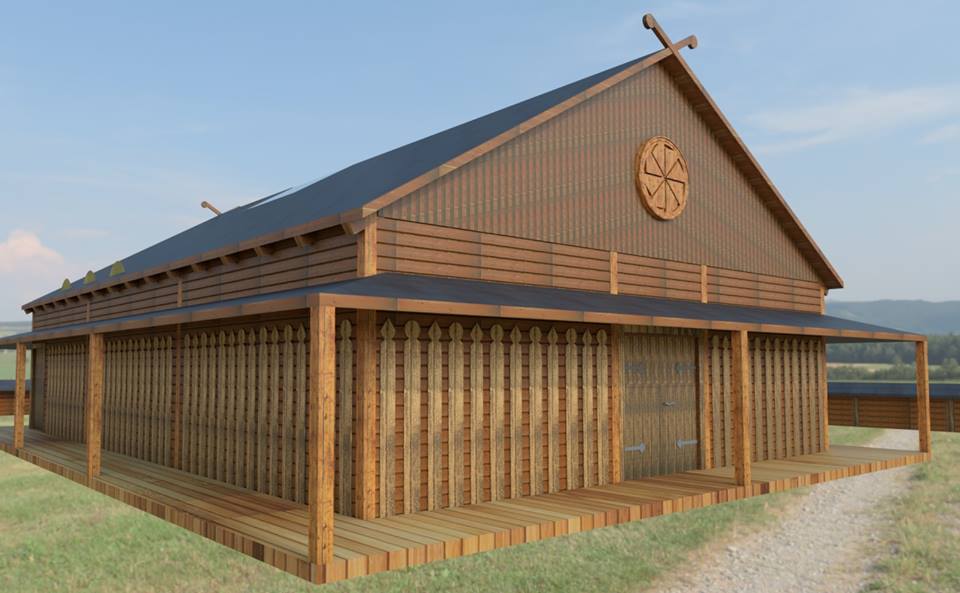
It's happening again; first it was Iceland who started to build the first major nordic pagan temple after a thousand years of christianization in the land. Then, it was Denmark with a very beautiful viking wooden themple to the norse gods. Now pagan history continues with a project to make the first pagan temple to the Slavic gods in Poland, after christianization spread through the land and wiped out all the old temples to replace for the ones of the new faith.
This year, Poland celebrates the 1050th anniversary of Christianization of the country and its people. But the pre-Christian believes were never truly forgotten or left aside, and the pagan faith still lives on. In the city of Wrocław, in Poland, the neo-pagans, or the rodnovers from the Slavic pagan association Watra, have a new project in had - to build a temple to their old slavic deities. For now, only a digital visualization of this temple is available, which is based on the architecture of the old Slavic temples, acording to historical sources.
The importance of this temple is not focused in the old faith, but rather in concentrating the Slavic culture and traditions in this place to rise awareness and to educate people about the history of their ancestors.
There seems to be an uprising (in a good sense) of pagan culture throughout Europe. After a thousand years of oppression from a foreign faith, the peoples of Europe are turning to the old ways of their ancestors. This is very important in a way that we musn't forget who we were, our traditions, our historical past and our cultures. For the future generations the history we are making today will help them to understand the essence of their ancestors. Most of the knowledge of the past was either lost or still remains a mystery, and now with the help of historians, archaeologists and antropologists, we are able to dig the past (literaly speaking when it comes to archaeology). I understand that for those who have other faiths which have the tendacy to dislike the pagan old ways, this uprising might frighten them, but we live in a world were religious freedom should be as natural and normal as waking up and breathe. No one has the right to bind people to a certain faith/spiritual path. A world where religious freedom is possible, is indeed a better world and half of humanity's troubles can be averted.
Here you have the 3D visualization of the pagan temple in Wrocław which is about to be built:

If you seek more information about this subject, please visit this link and support this project at: https://zrzutka.pl/en/rodzimowierczaziemia
Halloween - A Spiritual Approach
It's that time of the year again! I can't help it and must write about it, for it is the time of the year I love the most and it just feels so magical and wonderful (more due to childhood memories). Halloween is nigh! And since I write about it every year, 2016 is no exception.
This particular festivity is probably one of the most celebrated dates in our modern culture. It seems to be admired, immortalized and aproved each year, and its popularity is considerably growing across the Western world; I dare say all over the globe. In modern times it is the beginning of an holiday season and the opportunity to go out at night, dressed in a notably weird costime and, as if it was a ritual, going arround the neighborhood playing "Trick or Treat". Children do love this (and so their parents), for it is an opportunity to be part of the community and a cheerful way, and it's an escape from the average daily life. It's party for everyone. The decorations are also part of this celebration to enhance the atmosphere; nature of course does its part and brings the cold, rain, mists and very vibrant fiery colours.
It is interesting to see that this is a season of insobriety. Oh yes, the lack of moderation when eating treats (for children) and of course intemperance in drinking alcohol (for adults). But it's just one time of the year, right? We all need to celebrate once in a while and have a little freedom, as long as we do not disturb others.
Now, to the main subject, let us leave behind our whimsical behaviours and delve into the historical and spiritual path of this season. If you are here reading this, you most certainly know that Halloween is the glimpse of what remains of our ancient traditions during this time of the year. The roots into paganism are very deep and strong, although we can't possibly know the ancient name for this celebration. Some neo-pagans call it Samhain (which is the most common term when refering to this season), others call it Winternaucht or Ancestor's Blót and so on. Suffice to say, this season is closely connected with the end of Summer in our world (and the beginning of it in the world of the spirits), the last harvests, the preparation for the coming winter ("Winter is Coming!") and of course, a time to be connected with our ancestors. However, and I've said this a hundred times by now, the Catholic Church appropriated this occasion claiming the 1st of November to be the christian celebration of "All Saints’ Day" and the eve before to be Hallows’ Eve, which in time became shortened into Halloween. Still, the importance of honoring our ancestors was there, even if cloaked by a new faith.
For those of you who still practice the old pagan ways, Samhain (let's refer to it like this) this is yet another important celebration of the year and one of the major ones. For most, this is the season to honor our ancestors, to be in contact with them since the connection between this world and the next comes closer and in mythological references this is the time of the year when the gap between worlds is opened and the spirits might come easily into our world. For the northern pagans for instance, this is also the time to be in contact with the spirits in general; the landvaettir (the spirits of the land), Elves, ancestors and the gods. It's also the time for the Wild Hunt that many pagans have in common in their lore. The time when the spirits of the gods and ancestors travel the skies to hunt for souls. In some cases they take the dying, in other accounts they take those who are worthy, or those who want to take part in it, or sometimes they simply take who they wish. What is important to see here, beyond the myth and metaphors, is that once again this is the time when we are closely connected to the supernatural in a spiritual way.
But since every year I talk about this subject and show the historical background of this season, as well as the purpose of it, I would like to go a little astray from that (and you might read the other posts about this for a better information on the subject) and go into a more spiritual approach.
As I've said, this is the time when the veil between worlds is at its thinnest and spirits from other realms can easily engage with humanity. There is a good possibility that we can achieve connectivity with the spirits and undergo a spiritual experience that might change us completly (often for better). For this same reason and to assuage any malevolent behavior from the spirits, gifts of food and drink were left for them, and people would wear masks to fit in with the ghosts. Into our modern days somehow this managed to survive and gave us the new tradition of "Trick-or-Treat" and putting on costumes.
But, it's not only about our connection with the spirits and the knowledge we might gain during that process. This is indeed the time of the year that we also change our behaviours, our moods, and our personalities have to adapt to a new reality. This is the time when darkness conquers the natural world, and the light and warmth of the sun is gone, such as the flowers and the green meadows and everything that is beautiful in nature. There is a huge change in nature, a transfiguration, a metamorphosis. The cicle of life comes to an end, or at least this is the beginning of that end. It gets colder, the leaves fall, the trees are naked and nature dies out in general. Wild creatures either hibernate or seldom come out. This is just a part of nature that we must accept, the same way we must accept ourselves and our own changes. Our moods darken, there is a sence of melancoly and sadness. Death is in the air, that's what it is. But death is a part of nature and with death also comes life. Nature is giving the possibility of new life to be created, so you too must give yourself that opportunity. This is the perfect time to make your inner spiritual journey and find yourself and understand your place in this world. Darkness can be a friend, when you spend more time indoors, getting to know what really makes you happy. The trick is not knowing what defines us during happy times, but to understand who we truly are and what we truly want in the most desperate moments.
You shelter yourself from the cold and storm. You tend to find a cosier atmosphere at home, maybe beside the hearth. This will be the beginning of your spiritual journey, the beginning of inner reflection. In nature life ended and death began to give way to more life. Your natural cicle also ended and now you must create a new one. The problem is that darkness isn't a cheerful companion and it brings a sense of dread and loneliness. But maybe that's because we were thought to avoid it and walk towards the light and get distracted with beauty. Darkness means being aware, confronting our inner problems, get to know negativity so we might balance it with positivity, to appreciate and feel the other face of nature and the energies of the world. Don't try to avoid the coming darkness, because there is no escape; it's just natural. Darkness will come and you can either embrace it or live the rest of the year feeling miserable and lonely until spring comes again and you start to avoid your problems again, running away from yourself and be dumbfounded with light and the illusion that you can actually escape what is less pleasant. Do not avoit it, just accept it the way it is. If you accept it, you will see that there is happiness to be found even in the darkest moments of life. This is the perfect time to think about your own projects, remake your life, rethink the choices you made and start preparing for another journey in your life. Be ready for changes and walk towards them; walk towards the things and the people that make you happy.
We all have shadows in ourselves that we tend to hide. The wounds will never fully heal if you deny them. This time of the year is to be in contact with our ancestors and that also means being in contact with your past. Understand it; it helped shape who you are today and you must know how to let go of the past just as you must let go of those you loved, or, make a new approach with what really made you happy and with the things and people that you are certain that there is a chance to rekindle the light that now seems so dim and faint.
Halloween, Samhain, All Saints' Day, whatever you call it, is the time to embrace the other side of nature and your own other side. You can't live apart from one side and try to run your life with the other. You can't break your heart in half and throw it away and live with the other. That will keep you out of balance. It keeps you away from your own essence, and out of touch with the other aspects of your own desires and wishes. Self-awareness is what will actually help you to live life and not just survive in it. This is the period in your life to find a rebalance and restoration of your own being.
I wish you all happy Holidays and that you might find balance in life and within yourself.
My Social Media:
Youtube: https://www.youtube.com/channel/UCYac9irNGo3pSrvc_L8HERw
Facebook: https://www.facebook.com/ArithHarger
Instagram: https://instagram.com/arithharger/
Twitter: https://twitter.com/ArithHarger
Deviantart: http://vikingwidunder.deviantart.com/
Wordpress: https://arithharger.wordpress.com/
Blogger: http://whispersofyggdrasil.blogspot.pt/
Askfm: http://ask.fm/ArithHarger
Worshiping in ancient Scandinavia - Freyfaxi
Every religion is always changing, and no matter how hard we try to follow the footsteps of our ancestors, we will never fully understand the essence of their spiritual beliefs. All religions have their branches also, and that happens on the spirituality of the Germanic and Scandinavian peoples of old as well. Some prefer to worship only the Aesir or the Vanir, others worship the underworld deities and the deities connected with a more primal scenary, and others just choose one deity and prefer to focus on that one archetype. Suffice to say that most neo pagans prefer to worship just Odin, or Thor, or even both; these two deities are very famous amongst neo pagans and everything else in this spiritual tradition seems of no importance. However, to our ancestors it was obviously different. In fact, as I've mentioned before, Odin was not that famous back then, and people prefered to worship fertility deities rather than Warrior deities. The majority of the populace were farmers, herders and fishers. Only a few would worship warrior deities and death deities. Odin was a deity more related to death and war than magic and wisdom (as we commonly think nowadays). Odin's cult was very restricted and only for a certain elite of the society.
With that being said, I'll move on to the real subject of this post. One of the most worshiped deities of that time was the god Frey, mostly worshipped at Upsala (Sweden). Fricco or Freyr, a name which appears to be identical with the Teutonic word represented in Old English by frea - meaning - lord or king. It is stated by some historians and archaeologists that an image of Frey, which was worshipped at Thrandheim in Norway, had been sent there from Sweden. There are certain stories that mention this very image of Frey in Sweden which was carried about the country, and to which sacrifices were offered. This was common with certain deities and Tacitus mentions a cult with these similarities in his Germania; an image of a female deity carried to a forest and sacred grove, and sacrifices were made to her (including human sacrifices).
There were many sacrifices to the god Freyr, but mostly were animals. There are accounts of the sacrifice of black oxen offered to Frey by the mythical hero Hading. This sacrifice was often called Frodblod or perhaps Frodblót by theSwedes - Frey's sacrifice. There are frequent occurances of Frey - in Swedish (and Danish) - place-names which indicates the prevalence of the cult in both of these countries.
The worship of Frey might also have been very popular in Norway, and from there it passed to Iceland. The cult being passed on by the early settlers. As late as tenth century the people of Thrandheim are represented as refusing to break their image of Frey at the command of King Olaf, because people had long served thisdeity and the god himself had done good to his people. There are accounts from the folk of Thrandheim that state the deity often talked with them and told them things to come and also gave them peace and plenty. At the great festivals it was customary to drink to Frey, in order to secure peace and prosperity. A talisman on which the image of Frey was marked in silver is mentioned as having been owned by one of the petty kings of Norway about the late nineth century; this was given by King Harald to Ingimund.
In Iceland itself the traces of a popular cult of Frey are very clear, and more than one prominent person mentioned this cult in the sagas. One of these accounts, from Thorgrim, brother-in-law of Gisli Sursson, the saga says that he intended to hold a festival at the beginning of winter, and greet the winter, and sacrifice to Frey and in honor to the deity. When Thorgrim was murdered, and had been laid in a grave-mound, it was noticed that the snow never lay on the south or west sides of the mound, and the ground never froze there; it was supposed that he was so highly esteemed by Frey himself for the offerings he made to him, that the god did not wish Thorgrim's mound to freeze. Great attachment to this deity also appears in the story of Hrafnkel, who loved no other god more than Frey, and gave to him his possessions ; all his most valuable things. Among the offerings was a horse (Hrafnkel's own horse), which on that account bore the name of Freyfaxi. Another Freyfaxi belonged to Brand in Vatnsdal, and most people believed that he had a religious reverence for the horse. Horses owned by Frey are also mentioned as existing in Thrandheim in the days of Olaf Tryggvason by the end of the tenth century. Freyfaxi became the well known name for the cult of Frey and the celebration to him in August, during Lammas day (1st of August).
If you need more information and would like to talk with me, please feel free to visit my facebook page at: https://www.facebook.com/ArithHarger/ where you cna also see my artistic works.
| Keywords: Ancestors, European History, Frey, Freyfaxi, Freyr, Lammas, Norse, Northern Pagan Traditions, Northern-Tradition Paganism, paganism, scandinavia, vikings
Subscribe To


 Posts
All Comments