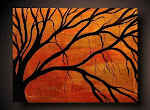
Yggdrasil the Axis Mundi
You can watch the video about this subject in here: Yggdrasil the Axis Mundi
It was common in ancient civilizations the belief in an axis mundi, a central point around which the world existed, a connection between the heavens and the earth, the source of all life and also a connection between different reality planes. The very thing connecting the realms of the divine; the sky, the earth and the infernal. Infernal not in a Christian sense, related to Hell, because pre-Christian or pre-Abrahamic religions had not the concept of an infernal realm for punishment; infernal rather in a sense of an inferior realm, underworld, just like the world above is called supernal (celestial).
To the Scandinavians and other Germanic peoples, this axis mundi was Yggdrasil, the world tree. Now, we have to take in mind, that the oldest documentations we have about Yggdrasil, are from the X century, and we have to be careful with this, because this was already a period in northern Europe when paganism was coming to an end, and since the IX century Christianity was already a force to be reckoned with in the north. And such polytheistic accounts were registered by Christians who perhaps had lost the true meaning of the pagan folklore, because they wrote such accounts many years after the conversion of the countries, and also, the Norse beliefs at this time had already a lot of influence from the new religion - Christianity.
Speaking of this, let's take a closer look into two of the most important sources to understand Norse mythology - The Poetic Edda and the Prose Edda - which date from the XIII century. The Poetic Edda is a combination of poems that date far back before the coming of Christianity, but from oral tradition, and there's no telling how much these poems have changed with time. The Poetic Edda is the medieval version of such accounts. And the Prose Edda, written by Snorri Sturluson, is a manual of Skaldic poetry using periphrases or metaphors of mythological references. Snorri Sturluson turned to folklore, to poems contained in the Poetic Edda and other poems which survived in oral tradition to create this work. This work by Snorri Surluson is a synthesized and simplified view of the Norse mythology, in contradiction with other sources and influenced by Christianity since Christianity was the official religion in Iceland in Snorri Sturluson's time for two hundred years already. But about these sources I think it’s best to write another article, so let’s go back to the subject.
We shall stick with the version we know from Yggdrasil, being the world tree. The term “Yggdrasil” comes from two elements: Yggr, which is one of the names for the god Odin, meaning “terrible” as in Odin being The Terrible/The Fearful/The Dreadful. And the term drasill, which refers to “the one who walks” something, “the one who rides” something, and it's also a poetic term for a mount, a horse. So, as you might rightfully guess, Yggdrasil is Odin's mount, vehicle, or horse. Meaning that this deity used the World Tree to travel between worlds; he uses this cosmic axis to journey into different worlds. But the term drasill can also be connected with the gallows, or hanging as a form of execution, which was compared, for some reason, with the horse. For example the XI century poem Háleygjatal, from Eyvindr Finnson, which refers to Sigarr's horse (a legendary Scandinavian king) as also being his gallows. This gives us the connection of Yggdrasil being the very thing Odin used to hang himself, kill himself, in order to be able to free himself to pursue the knowledge he so deeply wished for. We can see in here an old shamanic tradition of freeing the spirit from the body to reach the world of the spirits and gain knowledge, and communicate with the spirits and gods.
There might be another possible explanation for the name “Yggdrasil”. It’s also referred as askr Yggdrasil, or “The ash-tree Yggdrasil”, meaning that Yggdrasil is an ash-tree, which might mean that this was the tree where Odin strapped his horse or where Odin tied a rope to hang himself. Well, after all, poets play with multiple meanings and what might seem to us a tree, it might be a metaphor for something else.
This interpretation leads us again to a shamanic comprehension in how to reach the world of the spirits, through a symbolic but painful death, perhaps a ceremony around a great pillar, symbolizing the centre of the world, and maybe that pillar being made from the trunk of an ashtree, being a tree with magical properties and with a symbolical meaning to our ancestors that go far back since they began to have their first spiritual thoughts. Charlemagne, for instance, in the VIII century destroyed the great symbol of the Saxon faith. It was called Irminsul, and we still don’t know if it was a tree, or a great pillar, or some sort of idol. It was something big and vertical, possibly the remnant of this tradition of an axis mundi. So maybe Irminsul for the Saxons might have been what Yggdrasil was to the Scandinavians, “a great pillar”, a symbol of their faith and the connection between all living things from our world and the world of the spirits. The remnants of a spiritual shamanic tradition.
This world tree isn't just the symbol of the shamanic techniques used to reach the world of the spirits, or a symbol of the very connection between worlds. Yggdrasil is also the symbol of that which gives life. In the poem Grímnismál, deer eat from the foliage of Yggdrasil, a great eagle lives on top of it, on the very bottom Nídhöggr gnaws upon its roots and that's where snakes also live, and a squirrel named Ratatoskr goes up and down the tree delivering messages between the eagle and the great serpent. This shows the amount of life a tree can give, it is the home of living creatures of the forest, a shelter and also the source of food.
Another point, is that in the poem Voluspá, it is said that Yggdrasil is an evergreen tree, which is odd because the ash-tree is a kind of deciduous tree. But the Norns water the tree from the well Urðarbrunnr, supposedly magical waters that also give life, it's the Well of Destiny and it keeps Yggdrasil healthy and evergreen. And finally, as it is written in the poem Gylfaginning, three gods created the first humans from the bark of trees, one of those humans was a man named Ask, which means Ash-tree, making the ash-tree once again the source and creation of life, invoking the beliefs passed on by oral tradition, from a past far beyond memory, when our ancestors were much more attached to the natural world than we are today, unfortunately. But they already understood the importance of nature as the source of all life and as a means of communication with the spiritual and the divine.
| Keywords: About Shamanism, Axis Mundi, European History, Gods and Mythology, Irminsul, Mythology, Norse Mythology, Odin, shamanism, Video, World Tree, Yggdrasil, Yggdrasil Video, Youtuber

Introduction to: The Goddess Eostre (Video)
Introduction to the Germanic goddess Eostre, as a continuation of the previous video about the Vernal equinox (Spring). A better understanding of the pagan celebrations of this season which gave birth to the origins of the christian celebration of Easter. Also, the connection between the "Easter Bunny" and the Eggs. Tack för idag! :D
My Social Media:
Easter - Pagan or Christian? (Video)
Hello friends! This is the first out of three videos about the Vernal Equinox (Spring). In this one the question is simple - is Easter Pagan or Christian?. On the next video I will talk about the goddess Eostre and the connection between Easter and rabbits/hares and eggs. On the final video I will talk about the Northern-European pagan celebration called Sigrblót/Sigerblot/Ostarablot. Enjoy friends and tack för idag! :D
(\__/)
(o.O) ~The owl-bunny!
(___ )
'' ''
My Social Media:
| Keywords: Easter, European History, My Youtube Videos, Other Pagan Celebrations, Pagan, paganism, Youtube, Youtube Video, Youtuber
Introduction to: The God Loki
This video has multiple subtitles, you can choose between, English, Italian, French, Spanish and Portuguese. Many thanks to the contributors!
Hello friends how are you? I've seen that a lot of people would like to know more about the gods; I even receive private messages on my facebook page of people wanting to know a bit more about the rituals and how to praise the deities. So here it is, an intoduction to the Norse deity Loki.
My Social Media:
| Keywords: Gods and Mythology, Loki, Loki Video, My Youtube Videos, Norse Gods, Norse Mythology, Working with the Gods, Youtuber
The Bear - Symbology During the Middle-Ages
You can watch the video about this subject in here: [The Bear - Symbology During the Middle-Ages]
When people
ask you “what animal is the king of all animals?” the first creature to come to
mind is the lion. But in truth, before the church imposed the lion as the king
of all the animals, the bear was the real king, at least in the European
continent. The bear was the symbol of power, strength and majesty.
It is
possible that our ancestors during prehistoric times already worshiped bears.
We can find bear skulls aligned in niches in caves, and they weren’t placed in
there at random. There might have been an early bear cult, and unlike the image
we grow up with, of people living in caves, our ancestors actually built houses
made of huge animal bones and tusks, tree-trunks and animal skins, so those
caves with beautiful paintings, were in fact out ancestors’ first temples. But
let's not go back so much in history.
Anyway, we
can find traces of the utmost respect, even fear and also admiration our
ancestors had for these creatures, in folktales, changed by time and the
different political and social realities throughout history, and of course,
changed by new faiths. We can also see it in sacred places, christianised, but
were once the places of pagan deities and with the new faith became the
dwelling places of saints and Christian mythological accounts. For instance,
the Celts worshiped a goddess which was represented with a bear on her side or
in front of her. The bear goddess called Artio, and the name has a lot of
similarities with Arthur, who in turn is also a name connected with bears. This
was a primitive deity, linked to the fertilizing force of the earth, in a time
when gods had not yet been anthropomorphized and were still represented as
animals.
There were
certain early Cristian accounts that show the importance the bear had to the
pagans, and as such, the devil often took the form of a bear to come and terrorized
the monks. The king of animals was turned against those who admired it, by demonizing
the poor animal. In the Jewish and Christian traditions, the bear often has a
negative symbology, and you can see that in the Old Testament.
When the
missionaries began their process of evangelization through Europe, they
encountered a variety of pagan deities, many of which were either associated
with bears, or were bears themselves. To the Germanic and Celtic populations of
Europe, the bear was the animal associated with royalty, so it isn't a
coincidence that the most famous legendary king, Arthur, was also associated
with the bear. It’s interesting to see that the bear, well, the she-bear, was
connected to the warrior goddess Brigid, of whom the Celtic kings were sons of,
making them little bear cubs. So there was the necessity to christianise this
goddess, and so Saint Brigid was born, and later, this pagan goddess, now
christianised, was associated with a real abbess of Kildare named Brigid, who
died more or less in the year of 525 of our era.
To the
Germanic and Scandinavian peoples, the bear was connected to the warrior
spirit, personified by the god Thor. It appears that in certain Germanic
groups, one of the imposed trials to the young warriors, was the solitary bear
hunt. Although it hasn't been proven yet if these initiation rites were real or
just mythical. Anyway, what is real is that the strength and the ferocity of
the bear was an inspiration to the Germanic and Scandinavian warriors.
Many ancient
cities throughout Europe still have the representation of the bear in their
coat-of-arms. The survival evidences of the bear being the king of animals
before the church replaced the symbolic functions of the bear for the lion. The
lion was an exotic animal, and by the time it replaced the bear, sometime in
the year 1000, the lion didn't belong to the European Fauna so this almost
mythical creature during medieval times was easily adopted. But to this day
some cities such as Bern in Switzerland and Berlin in Germany, to name a few,
still have the bear in their coat-of-arms.
It's not a
coincidence that during the reign of Charlemagne a lot of bears were hunted
almost till extinction, because of the cult the Germanic peoples had and the
pagan gods associated with the animal, and of course taking down loads of
sacred trees. We all know about the forest devastation held by Charlemagne and
his nobles, but we don't often hear about the bear-hunt.
To the church,
during medieval times, the bear was the personification of evil, ferocity and
chaos, because the creature lived in the dense, almost unreachable, forests.
The forests were the dwelling places of the pagans (in truth the forests were
the places the pagans considered to be sacred, once, but now it was their
refuge from the horrible acts of forced cristianization). But the bear started
to enter in the christian mythology in another way. It became the symbol of the
divine dominating chaos, because the only ones who could contact with these
terrible creatures and turn them into docile animals, were the hermits; those
who would seek the most inhospitable places to live in solitude, for spiritual
reasons. Only through their faith, and the connection with the divine and the
power of god, could they do such a thing, turning a ferocious beast into a
docile companion. Thus the bear became the symbol of the victory of the divine
over chaos, and we can actually see this representation in the story of Saint
Columbanus and his many encounters with bears, and befriending them.
The bear was also
associated with the Devil, and a symbol of the many vices and sins condemned by
the church. There were many accounts of bears being the evil creatures of
chaos, to the point that they became the creatures that would kidnap young
beautiful maidens and would rape them. And we can still see this in many
folktales; the bear being the "bad guy" in the story. This actually
might be the beginning of the creation of the story of "The Beauty and the
Beast", highly infantilized and softened by Disney, and thank the gods for
that because no child would want to hear about the real account.
So, in
conclusion, the fight of the church against the bear, was a symbolic, and in
some cases a very real way to free territories from their pagan past and
convert them to Christianity and order over chaos. Unfortunately, the bear had
a very negative connotation during the middle-ages, but at the same time, the
symbolism the bear had during pagan times, somehow prevailed till nowadays, and
I'm sure all of us remember the childhood stories of the she-bear being a kind
and caring mother, and it isn't a coincidence that many children to this day
still sleep with their teddy-bear.
Norway’s First Coin
Currency has been around for quite some time, but in the cold northern European countries it took some time to arrive. In truth, everything from the south took long enough to reach the north and vice versa.
In the year of 995, of the Common Era, when Olav Tryggvason became King of Norway (some call him Viking King but that isn't the correct title), silver coins changed their appearance and the king's own name started to be carved in coins. "Onlaf Rex Nor", meaning "Olav, King of the Norwegians", this started to be printed in coins. Of course coins were not something invented by Tryggvason, particular these coins with religious (christian) motifs.
During Tryggvason's time, Ethelred II was the king of England. Viking raids were still common, but things were changing, and not only landlords and nobles were going "viking", but also kings. Raiding became a great source of income to the northern peoples of Europe, which arose their economy imensily. Raiding was also to show one's power and right to rule, so above everything else, raiding was the legitimate claim to govern. So king Ethelred II had to face both the armies of King Olav Tryggvason and King Svend Tveskæg of Denmark. Suffice to say that the king of Englad had to pay a large amount of money to sue for peace. In the spring of the year of 995, Olav Tryggvason returned home with a great amount of Anglo-Saxon Crux coins in his luggage; a lot of coins already with the christian motifs well printed, marking the faith of those people.
Olaf/Olav Tryggvason was King of Norway from 995 to 1000 A.D.. Olav was the major "character" in the conversion of the Norse to the new faith (Christianity). He is known for this and somehow exalted by historians for being the key to the converstion of the northern pagans into christianity. However, such conversion was brutal, horrible even, with many gruesome accounts of torture and the most abominable, enduring and painful ways to kill in the name of religion and forceble convertion. Nonetheless, he was the reason for the first christian coins in Norway, and probably the introduction of hard currency, because before that cattle was the measurament of wealth.
The New Pagan Temple In Poland & Religious Freedom (Video)
This video isn’t just about the new project to build a pagan temple to the Slavic gods in Poland. This is also about the importance of Religious Freedom and this project in Poland is just an example of how we need to start to walk towards a world where religious freedom is possible.
Note: In the video I say Poland celebrated in 2016 its 150th anniversary of the christianization of the land. Yeah, obviously not, it was its 1050th anniversary! My bad! 😀
My Social Media:
Subscribe To


 Posts
All Comments