Wight of the Nine Worlds

welcome

I welcome thee free spirit, which thou shalt come with an open heart, open mind and an open soul, for what you are about to read can only be understood by the wise who are eager to learn and to embrace the roots deep and forgotten in the hearts of the free people of Europe, by accepting who you are and where your roots lie, is half way into the great road of life. We will journey unto where our spirit takes us with the knowledge we gained. Learn and teach.
Showing posts with label Loki. Show all posts

Introduction to: The Goddess Sigyn


Since some of you asked me to make a video about the goddess Sigyn, well here it is :D There isn't much information about this goddess and I like to always give a modern perspective to the worship of the gods, because times change and so do the needs. I hope you enjoy it and from now on all my videos are opened to have subtitles made by you in your own languages; feel free to add your own subtitles if you want to contribute to spreading the information. Tack för idag!


My Social Media:

Introduction to: The God Loki


This video has multiple subtitles, you can choose between, English, Italian, French, Spanish and Portuguese. Many thanks to the contributors!

Hello friends how are you? I've seen that a lot of people would like to know more about the gods; I even receive private messages on my facebook page of people wanting to know a bit more about the rituals and how to praise the deities. So here it is, an intoduction to the Norse deity Loki.


My Social Media:


The Origins of the Gods - Part 1 (video)


Hello friends! I know this is a very long video (probably too long!) I’ll try to make it shorter next time 😛 But I hope you enjoy it!

This video is about the deities worshiped during the prehistoric periods of the Palaeolithic age to the Mesolithic. I’ve used the Norse Gods as examples of the types of deities that were worshiped during these periods in history. Not that the Norse gods were worshiped in prehistoric times, but certainly the gods of prehistory were the ancestors of certain gods of the Norse Pantheon. This is getting confused? Alright, I’ll explain it better during the video.

Hej då! Tack för idag! 😀


My Social Media:

My Youtube

Facebook Page

Instagram

Twitter

Deviantart

WordPress

Blogspot

Angrboda - How To Praise And Make Offerings To Her?


As I have written the other day about this norse goddess, this post will be only about making offerings to her. Summarizing, Angrboda was the first wife of the god Loki. That is how she was entitled as a goddess thereafter, foe being connected with another deity. This doesn't mean she had no power before, on the contrary, she was a powerful figure in Jotunheim, chieftain of all the tribes of Jotnar. Such power she had, that Loki himself felt drawn to her. She is also the mother of the death goddess, Hel, or Hela, as well as the great sea serpent and the wolf Fenrir. Angrboda's marriage to Loki produced three children - Hela, who became the goddess of Death; Jormundgand the Great Serpent who surrounds and protects all of Midgard; and Fenris the wolf-shaped God of Destruction who was chained. 

In the previous post about her, I wrote that she will not work with anyone, her choices in spiritual-workers are very specific. Whoever she chooses, she will protect the person if she considers him/her to be a member of her clan.

In Ironwood, as well as in most places throughout Jotunheim, she is known as the Wolf Mother. This shows her matriarch personality. This title "Wolf Mother" is actually relevant for this post, because most want to work with her but can't, so in other to help her or give her offerings indirectly, you can help the wolves of your country, those animals are an endangered specie in all the countries which they are native. Helping the wolves, in whatever kind of job is needed in the centres that protect them, is actually hard work, and Angrboda appreciates the tough ones.

Most people only know Angrboda by her marriage with Loki and for being the mother of many of his children. The lore speaks of such things but not how to work with her and what is her real purpose. Through time, many spiritual-workers gave us the knowledge of the things that don't come in the lore.
She is a strong figure, violent, passionate, very protective like a wolf mother to her cubs, and also much wise. She as a reddish hair, a brown hair with a mixture like copper and red, or the color of dried blood.

As i told before, she is a very strong mother-figure, not in terms of nurturing or tender love, but in terms of motivation, support and advice, she takes special care to those who are "different", who have physical anomalies, people who also need love and care and need a mother-figure to guide them and to tell them they are also beautiful, as long as they are strong inside and never give up.

To work with her indirectly, you don't need to just help wolves, but also people with physical and mental disorders. As I have said before, she requires a strong spiritual-worker, capable of leadership, determined, wise and inclined for more primal aspects of life and human behaviour. Take note that she only works with female spiritual-workers, but once in a while a male spiritual-worker might also be summoned.

Working with the Gods: Baldr


Baldr or Baldur is the Norse god of beauty, naivety and light. He is one of the few gods who as descended into the realm of Hel and do not yet arise from it. His story is a difficult one to understand, very tragic for the Aesir tribe of gods, a story of mischief and sorrow.

In the Norse mythology, Baldr is the youngest son of Odin and Frigga, the most beautiful of thesky gods, the Aesir. His mere presence brought light and merriment to all the gods in Asgard, and from him, a very bright light came to everywhere he went. 

Baldr married the Aesir goddess Nana who took care of the orchards of Asgard. They lived in the hall called Breidablik and in its surroundings nothing that was impure could ever live in such place, everything was naturally beautiful. They had a son called Forseti who would be later be known as the god of justice.

The saga of Baldr, Baldurs Draumar (Baldur’s Dream), tells us of the time when Baldr began to have strange dreams about his oncoming doom, death was approaching to cover in darkness the world of Aesir, light itself would be swallowed by it. Baldr told his parents about the dreams and his mother, Frigga, in a hurry, travelled throughout the nine realms asking every living thing not to harm her beloved son. Every living thing made this oath and when Frigga passed by the mistletoe, she thought that it was too young to make such an oath and she thought it to be harmless. Then she returned to Asgard and told to Baldr what she had done and that he was safe, nothing could harm him. Baldr made a game out of this, every god would throw weapons against him and every single object would bounce off.

Every great tragic story has vengeance in it, and this one isn't different. The god Loki was angry with the Aesir because they had murdered his wife Angrboda and imprisoned one of his sons, Fenrir, so Loki discovered the secret of Baldr's imunity to all things except the mistletoe, so he made a dart out of it and waited until the games of throwing weapons to Baldr began. Loki offered himself to help Hoder, the Blind brother of Baldr, so he could also participate in the games. Hoder agreed, and threw the mistletoe dart to Baldr, killing his own brother.

Meanwhile Loki fled and there was great mourning in Asgard. Many gods offered themselves to avenge Baldr's death, but Odin had other things in mind and none from his family was fit to do the task. So Odin raped the giant goddess Rind and she gave him a son called Váli, the god of vengeance. Váli didn't knew about the true story, all he knew is that his half brother Baldr had been killed by Hoder, and so he murdered the blind god.

Baldr was placed on his ship called Hringhorni and the funeral fire was started. Many were those who came to Baldr's funeral. Thor lost his self control because of the death of his younger brother, and in that rage he kicked a visiting dwarf right into the fire thus killing him. Baldr's wife, Nana, threw herself into the funeral pyre, thus commiting suicide to be with her beloved. Baldr's horse was also burnt along with everything that belonged to the god of light. When the time came to push the ship into the waters, it prove to be too heavy. All of a sudden a female giant called Hyrrokin, ridding a great wolf, came and gave the ship such a shove, that the earth itself trembled. It is said that this mysterious Hyrrokin was none other than Angrboda, Loki's wife, coming to witness her vengeance for the murder attempt on her, and for the kidnapping and later binding of her son Fenrir, and also her child Jormundgand, the great sea serpent.

In the meantime Odin and Frigga gave another task to one of Baldur's brothers, Hermod. He was to ride into Helheim and beg Hela to release Baldr. Hermod rode fro nine days till he finaly reached the Gates of Helheim and entered. He begged to Hela for his brother's life and she told him that she would only release him if every living thing in the nine worlds would weep for him. The Aesir went in all directions asking everyone they met to shed a tear for Baldr. All did so, except for an old female giant called Thokk and thus Baldr was lost forever. It is said that this Thokk figure was no other than Loki himself in disguise, making sure that Baldr stood with her daughter Hela.

There is much speculation in why such an event happened, why did Odin let all of this happen. In a foretelling, Odin knew that Baldr would be slain when Ragnarök started if Baldr was alive by then, on the other hand, being slain, Baldr would come to life after Ragnarök and rule in Asgard. It is said that Baldr's death was arranged by Odin and Loki to protect Baldr and send him to the safest place in the nine realms, the realm of the dead, so he might arise when the time comes and rule in Asgard.

The Saxons had another version of this story, in which Baldr and Hoder were two princes and both wanted the mortal princess Nana. Both fought and Hoder killed Baldr with a sword named Mistletoe and thus he married Nana.

It is clear that behind this story we can see that the only thing that can prevail over the light, is darkness, the opposite. Hoder the blind god is darkness and he took the life of his brother, Baldr, the god of light. When darkness covers the land, death and sorrow comes to mortal men and it is in darkness that Ragnarök starts, when all light fades away. But after te darkness a new light comes forth and life sprouts once more. Baldr revives and will rule in the realm of the Sky Gods.

One thing is also certain, to Baldr was given another task and he became a different god with a new sacred task, he is now the god who gives light in dark places, this also means giving light to those who live a life in darkness, while their mind is, metaphorically speaking, in darkness. Sorrow, sadness, depression, living in hard times, Baldr gives light and a new awakening.


Note: The artwork to illustrate this post is a painting of Baldr made by me. If you have any questions for me or if you want to see my artistic works, check out my Facebook page and make a Like if you can by following this link --> http://www.facebook.com/ArithHarger

The Birth of Loki


Nowadays when we think or speak or hear of Loki, most immediately think of he Marvel villain with black hair and green eyes, filled with thoughts of revange and lust for power, but the real Loki the trickster god of mischief from the Norse mythology, isn't such a character.

After the death of Ymir and the creation and formation of worlds and the great flood, the surviving Jotnar found a land for themselves and called it Jötunheim. The etin-folk settled all over this realm, some in the north mountains, others by the coasts, and some of them went south and found a strange forest, dark, filled with short and hard trees, the ground itself was magical and that magic spread all over that forest, every living creature there was tainted by that very magic, the entire forest was tainted, most Jotnar there became deformed but with special abilities in magic and it was they who started to work with such powers and teached them to other beings and deities. The Jotnar named this forest, Ironwood.
The Jotnar folk divided themselves into nine clans, and elected a chieftain for each of the clan. But the clans were always fighting against each other, as to who would be the chief of the chiefs. This war went on for many years until only two clans were left to fight agaisnt each other and one of the chiefs would claim leadership over all the nine clans of Ironwood. One of the chieftains was Farbauti, of fire-etin blood, tall and strong, living in the stony hills of Ironwood, the other chieftain was a very young witch some say, who could see into the future, and she saw that she would be the chief of chiefs and would claim leadership over the entire Ironwood and its nine clans. So it came to pass that she succeeded, and Farbauti went off into the western mountains and then into the ocean. For many a year he wandered by boat from island to island, he went so far from the costal line of Jötunheim, that at one point he could see the realm of Vanaheim. It was there, on another island that he met Laufey who came from the lineage of the earth-goddesses, she was so beautiful that Farbauti couldn't think of nothing but her, and love struck his heart like a lightning. Laufey loved him likewise and in that great love a child was conceived. But in the early months of pregnancy, her womb began to burn, and the pain was excruciating. Farbauti feared for her and the child, so he asked her to come with him into Ironwood in Jötunheim, he told her that there were healers in his land that could take care of her and the baby, she agreed with him and left her island, it was difficult for her, for she loved her home, but she knew that the baby was in danger and that that child would be the next chieftain of his father's clan should he die, this child was the rightful heir.
At Jötunheim, Farbauti build an house for Laufey and their child, hidden in the hills, he feared that the chieftess of the other clan would know about this and came after them, after Laufey and strike at her and their unborn child, to wipeout the bloodline of Farbauti and claim rulership over his clan once and for all. But this chieftess was cunning, and news of Laufey came to her and she saw in her dreams the prophecy that Farbauti's child would master her one day, so she set out with her clan towards the stone house where Laufey was. Long and terrible was the battle between Farbauti and his  clan, again the chieftess of the other clan and her followers, in this confusion Laufey left, she fled from Ironwood and Jötunheim itself, but the Chieftess ran after her. Laufey came to Midgard, not would own world, but Midgard of the humans of the spiritual world, the realm very much alike our own, the realm where we have a strong connection to also. Laufey came to the border of Midgard, which is Myrkwood, a dangerous place filled with foes, strange beasts, everything in there is a menace and wants to kill you, but even so, Laufey went and ran like the wind until the trees of that forest were no longer with leaf, and they started to be blackned, scorched, the very ground was burnt. She came to the realm of Muspelheim, the land of fire and dust. Surt the fire-lord came to her and asked her what she was doing there, Laufey told him that she seeked shelter, and that she was carrying the child of Farbauti, who shared the same blood of the Fire-Etins such as Surt himself. He agreed with her to give her shelter in exchange that he would be the godfather of her child and the second father. Laufey was in much pain and was also tired of running away, the chieftess was on her heels, and so she agreed with Surt and he brought her to his Castle. The chieftess and her folk would not dare following her into Muspelheim itself, Surt was a very powerful being, and so they stayed at bay.
Laufey had her son within the land of fire, a red-flaming-hair boy. Laufey sent word to Farbauti, telling him that he had a son and that she and their child wanted to return to Ironwood, but Farbauti was still at war, and it wasn't safe for his wife and son to return there, so Laufey stayed at Muspelheim for many years, and Surt himself taught the boy in the ways of fire and all its secrets, and told him about the power he had in his own veins, Surt raised him as his own child.
When the boy was leaving his childhood, Farbauti sent word to Laufey that the war was over and that the Chieftess had won and claim the title of ruler of the entire Ironwood and the leader, chief of chiefs of all the Nine clans, Farbauti gave her the title and rulership over his own clan and agreed with her that by doing so, she would never harm his wife or his son. So Laufey made ready her departure from Muspelheim with her son, but before that a Seer from Muspelheim prophesied the future of the child. The child would be a wanderer for all his life, he would never have a place to cal home, yet every place he would be in would be his home, he would achieve great power and would be dearly loved but also terribly hated, but his name would be very much known all over the Nine worlds and outsider them also. After this prophecy he left with his mother to meet his father in Ironwood at last. When Laufey arrived, she was angry with Farbauti, for he ordered her apart, when she wanted to be by his side, fight by his side and die by his side if it should come to that, he did not share with her all his troubles, and she declared that she would not live with him anymore, so she went into the mountains overlooking Ironwood, in there she built her own dwelling and stayed, but Farbauti could visit her any time he wanted, but she would not live with him anymore. Their child went to live with Farbauti but only until he reached adulthood.
Laufey asked that Farbauti should take their son into a counsel with all the nine clans gathered so that their son should be welcomed and claim his heritage, to this Farbauti was fearful, for the great chieftess of the nine clans could break her oath and kill their son, but Laufey was confidente, for she remembered the prophecy of the Seer at Muspelheim, so Laufey herself came forth with her son when the counsel was called. The great chieftess remembered what she has seen in her dreams some years ago, that Farbauti's child would master her, so in spite of her word, she really wanted to kill him, even if this seemed to be wrong to her and break her word, but when she saw the child coming near the fire at the counsil, her dream came to her again, but this time with much more details. The child would indeed master her, but this mastery was with love, and he would become her concort and would be the father of all of her children, and she also saw what the Seer at Muspelheim had seen. So the great chieftess, Angrboda welcomed Farbauti and Laufey's son, and he became a member of the nine clans, and so Loki, that was the name of this child, started here his path, that would bring much joy and also hate to many, and few would understand him, but he would change the lifes of many.

Note: If you have any questions for me or if you want to see my artistic works, check out my Facebook page and make a Like if you can by following this link --> http://www.facebook.com/ArithHarger

Váli god of vengeance


Odin had a son with the giantess Rind, his name is Váli, but he his also named Ali or Bous so people might not be confused with Vali the son of Loki with Sigyn to whom Odin drove him to madness after being turned into a wolf.
Váli the  son of Odin is the god of vengeance like his half-brother Vidarr, but Váli was the first one to gain this title and his story is closely related with Baldur. When Hoder/Hodr the blind god was tricked by Loki into shooting and arrow towards his own brother Baldur ( an arrow made by the only thing Baldur wasn't imune to, mistletoe ) Odin decided that he needed another son to avenge the death of Baldur. Odin forced himself on the frost giantess Rind and she bore him a son, Váli.
In the myth, Váli grows to adulthood in a single day and made an oath, never to wash his face, combing his hair or do any other kind of personal hygiene until he slains his brother's killer, Hodur, who was also an half-brother to Baldur. It seems that Váli had little knowledge about the true facts and in truth he didn't care much about it, his objective was one only and as soon as he set eyes upon Hodur, he slained him, a blind half-brother of his, defenceless and innocent.
 
Váli's story is one difficult to understand, all about Baldur's death is, but probably this was Odin's plan all along, for Baldur went to Helheim and from there he as a different power and he will be a great ruler after Ragnarök if that comes, from there he is more then a god of beauty. Also Hodur was limited in his power while in Asgard, a god of shadows and dreams, of powers hidden inside one's mind, magical powers out of mere sight, he could do little in Asgard, and so by dying, somehow he was also set free and extended his powers and his field of expertise, and also help those in need, and be called upon in easier ways. If this is true or not, only Odin and Loki might know the truth. About Váli, it is strange that Odin needed a son so desperately just to kill another son of his, probably he had more plans for this child and probably for Váli, killing his own half-brother wasn't an easy task, he might had pondered about that for some time, but how would he if he grew to adulthood in one single day? Well.. those who know the goddess Rind, know that she works with time itself, and can go to and fro without being noticed, she can stop time, she can freezes that in a single place were one might live his life in a normal period of time, and other do the same outsider that place but each don't have the perception of time, and has one might live an entire life in a normal time frame, other's outsider the place choosen by Rind, live slowly second by second, so Váli had in truth plenty of time to grow and learn, and probably he did what he had to do because Odin asked him to and behind these actions, a greater good could be achieved, for Váli is now among the Aesir tribe and lives as a champion of Asgard.
 
We might learn with this story, that one might have the need to sacrifice what is dear to him/her, in order to achieve a greater good, or to turn the life of many into a better way of living, and this takes great courage. So in my point of view, Váli can be called upon ( as Odin also in this case ) not just for a simple vengeance, but also to take heart and courage to do what must be done, to sacrífice whatever needs to be sacrificed in order to build a better future, a better life, for us and those around us that we love so dearly.
 
Note: If you have any questions for me or if you want to see my artistic works, check out my Facebook page and make a Like if you can by following this link --> http://www.facebook.com/ArithHarger

Working with the gods: Glut


You may be wondering why i lable "Working with the gods" even when i talk about spiritual beings who are not labled as gods in the lore or minor deities or even if i write about them but i do not extend the knowledge at a more personal level of that deity or when i do not specify much how to work with a specific deity. Well this is simple, for two personal reasons, one is because i need to have a personal guide for the gods and goddesses, spirits, wights and other beings of the northern pantheon and mythology because i've been asked to aid in games where norse gods enter and they need to have as many knowldge about them as possible, and in this way, it is easy to find them all in a list that i am making here in the lable "Working with the gods" so it will be also easy for me to help hehe. Another reason is the fact that i'm not sure if people know what gods are, if we understand the meaning of the title  "god", a spiritual being who is very powerful in specific ways and it can help us humans in a variety of needs, expressing their powers over nature, being able to contact us between this world and the world of spirits, then yes.. those spirits are deities and we can call them gods and goddesses, this is why in this list, there are many spiritual beings who aren't as famous as Odin or Thor, or weren't labled in the lore as gods, but they are equal in power and greatness in their own ways and we must honor them by telling their stories and how they might help us in their field of expertise.

Anyway, going straight to the subject of the main topic now, i will write about Glut, it seems appropriate since i have start this month writing about Surt the lord of fire.
Glut was the first wife of Loki, they married when Loki was still very young, but she left him so he could marry with the giantess Angrboda. Glut is a fire-etin, a child of Muspellheim, so it doesn't seem uncanny that she would be the first one that Loki would have a strong connection, since he was born in Muspellheim. Glut's daughters are Einmyria and Eisa. There seems to be a lot of confusion with these names, because Logi had a wife called Glut and she had two daughters by the name of Einmyria and Eisa ,these names are very common among the fire-female-giants, but the Glut i'm writing here today, is the fire-giantess Glut who settled in the Iron Wood when she was still young and she was adopted as a younger sister by Angrboda. She was given to Loki as a bride by Angrboda, and she bore him twin daughters which he named them Einmyria and Eisa after the children of her long dead ancestress, the other Glut. However, this relation did not last for long, after an year, Loki lost the interest for her and Glut returned to love with Angrboda and her babies.

Glut and her daughters greant stamina, energy and strength to those on sports, athletes, practicioners of martial-arts etc. Glut can also help to heat up the passion between a couple. I haven't said this before, but in ancient times, people use to ofer a variety of things to the gods as we know it well, so it isn't different with other beings, eveything you want as an offering to a fire-etin, must be burnt before.

Working with the gods: Surt


We have all heard about Muspellheim, one of the nine realms in the Norse cosmology but it isn't a famous place as much as Asgard is for exemple, people tend to stick with the knowledge most appealing to them, we know better about the beautiful landscapes and beings of Asgard or Vanaheim or even Álfheim because those are places of light and beauty, of magic and wondrous powers, but all the other realms are equally important. What ever you might know of Muspellheim, the first thing you need to know is about the deity who rules over that realm.
Muspellheim is the eternal land of Fire where the fire-etins live, their king is Surt / Surtur the Black , whose sword gave the first sparks to create all the other realms, and it is said that he is the oldest living being in all the nine realms, few have seen him and even fewer had the opportunity to meet him, but for those who have, they have shared their knowledge with us and i am here today to talk about Surt as a contribution to the vast lore of the Norse/Germanic pagan traditions.

Surt is the king of fire, the supreme deity who has turned all his powers to the fire element in the Norse Mythology, he is also the king of all the fire-giants/etins and his realm is Muspellheim. We know about Ginnungagap, the great vast blackness of the universe and the only existing thing in the beginning and Surt appeared out of that blackness with his flaming sword eventually creating the land of Fire called Muspellheim which in some time got close enough with the realm of ice Niflheim and as such, the frozen earth melted revealing Ymir the primal frost-giant and Audhumla the great cow. Thus life was created in such matter, the meeting of fire with ice in the Norse mythology. Surt's children had connections with Ymir's children and they mixed their bloodlines. Surt was the only living thing in the beginning, lighting all that blackness with his great sword Laevateinn, and he is the oldest living being also, unfortunately, no one knows where he came from or how, or what brought him, but it is interesting to know that the element of fire and of ice is indeed the first things to appear in the creation of any planet, and so he is the very symbol of creation.
Most people don't know, but Surt is the godfather of Loki and raised him as his own son, as it is told in Loki's birth tale, when his mother Laufey came to Muspellheim to give birth to him when running away from the most powerful clans of Jotunheim after defeating Farbauti, Loki's father.
Surt is a powerful being, having the knowledge about all kind of fires, even the primal fires from which stars and worls are made of, he knows about the energy of such fires and the power of heat.
In the lore, it is said if Ragnarök comes to pass, Surt will rise up with the legions of Hela's dead beings and attack Asgard, and if that happens, Surt will kill Freyr who gave up his sword for love, after that, much of the world will be consumed by flames and Surt will rebirth it again. This is the very symbol of the power that fire has over nature, Freyr the god of fertility and light with his powers over the land, giving life to it, as we see all the landscapes around us filled with life, and when a great fire comes, in this case Surt, bringing death with him ( Hella ) burning all the land, and as Freyr will do, giving up his sword, refusing to fight the inevitable chaotic power that is too powerful to face, such as nature does, it has no powers to face the fires and it stands there, waiting to die and be consumed by it, just to rebirth after that in great beauty and stronger.

For those who want to call upon Surt and ask for his aid, Surt gives energy and courage, and the fire within all of us is lit, he is the very force that kindles the fire in all of us, that little spark that might spead into a great power which gives us the capacity to face all the hazards of life when we feel saddened and unmotivated. He can also be called upon for inspiration, for those who are musicians and those who are dancers, for all fire-etin love to dance and love to hear music.

Note:  If you have any questions for me or if you want to see my artistic works, check out my Facebook page and make a Like if you can by following this link --> http://www.facebook.com/ArithHarger

Working with the gods: Loki


Those who work with the god Loki the Trickster, said to be a very hard god to work with and to handle. The first thing you need to have in mind if you are a spirit-worker willingly to work with this god, is that Loki will likely do things to the spirit-worker, that he/she will not like or expect. The knowledge i have earned with the shamans i speak with and an important friend who is also a shaman ( RavenKaldera ), it was told to me, that when working with this god, it is important to have an other god as your protector, to set limits when working with Loki, so you dont end up "bad" or doing things that goes beyond your likings. Also this god may not stick to the agreement and the rules you may have had and stipulated, before you started the spiritual work.

When inviting this god to work with, you dont have to worry about which food he might like, he will eat all kinds of stuff, but that doesn't go the same way when dealing with drinking, in that he will prefer alcoholic beverages with cinnamon and red pepper in it if possible.

Don't forger and always keep in mind, that if you will work with Loki, you best be prepared for the ways and doings of this god, and it is always better to work alongside with an other spirit-worker who already has a good relationship with Loki or perhaps if you work with Hela, in case you need to protect yourself, you can always call upon Loki's daughter to calm him down.

Angrboda - How to Praise and make Offerings to her?


Angrboda in the Norse mythology is the first wife of the god Loki and thus, this Ironwood giantess the female leader of all the tribes of the Jotun that live in there, has become a goddess. Although she may be very limited in her choices to whom she will work with, she is also very protective to those she consider to be of her "pack". She is the Mother of the goddess of death, Hel or Hela.

She is often called the Wolf Mother, and if you can't work with her directly, you can honor her and make
offerings, by helping the wolves, by giving service to the concervation centers that protect these animal, and keep the national parks of your country, safe and cleaned, with the least of human presence as possible, volunteering to make any kind of jobs the people behind these parks, centers, federations, institutions, that protect the wolves, can ask you to do.

Most people only know Angrboda by her marriage to Loki and mother of many of his children, that is what's in the old lore in the Norse myths, but fortunately, those who work with her, gained more knowledge about this giantess, leader of the wolf clan of IronWood in Jotunheim, and chief of the nine clans, and she gained these titles by fighting many battles. She is a strong figure, violent, passionate, very protective like a wolf mother to her cubs, and also much wise in the old lore. She as a reddish hair, a brown hair with a mixture like copper and red, or the color of dried blood.

Loki spends half of the time with Angrboda, and the other half, with her secound wife, Sigyn. Multiple marriege in Ironwood is not uncommon, so Angrboda respects Sigyn as Loki's secound wife.

Angrboda's marriage to Loki produced three children - Hela, who became the goddess of Death; Jormundgand the Great Serpent who surrounds and protects all of Midgard; and Fenris the wolf-shaped God of Destruction who was chained. 

As i told before, she is a very strong mother-figure, not in terms of nurturing or tender love, but in terms of motivation, support and advice, she takes special care to those who are "different" with physical anomalies, people who also need love and care and need a mother-figure to guide them and to tell them they are also beautiful, as long as they are strong inside and never give up.

Lokiblót - 1st April


Lokiblót
As the name indicates, at the 1st of April, its not just the April Fools' Day, but also the day that in the Northern Tradition Paganism, it is celebrated the Lokiblót to honour the God Loki.

This was not a celebration held in the ancient times, it is a new one that came with the NeoPaganism. In My opinion, i do celebrate the ancient traditions and celebrations, and i dont give too much heed to the new ones, but this is a good day to show you the importance that all Gods have.

There is no such thing as Evil Gods and Good Gods, and most of the time, people tend to see Loki as the Evil one, like the Devil or Satan in the Christian myths, but this is not true, all Gods are important, all of them have their powers and
purpose.

Loki is the god of mischief, of fire, and a very cunning god, and we all need to be cunning in this world, in order to survive the mischief of others, we have to workout our minds or we will be "eaten" by the society. Loki is also a shapeshifter and also we have to be like that many times in our lifetime, not like Loki of course, we do not have those powers, but shapeshifting in a diferent way, to shape our
personality and tastes sometimes, in order to fit into some work, that we realy need, or to be happy in places we hate to be but we must, for exemple, working in an other country, we must do that, but the native people in it are of our dislike, or the weather isn't that great, but we have to change in order to survive that and be happy with it.

I have talked about Loki in my blog for many times, you can see it in the labels such as "About Shamanism" , " Gods and Mythology" and even "Northern Pagan Traditions". A curious thing is that the post that was read the most in my blog, was the post that talks about
Rökkatru, as you may well know, it is for those who work with the deities such as Hella and Loki etc. So people are realy interested in that.

As i have talked about Loki so many times, i leave you here a brief text so that you may know how to work with him:
Loki the Trickster is  hard to handle and to work with for a spirit-worker. First of all, he may do things to the person who is working with him that the spirit-worker doesn't expect or like. (This is where it is important to have a spirit-worker with a patron deity to set limits and look out for their best interests.) Second, he may not stick to the agreed-upon rules regarding the event. Third, he tends to want to stir things up - for example, none of the other Gods would hit sexually on anyone who wasn't already open to the idea, but Loki might go hit on a straight guy while in a male body just to stir things up. People present at a Loki spiritual-work should all be well aware of the situation and ready to roll with the punches, or things can go very wrong.
Loki will work with men, women, and third gender people happily, although he prefers to have sex in a body with a working natural phallus. He will eat fast food, junk food, candy, booze (especially spicy food and booze with cinnamon or red pepper in it) and likes to have a table full of weird toys that he can play with, the weirder the better. He has been known to bless whisky and tell people to add it to their bath water or pour it over themselves in the tub, which is at least kinder than the Afro-Caribbean trickster spirits who will spit rum on people.
Any page assigned to Loki has to have a wacky sense of humor, not be easily upset or offended, and willing to give him their full attention and be a sort of "chew toy", as one spirit-worker referred to the job. Make sure that they know that it's not their job to prevent him from doing ill-advised things, except as a matter of self-protection. Getting in Loki's way is the dangerous job of the priest/ess, who should be another spirit-worker with a good enough relationship with Loki to be able to make noise, or perhaps one of Hela's who can call in his daughter to ride herd on him (something that actually works sometimes).
In general, though, it's not about confrontation as much as redirection and distraction. Loki has a short attention span and this can be exploited, although don't think he doesn't know what you're doing. Nobody ever gets one over on Flame-Hair. If he goes along with it, it's because he feels generous or thinks that it's worth it to him, perhaps for the new toy, or the entertainment value of watching people jump to distract him with new toys.

Mythology around Runes: Dagaz


Dagaz

Mythology:

Because Dagaz is elementally governed by fire, two fire gods of radically differing characteristics are associated with it. The first is Heimdall, symbolised by a steady torch or beacon shinning in the darkness. Heimdall is the sentinel of the gods, the guardian of the rainbow bridge, ever watchful and the bringer of enlightenment to mortals ( it was he who revealed the secrets of the runes to humankind ). The other god connected with Dagaz is the untrustworthy ( for some ) Loki, the trickster. Loki is too clever for his own, or, indeed, anyone else's good.
Although he did some beneficial things, these boons were usually a by-product of his mischievous acts.
Even so, he is the blood brother of Odin and was usually cunning enough to talk his way out of trouble.
Loki represents wild, uncontrolled flames. Heimdall represents warmth, security and illumination. The two gods were great rivals and were fated to kill each other on the dreaful day of Ragnarok.

Mythology around runes: Jera


Mythology of Jera :

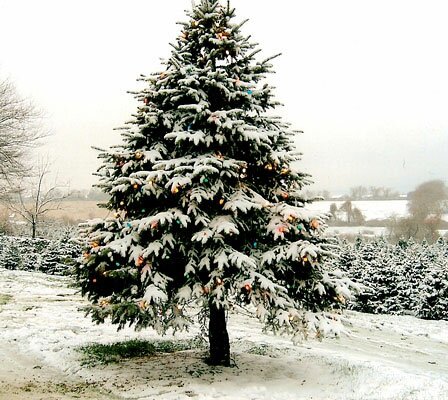
"The brightly decorated Christmas tree is the most familiar aspect of the rune Jera. Its image evokes happy memories and the yuletide spirit."


The symbolism of jera relates to the tragic tale of baldur and hodur, two of the sons of Odin. Baldur, who was known as "the Beautiful", shone like the sun. Poor hodur, on the other hand, was blind and so quiet that he was often ignored. Baldur was so beloved of both gods and humans that his mother, Frigga, spent a long time extracting a promise from every living thing that they would not harm him. However, she ignored the mistletoe because it was so puny that she could not imagine that it could possibly hurt her beloved son. Unfortunately, Frigga had not considered the malice of the deceiful fire god, Loki. Loki incited the other gods to trow weapons at baldur, all of which bounced off him. The he suggested other objects, such as pots and pans. No harm came to Baldur. Only blind Hodur held back because he could not see his brother, but wily Loki persuaded him to join in the game and offered not only to guide his hand, but to procide him with an unlikely weapon: a dart made from the puny mistletoe. This small dart alone hit its mark, and baldur fell down dead, slain by his brother's hand. But all was not lost, for Baldur eventually conquered death and was later resurrected, just like the sun on midwinter's day.

What is Rökkatru?


Note: The Drawing was made By me and it was an illustration already for the story of the birth of Loki here in my blog, but it serves well for this post as well!

First, there was Asatru, which meant, technically, “True to the Aesir”, or the Norse/Germanic Gods of sky and war and culture. They included Odin, Frigga, Heimdall, Baldur, Iduna, Bragi, and many others. Eventually, those whose religious practice concentrated on the Vanir – the second, more agricultural pantheon of Gods including Frey, Freya, Njord, and Nerthus – decided that they would be called Vanatru. Some time after that, Abby Helasdottir of New Zealand coined the term Rökkatru, for those whose primary focus  was the third pantheon of underworld Gods. These include Hela, Loki, Angrboda, Sigyn, Fenris, Jormundgand, Narvi and Vali, Surt, Mordgud, and Mengloth, among others.
The concept of a World Tree is not limited to northern Europe. Many cultures around the world have world trees, and it is usually the job of the shaman or spirit-worker in that culture to travel from world to world. There are always at least three levels: heaven, earth, and underworld. Each are valued equally and have their own blessings and dangers. There are always spirits of sky, spirits of earth, spirits of the beloved ancestors and those who guard them. Norse cosmology grew from a preliterate culture that followed this pattern, and we follow the same idea. Three pantheons, all valuable, all necessary to the functioning of Yggdrasil.

Those who identify as Rökkatru do not see “dark” as bad, nor “underworld gods” as evil. We feel that this is a Christian concept that has infiltrated some modern interpretations of Norse cosmology, first through the Christians that wrote down (and tainted) the only sources we have of these myths, and second through the Christian upbringings of many converts to Northern religion. Other Neo-Pagan sects have already been down this road and come out the other side; they have learned that underworld Gods are to be honored and revered for many things. Death is not evil; it is part of life. So is rot and decay, and loss, and the passing of all things. So is chaos, so is randomness, so is the destructive parts of Nature that we humans find inconvenient. All these things are sacred and so are the Rökkr. Just as there are those dedicated to Hecate, or Kali, or Hades, or Ereshkigal, or Coyote, so are there those who are dedicated to Loki and Hela and the others.

Currently, at this time, Heathenry (reconstructionist Norse/Germanic religion) prefers to limit itself to worship of the Aesir and Vanir. Northern Tradition Pagans, however, believe that Gods are not divided into categories of “good” and “bad” Gods. They are all worthy of honor, and we honor all of them. Since there are already many lovely websites with information about Asatru and Vanatru but very little for Rökkatru, and since honoring all three pantheons instead of only two is part of what sets us apart, we have chosen to put up a small place of education about this third truth. Not all Northern Tradition Pagans are Rökkatru – they might just as often be dedicated to or favor Aesir or Vanir Gods – but they will all agree that it is good to see all the Gods honored, and have no issue with the followers of underworld Gods.

Supported by RavenKaldera

Sleipnir - The Shamanic Riding


Note: The picture was taken by Missloony and it is i, enjoying a cheerful day with her.


I will talk about Sleipnir as a shamanic symbol but first i will tell his story and how he came to be...
Right at the beginning of the gods' settlement, when the gods had built Valhalla, an unnamed builder appeared, he has offered to build a fortification for the gods that will keep out invaders in exchange for the goddess Freyja. After some debate, the gods agreed in this, but had placed a number of restrictions on the builder, including that he must complete the work within three seasons with the help of no man. The builder makes a single request; that he may have help from his stallion Svaðilfari, and due to Loki's influence, this is allowed. The stallion Svaðilfari performs twice the deeds of strength as the builder, and hauls enormous rocks to the surprise of the gods. The builder, with Svaðilfari, makes fast progress on the wall, and three days before the deadline of summer, the builder was nearly at the entrance to the fortification. The gods convened, and figured out who was responsible, which resulted in a unanimous agreement that, along with most trouble, Loki was to blame.
The gods declare that Loki would deserve a horrible death if he could not find a scheme that would cause the builder to forfeit his payment, and threatened to attack him. Loki, afraid, swore oaths that he would devise a scheme to cause the builder to forfeit the payment, whatever it would cost himself. That night, the builder drove out to fetch stone with his stallion Svaðilfari, and out from a wood ran a mare. The mare neighed at Svaðilfari, and realizing the kind of horse it was, Svaðilfari becomes frantic, neighs, tore apart his tackle, and runs towards the mare. The mare runs to the wood, Svaðilfari follows, and the builder chases after. The two horses run around all night, causing the building work to be held up for the night, and the previous momentum of building work that the builder had been able to maintain was not continued.
When the Æsir realize that the builder is a Hrimthurs ( a frost giant tribe who live in the land of Niflheim ) they disregard their previous oaths with the builder, and call for Thor. Thor arrives, and kills the builder by smashing the builder's skull into shards with his hammer Mjölnir. However, Loki as a mare, later gave birth to a gray foal with eight legs; the horse Sleipnir, "the best horse among gods and men. The horse later was given to Odin, and he became his horse.

Now that i have given you his story, i will talk about Sleipnir as a symbol of the shamanic ridings, the shamanic journeys.

The horse has always been a great symbol and actualy a living key in most of the cultures of the world, especially in Europe, all the way to the
Mediterranean, to the far east of Siberia. For exemple, the horses take the Norse warriors to Valhalla, and in the case of Sleipnir, he helped Odin become a shaman and reach the other world, in search for the great knowledge.
Sleipnir is like the galloping of the shaman in his journey, the constante sound of his hooves is like the
rhythm of the shaman drum, in which he journeys to the other side searching for protection and knowledge, from the spirits and ancestors, sleipnir alludes to move fast, and to everything that escapes the fisical control, like climbing the world tree of Yggdrasil into other realms, other worlds, the great journey, riding in a altered consciousness. Like i have said, the constante sound of a horse hooves when galloping, his like the beating in a shaman drum, a magic musicality, that induces rhe shaman to go in a slowly and progressive diving in his most deep corners of his mind, the instrument that makes you flow and enter in ecstasy.
The shaman rides his drum like Odin rides Sleipnir, and both free themselves from every
limitations of space and time, "flying" towards the spiritual dimensions.
In many ways a shaman can enter in trance, there are use of drugs ( in which i dont aprove ) but those are a rare situation, at least in Europe, there are other ways, some too gruesome, and others more safe, such as the Drum or in a state of close to death, like Odin when he cut himself with his spear, and hung from Yggdrasil for nine days and nights, losing blood, he entered in a stare close to death, and his spirit journeyed to the world of spirits, to gain the knowledge of the runes and their power, after arriving there, he was
congratulated by a Valkyrie who gave him mead, to celebrate his status as a shaman.
The constante sound ot the beating of the drum, takes you to a relaxation point when your body seems to fly,, just like the beating of the heart when the body and mind his calm, the constante sound of the heart pulsing, gives the baby inside of the mother, a state of relaxation, and it calms the baby, you notice this, that is why there are lots of toys for
newborns, with the sound of the heart, a constante music like a drum, that can prove very useful indeed.

I hope this information gave to the readers any useful information.

Best Regards

Arith Härger

Loki


Note: The drawing was made by me, you can see all of my works by clicking on the Portfolio bellow.

This Tale can not be found in any lore, those who wrote the ancient storys of the Gods and their doings, did not work with the Jotnar. This specific story was told to a friend of mine who works with the Jotnar and he told me the story, so i do not have any credit over this, excepct on the art work. The tale was told to me by Raven Kaldera, here it is a link to his website [Link] Enjoy.

The Birth of Loki - Laufey's Son

In the beginning, there were the frost giants of Niflheim and the fire giants of Muspellheim, and when the great flood came, many were washed away. Some found safety on a piece of Ymir's body that congealed into a new world, and they named it Jotunheim - the new home of the giants. Some say that it was formed of Ymir's spine and shoulders, for it formed itself into a land of great and imposing mountains, trees that nearly reached the sky, huge and fierce animals that roamed the dark forests, and lightning storms that split the sky.

The surviving Jotnar found it welcoming, and they married each other and produced many new Jotnar - the mountain-etins, the woods-etins, the sea-etins. Some settled high in the cold northern mountains, or the western mountains by the ocean, or the islands, or the eastern rain forests, or the southern woodlands. And in one place in the south of Jotunheim, they settled in a strange forest. Its trees were shorter and harder than anywhere else in the world, and they bore strange fruit. Magic leaked from the very earth; the place reeked of it, and tainted everything that was born there. The etin-folk named it the Iron Wood, and the recognized it as the sacred heart of Jotunheim, the wellspring of its magic. Werewolves and werecreatures were born there, and beings strange and twisted, but their deformities were considered a sacred thing. For a twisted troll to say that he had the blood of the Iron Wood was to replace scorn with reverence in the eyes of the onlookers. Magic ran strong in the blood of the Iron Wood folk; seers and galdr-folk came forth from that place, to marry and spread their bloodlines through all the etin-folk.

The folk of the Iron Wood divided themselves into nine clans, and each elected a chieftain. There was much fighting as to who would be Chief of Chiefs, however, and many were slain in the battles, and the blood soaked into the earth. Finally the fighting came down to two clan chiefs, both of whom swore that they would defeat the other and win the leadership of the Nine Clans.

One was Farbauti, whose name means Cruel-Striker, and whose clan was Lightning. He was tall and strong and broad as the side of a mountain, and belched fire from his mouth. Fire-giant blood ran strong in his veins. The other was the young chieftess of the Wolf clan, a powerful witch with the lineage of the Volva in her. She was tall and strong and had hair the color of dried blood, and she could see into the future and prophesy. And she saw that she would be Chief of Chiefs, and set out to make that prophesy come true.

And it came to pass that Farbauti went from the Iron Wood and came to the western mountains, and thence to the ocean, and he wandered in a boat among the many islands off the coast of Jotunheim, some so close to the world's border that one could almost see Vanaheim in the distance. And it was there that he met a beautiful giantess named Laufey, the Lady of the Leafy Isle. She had earth-goddess blood in her, old and ancient as Jord, and she shone like silver in the moonlight, and Farbauti could think of nothing but her from the moment that he saw her.

It is said in the lore that he struck her with a lightning-bolt, and thus was their son born. The truth of the matter is that love and desire for him did indeed strike her like lightning, and the fruit of that love and desire was that she swelled with child. Yet she had not gone but three months before her womb began to burn, as if a brand flamed there, and it caused her great pain. Farbauti feared for her, and wished her to return with him, for there were healers in the Iron Wood who understood the nature of its bloodlines. She agreed to travel with him back to the Iron Wood, although she sorely missed her leafy isle, but she understood that their son must claim his right to the chieftainship, should it come to Farbauti's death. Her husband built for her a cottage out of stone, and guarded it, for he feared that the wolf-chieftess might strike at her.

He was right in this thinking, for the wolf-chieftess heard of Laufey and her swelling belly, and the Sight came on her, and she saw as in a hazy dream that this son of Farbauti's might someday master her. So she called upon her brothers and sisters, and in wolf's hame they set upon the cottage, where Laufey lay within moaning in pain, for her time was almost upon her.

Great was the duel between Farbauti and the wolf-chieftess, and many scars they left upon each other, but in the confusion Laufey slipped from the house and fled as fast as an etin-woman laboring could run. She fled the Iron Wood, but the wolf-giants came after her, sniffing out her trail. She fled from Jotunheim itself, and crossed the world-border into Midgard, yet still they followed her, and the howling froze the blood of the Midgard humans who heard the chase. She fled into the Myrkwood, so fast that the fierce tribes who lived there could not catch her, but the wolves followed. And so it was that she came to where the trees of the Myrkwood were charred and blackened, and saw the burning waste of Muspellheim beyond. And she knew somehow that the burning in her womb had brought her here, to the burning land.

As she stepped foot into Muspellheim, Surt the Black came forth with his men-at-arms, and challenged her. "What seek you here, island woman?" he growled.

"I seek sanctuary, in the name of the father of my child, Farbauti, who is descended from your sons," she gasped out. "For his enemy is hot on my heels, and this child pleads to be born."

"What will you give me, island woman," Surt asked, "if I shelter you from all harm until there is no more harm to come? What will you give for your protection?"

Laufey held out her hands, and showed that she had nothing on her save her shift. "I come empty-handed into your kingdom, my Lord Surt," she said, "and I have nothing to offer. What would you have of me?"

"Empty-handed, perhaps, but full-bellied," Surt said. "Give me the treasure that you carry. Let me be godfather and second father to your child, and I will give you both sanctuary, for as long as you wish."

Laufey hesitated, for she did not wish to betray Farbauti, but the wolves were howling in the distance and her womb burned so that she could no longer stand or walk, and she finally gave in and agreed. Surt bore her to his castle, and the wolves were stymied, and howled many days along the border of Muspellheim, but they did not dare enter, for Surt was too powerful in his own kingdom, and the very land would rise up against them and burn them to death, and so Laufey and her son were saved.

Surt's palace is hewn from black glassy rock, and his hall has many fireplaces around it, big enough to cook an ox and still have room to turn the spit. And it was in the largest of these that Laufey lay down in the coals, and she lifted her skirts and spread her legs, and a burning brand came forth from her body. Surt took tongs of iron and drew the brand forth from her, and as he did so it became an infant boy with hair the color of flame. And so was Laufey's son born.

Laufey sent to her husband, telling him that he had a son, and pleading to return. But Farbauti was still at war, and felt that it was too dangerous for his wife and child, and he bade her bide with Surt until it was safe. But the years passed, and it was still not safe enough in Farbauti's mind, and all Laufey's pleading had no effect on his fear. Laufey burned first with desire for her absent husband, then with resentment, then with anger. Meanwhile, Surt the Black raised her son like his own, and showed him the mysteries of fire, and the fire-blood in his veins.

When Laufey's son was thirteen years of age, and was going from child to youth, Farbauti sent to Laufey and told her that it was over, and the wolf-chieftess had won. He had agreed to a truce, for she was more powerful than he, and she had been elected the Hagia, the Wise Woman and Chief of Chiefs of the Nine Clans. In return for giving her the title, he bade her promise not to harm his wife and son. So Laufey made ready to go, but before they left a seer of Muspellheim came forth at Surt's bidding and prophesied for Laufey's son.

The seer looked deep into the red-haired youth's sharp green eyes, and she gasped, and said, "You shall have no home, wanderer, save the road itself, and that road will be hard for you, and yet all places on the road shall be your home. You shall have freedom greater than any other, yet be bound by your own choosing. You shall be dearly loved and terribly hated, and little understood. Your name shall be more well known outside the Nine Worlds than any other name in the Nine Worlds save two, and one shall be your blood brother and the other spring forth from your loins." And with this prophecy, they left for the Iron Wood and came to Farbauti at last.

Farbauti made ready to welcome Laufey back, but she spoke forth in anger, and said, "You would not let me share your danger, but only your safety, and I say that this is not love. For I would have died by your side, yet you ordered me apart. So I will not live here with you, but will go up into the mountains that look down upon your forest, and there I will build a home and live. You may visit me when you will, but I will not live with you." And Farbauti wept for the first time, but there was no moving Laufey, for her feet were planted like the earth.

So Farbauti turned to his son, and said, "Will you go with your mother, then, or will you stay here with me, your father?"

Laufey's son was silent a long while, which was surprising to those who knew his quick tongue, but finally he said, "You are the father of my blood, but you were not there when I needed you as a child. Surt the Black cared for me then, and which is more important: the father who gave me his blood, or the father who gave me his time? I cannot choose, and so I will not. I will live with you, Chief of the Lightning Tribe, until I am a man, but I will be known henceforth only as Laufey's Son." And Farbauti accepted this, although with heavy heart.

Laufey spoke forth, and asked, "Will you bring our son to the council of the Clans, and see him welcomed into the Nine?" But Farbauti would not go forth where the wolf-chieftess held court, and he would not see his son welcomed with her hands, which was not all pride, for he still feared that she would break her word and kill his son. Laufey laughed and said, "Seers have spoken for our son, and they did not see him dying before his time, so I will take courage and go before the wolf-chieftess and demand our son's heritage." And a council was called, and she brought her son before them, and Farbauti watched from the trees lest there be foul play.

When the wolf-chieftess heard, she was sore in her heart, for she remembered the dream wherein it was whispered that Farbauti's son might one day master her, and she did indeed contemplate killing him in spite of her word. And with this in mind, she hid a knife in her skirts, even though the deed seemed evil to her. Yet when Laufey and her son came to the clearing where the Council stood, and she faced the youth across the fire, with his flame-red hair and his sharp green eyes and his three-cornered smile, the vision came on her again, and she saw it more clearly this time.

And she saw that someday, not far off, when Laufey's son came to manhood, he would come to her and would indeed master her, but that mastery would be Love. He would become her consort, and he would be the father of all of her children, and she would love and desire him above all others, and sometimes hate him as well. And she saw also that he would be her greatest joy and her greatest sorrow, and that he would be the eventual cause of her death, and her rebirth. And she saw also what the seer of Muspellheim saw, that he would wander forever, and be loved and hated, and come to both fame and infamy. And she would have wept, but she was too proud; and she would have screamed at the trick that the Norns had played her, but she saw the wyrd that must be, and that it was her orlog to take part in this path. The knife fell from her stiff fingers, to bury itself unseen in the earth.

So Angrboda did the only thing that she could do. She stepped forward, in all her regalia of the Hagia of the Iron Wood, and she welcomed him into the tribe, saying, "Laufey's son, child of the lineage of Farbauti, you are welcome into the Nine Clans of the Iron Wood, the sacred heart of Jotunheim. We are your family, and we will guard you, and succor you, as long as you live among us. May none who hear me ever say otherwise!" And she threw back her head and howled, and there was sorrow in the howling, and all wondered to see it, but they all joined in as well, and with one great howl Loki was swept onto the path that would be his life.