Showing posts with label Magic. Show all posts
Showing posts with label Magic. Show all posts
Archaeology: Magic in burial context
In late medieval burials (between the 11th and the 15th centuries), in Britain, archaeologist found a couple of objects and materials which might give us a hint of magical rituals for the dead still held during these periods.
Healing charms, protective amulets, objects linked to the occult and practices that may have been associated with the demonic magic of divination or sorcery. All the sort of exciting things an archaeologist might come about on an archaeological intervention, which might help us to understand the mind of our ancestors and how it changed through the course of history.
It is known that the placement of amulets and charms with the dead was something common in christian belief, with the intention to protect the dead body and the soul. These kind of magical objects have a clear connection with folk magic, mostly performed by women and drawing on knowledge of earlier traditions.
Things don't change from one day to another. It takes time to bury the traditions of the past and welcome the new ones. So it's perfectly normal that popular magic remained for a long while even in the christian world and during the process of the adaptation of the masses to the new religious reality. Christianity in some places tolerated local magical traditions, in a way to appease the populations so that the drastic changes wouldn't make the people riot against the clergy and it would be fairly easy to convert pagans to christians slowly and safe. However, if we think about the christian beliefs, it is very important to protect the body and leave it intact, to ensure the corpse reanimation on judgment day just the way a person was before death. Cremation came to an end with the coming of christianity, because the body was supposed to remain intact till the journey through purgatory and to appear before god with our body unspoiled by decay. But people knew that the body on earth, even wrapped in a sudarium, would eventually decay and rot away, and that was a major problem in the mind of the christians and it actually caused panic and fear. So, tolerating the old pagan beliefs in placing charms and protective amulets on the dead, was a sort of way to ensure that the body was protected from all evil and to ensure it reached the judgment day intact.
Archaeologists are always reluctant in explaining what they have found by comparing it with folklore, spiritual and magical beliefs. Unlike what people might think (and trust me, I'm an archaeologist in the making) the occult most of the time is left behind because society is more concerned with the scientific material rather than a folkloric explanation. But truth be told, the spiritual beliefs of our ancestors are just as important as a scientific explanation. We cannot dissociate one thing from the other, because if we understand the way of thinking of our ancestors, we will better understand what we find on an archaeological context, especially when it comes to deal with death (and trust me - again - in archaeology there is a lot of death). There are a lot of questions when dealing with different kinds of burials from different periods of history. Why the body was disposed in such a way for instance, or why are there certain objects on a grave or why the post-mortem factors, and so on. To understand the spiritual beliefs of our ancestors, is to understand what we have found and it will just enhance our explanation of the findings.
| Keywords: Archaeology, Burial, European History, Magic, Medieval Ages, Personal Thoughts and Experiences

Secret Staves
In the old northern european societies, it was common to use runic symbols and combinations of runes for different magical purposes. Most of the symbols and spells used in the incantations of the bidding of runes, appear to have been for the use of simple daily problems in the life of the common folk. For instance, for catching a thief or to overthrowing an enemy. Others helped heal livestock, whilst others look at cursing the animals of another. It was also common to create charms to help preserve food and ale, staves to bless the bearer with strength or courage, or symbols to help with fishing or prevent death by drowning. The bidding of runes, charms, staves an so on, were also commonly created to protect a person while in battle, to enhance the durability of a shield, the deadly strike of a weapon or the flexibility of a bow.
However, the people in the 17th century in Iceland faced more difficulties in agriculture, herding and hunting and finishing, rather than the troubles of war. With long dark winters, little arable lands for crops, and icy seas, life was unforgiving. Luck seemed to have an important role in that society, and the inhabitants would do what they could to influence their fortunes themselves. In times of famine, neighbours would be tempted to steal from each other, and disputes would often end in violence of course. Reputation and the ability to intimidate seems to have been an important factor in survival, and many staves were created to allow the bearer to do this or cast back negativity upon their perceived attacker. It was a very superstitious time.
As this was an age where Christianity had great influence in the European societies, witchcraft was still used by some but in secrecy, as folk remedies for example. Some practiced these arts more openly, sometimes charging for their services. By using the magical staves, a person felt that they were able to control and influence their predicament without direct confrontation.
The staves appeared to be drawn by using the Norse runes and later mediaeval and renaissance occult symbols. They were at least influenced by later charms used on mainland Europe. Some even appear to be influenced by kabbalistic symbols. During the 17th century in Iceland, it was a time where the christian faith and the old Scandinavian faith was mixed. Icelandic society never forgot their past, their roots and traditions, so some charms that accompany certain staves mention the old Norse gods such as Odin and Thor, whilst others mention Solomon and Christ. The system seems to be an interesting blend of old and new magical beliefs. During the periods of transition between religions, Odin was still appealed to or mentioned, but his role had shifted from being the All-father figure to that of a sorcerer. The Christian God had taken the place of the Father of men on earth, with the Old Gods being pushed into the positions where they were only called upon by the superstitious or "evil magicians".
Between the 14th and 17th Centuries, it was common to hunted down and tried and punish witches for their sorcerous arts. In most cases these practitioners of the old ways were female. Interestingly enough, unlike mainland Europe, the majority of Icelandic witches that were executed were male; punished by being burned at the stake; women were usually drowned. Like so many other examples of hysteria and bitterness that peaked during such times of persecution, accusations of witchcraft seemed to be a powerful tool to be rid of enemies and improve one's own situation. One such tale suggests manic superstition, or possibly a personal vendetta against a family.
There is an interesting account that I would like to state:
In 1656 in the town of Kirkjuból (nowadays known as Ísafjörður), a pastor called Jón Magnússon was suffering from ill health and other misfortunes. He accused two members of his congregation of sorcery against him. The accused were father and son, both named Jón Jónsson, who sang in the church choir. After being interrogated, the father confessed to using magic against the pastor and having a book of magic in his possession. Jón Jónsson junior confessed to making the pastor ill, and of using Fretrúner against a girl. The latter was a stave that caused the subject to fart constantly. Far from being a joke, it was intended to humiliate and cause terrible abdominal discomfort. The pair were found guilty and were burned at the stake. Pastor Jón Magnússon was awarded all of the Jónsson's holdings, but later accused the daughter of Jón Jónsson senior (sister of Jón Jónsson junior) of witchcraft as his ills still continued. Thuridur Jónsdóttir stood trial and was found not guilty. She counter-sued the Pastor and won. As compensation, she was awarded the Pastor's belongings.
This account may have been an attempt for the pastor to get rid of that family and gain their wealth, but his intentions at the end left him with nothing. Unfortunately it led to the death of two innocent; were they really innocent at all? Some truths may never be known.
Well, back to the subject, folk magic went underground and its practices became hidden. Some records that exist of the staves, their uses and other magical practices of the Icelanders, were made by the courts during the trials of supposedly witches. Ironically, it is this act that has preserved some of the old customs to this day. Without being recorded, they would simply have been forgotten or would have died with their practitioners. But how well were they transcribed? It's very likely that the true knowledge of such magics has been completely forgotten.
After so much time in secrecy, these magical practices returned. It was only in the last century that it became safer to explore the practices of folk magic throughout Europe. Whilst still frowned upon as superstition and nonsense, the Icelandic staves have seen a surge in popularity. Many of the staves are used in art and decorative wares, whilst some people have taken to having them tattooed onto their bodies. The Icelandic staves have evolved over the centuries, and while certainly incorporating Norse runes, they cannot be considered exclusively of "Viking" culture as they are influenced by other esoteric practices from mainland Europe and beyond.
Note: You can read it in here, with much more detail on this subject --> [Link]
| Keywords: European History, iceland, icelandic, Magic, Northern Pagan Traditions, Runes, Secret Staves, Witch, witchcraft, Witches
Working with the gods: Odin
In shamanism people didn't just work with the spirits of animals, trees or the ancestors, they used to work with all kinds of spirits, including the ones we called gods.
Shamanism in the Norse trandition isn't something we are used to hear about, but it existed and nowadays like all the spiritual work in all the other religions, is being brought to us once again and only to a few people these deities show themselves and actually have anykind of contact with us mortals. Through altered states of consciousness we can have similar experiences that shamans had and still have, but being a shaman isn't something you choose to be, it is something that is chosen for you, however, you can choose to do spiritual work, but that doesn't make you a shaman, being a shaman is more complex. Finding a real shaman is a great challenge, nowadays there are too many spiritual workers, too many that call themselves shamans, but in truth, shamans are fewer nowadays then before, a great clue to know if a person is a real shaman, is that the person will never ever tell you that he/she is a shaman, shamans hide that from all, only the communitie calls them shamans, they don't give to themselves any kind of title.
I'm not here to talk about my personal experiences, I'm here to tell you about a mixture of experiences of various people with whom I have contact, including my own experiences, debating these same spiritual experiences reaching a more concrete conclusion, though not entirely correct.
Lets start with Odin. For those of you already familiar with this deity, there is no need to talk about him in the myths, or who he is, what he does or what kind of god is he, this is entirely in a spiritual prespective.
Odin
For the spiritual work with Odin, it is a good thing to have at hand some kind of alcoholic beverage, it can be either mead or wine, not for you and maybe not for Odin, he will only accept it if he is in the mood for it, this is just like offering a drink to welcome a guest, politeness
He likes red meat and vegetables. You might want to be dressed with clothings with blue, grey, and black colors, those are his favorites.
Odin is a god to be called upon if you need counsel, advice, he likes ver much to talk, and solve disputes, so if you are in need of these things, he is the right god to do spiritual work with. Whenever you speak with Odin, never mention delicate matters in which he or someone or some deity close to him might have been involved, keep the conversation in what you really need, because Odin isn't a god that likes to talk about his problems, his affairs, he is a god that likes to communicate with the objective to help others.
Odin isn't a god to be taken lightly, he can be very ruthless, but he is extremely wise, treat him with the utmost respect.
Those who work with Odin can be either male or female, and should ideally be people sworn to him.
Usually the greatest experience one might have when working with Odin, or just by meeting him somehow, is to be turned into a wolf or a raven and experience the natural world in that way, even if for a few seconds. It is a different point of view that will give you both freedom of spirit and cleverness, you will learn to respect, to behave while in a group, you can either lead or be led. Working in group is very important to Odin, the old Norse who worshiped Odin and made a cult around this deity, always worked in group and behaved like wolves in a pack.
Odin is a god that will constantly test you, before you call upon him or he decides to show himself to you he already knows a lot about you, he knows your fears, and every test is so you might know yourself better. You might think that you are very courageous, he will test that to see how far you can go with all your bravery, or you might think otherwise, the complete oposite, and you might find out that you are stronger than you thought.
Note: If you have any questions for me or if you want to see my artistic works, check out my Facebook page and make a Like if you can by following this link --> http://www.facebook.com/ArithHarger
Working with the Gods : Odin
Odin
First, don't invite Odin without having some good quality alcohol on hand - mead or a nice wine. That's just courtesy. He also loves aquavit; some say that it's his favorite. In general he will drink a lot and not be drunk, so keep the mead, wine and aquavit coming. An attendant might gently remind him to take the alcohol with him. He likes tobacco, but prefers it in a pipe, so finding him a nice pipe and some good-smelling loose tobacco would be useful. He likes red meat, especially beef, and spearlike vegetables such as leeks, asparagus, and garlic. His preferred colors for clothing are blue, grey, and black.
Odin likes to talk, to counsel, and to solve disputes. Don't mention Baldur, or Loki's chaining, or that whole political debacle - it's a sensitive subject and he's not likely to want to discuss it with you. He has a terrifying side, which can inspire utter cowering fear or complete berserk, but he won't do that side at a gathering. That's saved for initiations of his chosen ones, usually somewhere in the woods where a painful ordeal is imminent, and then you might see Odin Yggr, the Dead Man.
Make him a throne where he can sit, with furs on it if possible.
Odin's attendants can also be either male or female, and should ideally be people sworn to him - there are enough Odin's men and women around that this shouldn't be too much of a problem. He has also had the habit, in the past, of turning his attendants into wolves or ravens, two apiece. This tends to happen when he is given attendants who are skilled at astral shapeshifting and/or have a strong affinity to one of those creatures. He also likes to have other members of his family present, if possible; negotiate it out first if you only have room or staff for one.
One thing that Odin has done while horsing is to threaten people with his spear (yes, it's politic to have a spear nearby for him, even if you're worried about him doing such a thing) by placing it against their hearts. It's a flinch test that he generally only does to warrior-types, or those who think they're really tough. So far he has not actually injured anyone, although I wouldn't push it. The right thing to do is to stand strong, neither flinching nor being arrogant and leaning into it.
Haustablot or FallFest 21st-24th September

You can watch my works in this [Link] at my gallary.
To begin with, i will tell you what a Blót is.
The Blót was Norse pagan sacrifice to the Norse gods and the spirits of the land. The sacrifice often took the form of a sacramental meal or feast. Related religious practices were performed by other Germanic peoples. This celebration wasn't made just by the norse/germanic people, but also throughout Europe, the celts, and latins did it, in their own traditions, often animals and even people ( most prisoners of war ) were sacrificed, the word Blót means "to worship with sacrifice", in this celebrations, the people give their offerings, such as mead. food, animals, personal objects, all to the Gods and in turn, people expected the Gods to give them gifts in turn, they asked for fertility, good health, a good life and peace and harmony between the people and Nature.
Now that you know what a Blót is, i will tell you what is the Haustablot, this specific blót in this time of the year, in 21st to 24th of September, it is the autumn equinox, such as the Celtic Mabon and Alan Elfed, it is a time to celebrate the harvest of the crops and it's ending, it is also a time to thank and to meditate, the celebration is made with the food and drink that is made with the Corn and wheat, and also to celebrate with cakes, cookies, mead, bread, vegetables, fruits, nuts.
It is not just a time to thank to yourself, your family, the Gods, and all the hard work, but also a time to thank to the Landvættir, who are spirits of the land and they protect and promote the flourishing of the specific places where they live, which can be as small as a rock or a corner of a field, or as large as a section of a country.
| Keywords: autumn, autumn equinox, blót, celebration, European History, Gods, hausblot, haustablot, Landvættir, mabon, Magic, Norse, Norse Gods, Northern Pagan Traditions
Introduction to Runes
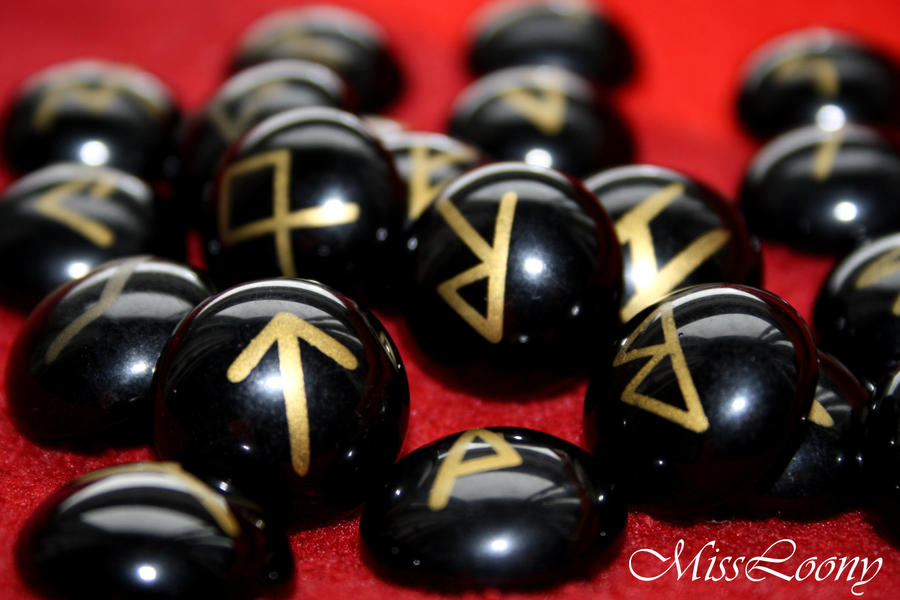
Most of my readers were expecting this subject the wednesday the 14th of September, but i couldn't do it, it was my Father's Birthday, but from now on, every wednesday i will post and talk about a new rune till it comes to an end, i hope you enjoy and learn about each rune and its healing power. This is the Introduction to them. Stay tuned, for every wednesday there will be a new rune to talk about.
The runic alphabets are a set of related alphabets using letters known as runes to write various Germanic languages before the adoption of the Latin alphabet and for specialized purposes thereafter. The Scandinavian variants are also known as futhark (or fuþark, derived from their first six letters of the alphabet: F, U, Þ, A, R, and K).
In the nordic mythology it is said, that Odin hanged in a branch of Yggdrasil for nine days and nights, bleeding, he passed into the other side ( as i've written in the Post about sleipnir ) to know the secret and magic of the Runes.
This is a brief introduction to the runes, the alphabet used by the germanic and scadinavian people, the runes were also adopted by many others throughout Europe, it has survived till today, but the runes have more to say about them and their hidden powers, that many talk about but only few realy know, every wednesday i will post and write about a rune, till it reaches an end, stay tuned if you want to learn more about the runes, thank you for your time, Farewell.
The elemental Air

Air is seen as an unirversal power, a pure substance, it is fundamental for life.
People often belive in what they can see or touch, but just like the air element, it is there, you can feel it, and you know it exists, you breathe it, my point is, things are there, just because you dont see them, it doesnt mean they dont exist.
But now back to the subject, air is everywhere, all living things breathe it, especially plants and trees, that filter the air and give us oxygen, it flows in our lungs, making the blood pulse to the heart, and it beats, it goes to our brain, making it work, so we can feel, move, think, live, even the fishes breath oxygen, not like the marine mammals such as whales but, the fishes have evolved in such a way as to not require frequent trips to the surface to breathe air. Fish have developed gills, on which they rely for the oxygen necessary for a fish's limited metabolism. Many animals have gills at some stage of their life (even humans have them at an early stage of their development in the womb), but fish retained these gills and they are still a functional part of their anatomy. Fish use their gills to extract oxygen from their watery environment. So air is a source of life, and just like the other elements i've written about, all combined, make the perfect natural harmony.
Have you ever Seen the wind in the grass?, it seems as invisible serpents are walking in there, feels like magic.
The air element as a therapy has unlimited ways, you can go outside and feel the cold winter wind in your face, open your arms and breath it, or even in a forest, like most of us do nowadays, breathing deep that natural air without pollution, you will feel much better, feel the soft breeze at spring time, it isnt cold nor hot, watch how the leaves in the trees dance with the wind, the sound it makes, air also brings the snow and the rain, the strong wind in the mountains comes down and entangles in your hair, and goes round all around you, embrace it, welcome it, it is speaking to you, the air is also compared with the spirit or spirits, if you listen close enough, you can hear it speaking to you, find for your self diferent ways to work with the elemental air, and to achieve relaxation with it.
Always remember to respect the elements, respect nature and its wonderful works, by respecting it, you will also respect yourself and life.
Loki

This Tale can not be found in any lore, those who wrote the ancient storys of the Gods and their doings, did not work with the Jotnar. This specific story was told to a friend of mine who works with the Jotnar and he told me the story, so i do not have any credit over this, excepct on the art work. The tale was told to me by Raven Kaldera, here it is a link to his website [Link] Enjoy.
The Birth of Loki - Laufey's Son
In the beginning, there were the frost giants of Niflheim and the fire giants of Muspellheim, and when the great flood came, many were washed away. Some found safety on a piece of Ymir's body that congealed into a new world, and they named it Jotunheim - the new home of the giants. Some say that it was formed of Ymir's spine and shoulders, for it formed itself into a land of great and imposing mountains, trees that nearly reached the sky, huge and fierce animals that roamed the dark forests, and lightning storms that split the sky.
The surviving Jotnar found it welcoming, and they married each other and produced many new Jotnar - the mountain-etins, the woods-etins, the sea-etins. Some settled high in the cold northern mountains, or the western mountains by the ocean, or the islands, or the eastern rain forests, or the southern woodlands. And in one place in the south of Jotunheim, they settled in a strange forest. Its trees were shorter and harder than anywhere else in the world, and they bore strange fruit. Magic leaked from the very earth; the place reeked of it, and tainted everything that was born there. The etin-folk named it the Iron Wood, and the recognized it as the sacred heart of Jotunheim, the wellspring of its magic. Werewolves and werecreatures were born there, and beings strange and twisted, but their deformities were considered a sacred thing. For a twisted troll to say that he had the blood of the Iron Wood was to replace scorn with reverence in the eyes of the onlookers. Magic ran strong in the blood of the Iron Wood folk; seers and galdr-folk came forth from that place, to marry and spread their bloodlines through all the etin-folk.
The folk of the Iron Wood divided themselves into nine clans, and each elected a chieftain. There was much fighting as to who would be Chief of Chiefs, however, and many were slain in the battles, and the blood soaked into the earth. Finally the fighting came down to two clan chiefs, both of whom swore that they would defeat the other and win the leadership of the Nine Clans.
One was Farbauti, whose name means Cruel-Striker, and whose clan was Lightning. He was tall and strong and broad as the side of a mountain, and belched fire from his mouth. Fire-giant blood ran strong in his veins. The other was the young chieftess of the Wolf clan, a powerful witch with the lineage of the Volva in her. She was tall and strong and had hair the color of dried blood, and she could see into the future and prophesy. And she saw that she would be Chief of Chiefs, and set out to make that prophesy come true.
And it came to pass that Farbauti went from the Iron Wood and came to the western mountains, and thence to the ocean, and he wandered in a boat among the many islands off the coast of Jotunheim, some so close to the world's border that one could almost see Vanaheim in the distance. And it was there that he met a beautiful giantess named Laufey, the Lady of the Leafy Isle. She had earth-goddess blood in her, old and ancient as Jord, and she shone like silver in the moonlight, and Farbauti could think of nothing but her from the moment that he saw her.
It is said in the lore that he struck her with a lightning-bolt, and thus was their son born. The truth of the matter is that love and desire for him did indeed strike her like lightning, and the fruit of that love and desire was that she swelled with child. Yet she had not gone but three months before her womb began to burn, as if a brand flamed there, and it caused her great pain. Farbauti feared for her, and wished her to return with him, for there were healers in the Iron Wood who understood the nature of its bloodlines. She agreed to travel with him back to the Iron Wood, although she sorely missed her leafy isle, but she understood that their son must claim his right to the chieftainship, should it come to Farbauti's death. Her husband built for her a cottage out of stone, and guarded it, for he feared that the wolf-chieftess might strike at her.
He was right in this thinking, for the wolf-chieftess heard of Laufey and her swelling belly, and the Sight came on her, and she saw as in a hazy dream that this son of Farbauti's might someday master her. So she called upon her brothers and sisters, and in wolf's hame they set upon the cottage, where Laufey lay within moaning in pain, for her time was almost upon her.
Great was the duel between Farbauti and the wolf-chieftess, and many scars they left upon each other, but in the confusion Laufey slipped from the house and fled as fast as an etin-woman laboring could run. She fled the Iron Wood, but the wolf-giants came after her, sniffing out her trail. She fled from Jotunheim itself, and crossed the world-border into Midgard, yet still they followed her, and the howling froze the blood of the Midgard humans who heard the chase. She fled into the Myrkwood, so fast that the fierce tribes who lived there could not catch her, but the wolves followed. And so it was that she came to where the trees of the Myrkwood were charred and blackened, and saw the burning waste of Muspellheim beyond. And she knew somehow that the burning in her womb had brought her here, to the burning land.
As she stepped foot into Muspellheim, Surt the Black came forth with his men-at-arms, and challenged her. "What seek you here, island woman?" he growled.
"I seek sanctuary, in the name of the father of my child, Farbauti, who is descended from your sons," she gasped out. "For his enemy is hot on my heels, and this child pleads to be born."
"What will you give me, island woman," Surt asked, "if I shelter you from all harm until there is no more harm to come? What will you give for your protection?"
Laufey held out her hands, and showed that she had nothing on her save her shift. "I come empty-handed into your kingdom, my Lord Surt," she said, "and I have nothing to offer. What would you have of me?"
"Empty-handed, perhaps, but full-bellied," Surt said. "Give me the treasure that you carry. Let me be godfather and second father to your child, and I will give you both sanctuary, for as long as you wish."
Laufey hesitated, for she did not wish to betray Farbauti, but the wolves were howling in the distance and her womb burned so that she could no longer stand or walk, and she finally gave in and agreed. Surt bore her to his castle, and the wolves were stymied, and howled many days along the border of Muspellheim, but they did not dare enter, for Surt was too powerful in his own kingdom, and the very land would rise up against them and burn them to death, and so Laufey and her son were saved.
Surt's palace is hewn from black glassy rock, and his hall has many fireplaces around it, big enough to cook an ox and still have room to turn the spit. And it was in the largest of these that Laufey lay down in the coals, and she lifted her skirts and spread her legs, and a burning brand came forth from her body. Surt took tongs of iron and drew the brand forth from her, and as he did so it became an infant boy with hair the color of flame. And so was Laufey's son born.
Laufey sent to her husband, telling him that he had a son, and pleading to return. But Farbauti was still at war, and felt that it was too dangerous for his wife and child, and he bade her bide with Surt until it was safe. But the years passed, and it was still not safe enough in Farbauti's mind, and all Laufey's pleading had no effect on his fear. Laufey burned first with desire for her absent husband, then with resentment, then with anger. Meanwhile, Surt the Black raised her son like his own, and showed him the mysteries of fire, and the fire-blood in his veins.
When Laufey's son was thirteen years of age, and was going from child to youth, Farbauti sent to Laufey and told her that it was over, and the wolf-chieftess had won. He had agreed to a truce, for she was more powerful than he, and she had been elected the Hagia, the Wise Woman and Chief of Chiefs of the Nine Clans. In return for giving her the title, he bade her promise not to harm his wife and son. So Laufey made ready to go, but before they left a seer of Muspellheim came forth at Surt's bidding and prophesied for Laufey's son.
The seer looked deep into the red-haired youth's sharp green eyes, and she gasped, and said, "You shall have no home, wanderer, save the road itself, and that road will be hard for you, and yet all places on the road shall be your home. You shall have freedom greater than any other, yet be bound by your own choosing. You shall be dearly loved and terribly hated, and little understood. Your name shall be more well known outside the Nine Worlds than any other name in the Nine Worlds save two, and one shall be your blood brother and the other spring forth from your loins." And with this prophecy, they left for the Iron Wood and came to Farbauti at last.
Farbauti made ready to welcome Laufey back, but she spoke forth in anger, and said, "You would not let me share your danger, but only your safety, and I say that this is not love. For I would have died by your side, yet you ordered me apart. So I will not live here with you, but will go up into the mountains that look down upon your forest, and there I will build a home and live. You may visit me when you will, but I will not live with you." And Farbauti wept for the first time, but there was no moving Laufey, for her feet were planted like the earth.
So Farbauti turned to his son, and said, "Will you go with your mother, then, or will you stay here with me, your father?"
Laufey's son was silent a long while, which was surprising to those who knew his quick tongue, but finally he said, "You are the father of my blood, but you were not there when I needed you as a child. Surt the Black cared for me then, and which is more important: the father who gave me his blood, or the father who gave me his time? I cannot choose, and so I will not. I will live with you, Chief of the Lightning Tribe, until I am a man, but I will be known henceforth only as Laufey's Son." And Farbauti accepted this, although with heavy heart.
Laufey spoke forth, and asked, "Will you bring our son to the council of the Clans, and see him welcomed into the Nine?" But Farbauti would not go forth where the wolf-chieftess held court, and he would not see his son welcomed with her hands, which was not all pride, for he still feared that she would break her word and kill his son. Laufey laughed and said, "Seers have spoken for our son, and they did not see him dying before his time, so I will take courage and go before the wolf-chieftess and demand our son's heritage." And a council was called, and she brought her son before them, and Farbauti watched from the trees lest there be foul play.
When the wolf-chieftess heard, she was sore in her heart, for she remembered the dream wherein it was whispered that Farbauti's son might one day master her, and she did indeed contemplate killing him in spite of her word. And with this in mind, she hid a knife in her skirts, even though the deed seemed evil to her. Yet when Laufey and her son came to the clearing where the Council stood, and she faced the youth across the fire, with his flame-red hair and his sharp green eyes and his three-cornered smile, the vision came on her again, and she saw it more clearly this time.
And she saw that someday, not far off, when Laufey's son came to manhood, he would come to her and would indeed master her, but that mastery would be Love. He would become her consort, and he would be the father of all of her children, and she would love and desire him above all others, and sometimes hate him as well. And she saw also that he would be her greatest joy and her greatest sorrow, and that he would be the eventual cause of her death, and her rebirth. And she saw also what the seer of Muspellheim saw, that he would wander forever, and be loved and hated, and come to both fame and infamy. And she would have wept, but she was too proud; and she would have screamed at the trick that the Norns had played her, but she saw the wyrd that must be, and that it was her orlog to take part in this path. The knife fell from her stiff fingers, to bury itself unseen in the earth.
So Angrboda did the only thing that she could do. She stepped forward, in all her regalia of the Hagia of the Iron Wood, and she welcomed him into the tribe, saying, "Laufey's son, child of the lineage of Farbauti, you are welcome into the Nine Clans of the Iron Wood, the sacred heart of Jotunheim. We are your family, and we will guard you, and succor you, as long as you live among us. May none who hear me ever say otherwise!" And she threw back her head and howled, and there was sorrow in the howling, and all wondered to see it, but they all joined in as well, and with one great howl Loki was swept onto the path that would be his life.
| Keywords: Ancient Lore, Fire, Gods and Mythology, Jotnar, Laufey, Loki, Magic, Muspellheim, Mythology, Nine worlds, Norse, Norse Gods, Northern, Rökkatru, shamanism
Of Fire and Mischief
 NOTE: The Picture was taken by MissLoony, All Rights Reserverd.
I will talk about the Natural Elements and today the subject is the elemental fire and the importance it has even as a therapy.
The Fire is the source of all creation, it all began with it, i see fire as a living creature, that breathes to live and eats or consumes all arround, so it can grow, it moves, it pulses with life. Fire can be a cosy friend but also a terribel enemy, above all else, when working with it, we must have the utmost care and respect it.
The fire as a therapy is like magic upon our minds, try to sit or lay near a bonfire or a fireplace, in a chair or bed, close your eyes and listen the crackling of the fire, imagine yourself in a distante place, beautiful, dreamlike, near a river or in the mountains, the wind is cold, you feel inside your heart, the bliss , you feel warmer, or you can even think about a place inside a wooden house, snow outside with the sound of the wind blowing hard and the yelp of the wolves. You will fall asleep and have a great rest upon your pillow. Of course you can imagine thousands of situations at the sound of the crackling fire.
Just like the God Loki, he has an outstanding power and skills over fire, and he gained all this knowledge with the Giant Surt the black of Muspellheim, surffice to say, he is the lord of fire. But that is another story for an other post. And speaking of Loki, i avail what i have said, to speak about it, many people see him as the devil of the christian myths, i can tell you, that is a mistake often taken, in the Norse Mythology there are no evil gods, each one has his purpose, his own skills, powers and doings, Loki is the God of Mischief, fire, magic, shapeshifting and cunning, and all of us in our daily lifes, when working with other persons, we have to be cunning, eyes opened, or the society will "eat us alive", also we have to shapeshift, not like loki, but in a metaphorical way, play a bit, not with evil purposes, or to gain things we want and pass over others, but in a way so we can help others and ourselves, it is easy to make evil, and hard to do good, that is the true lesson and the real task.
Subscribe To


 Posts
All Comments