Wight of the Nine Worlds

welcome

I welcome thee free spirit, which thou shalt come with an open heart, open mind and an open soul, for what you are about to read can only be understood by the wise who are eager to learn and to embrace the roots deep and forgotten in the hearts of the free people of Europe, by accepting who you are and where your roots lie, is half way into the great road of life. We will journey unto where our spirit takes us with the knowledge we gained. Learn and teach.
Showing posts with label scandinavia. Show all posts

Dalecarlian runes


We usually associate runes with the Vikings, although these symbols have been an early form of writing spread all over Europe since the late Bronze Age (possibly even before that). Our ancestors started to produce geometrical symbols; they perfected them, simplify them, until we start to see in archaeological context the early forms of what would be the runes. This form of writing soon came to an end when Romans started to conquer Europe and the latin alphabet replaced the old forms of written language. But far in the north the runes remained till late, due to the fact that romans had little influence, if any, in those regions. However, christianity eventually reached Scandinavia during the middle ages, and it was thought that the Vikings might have been the last people to use the runes in a daily basis, and that the runes continue to be used only for magical purposes. But in the hidden deapths of Scandinavia, people still used the runes as far as 100 years ago.

The runic alphabet was the dominant written language in Northern Europe until the advent of Christianity in the 9th and 10th centuries introduced the Latin alphabet. By the 15th century the Latin alphabet had almost wiped out the use of runes. But here, in Älvdalen, the runes remained very much in use.

In Älvdalen, near Dalarna, in western Sweden, the local population continued to use the runes for centuries after the ancient written language had been abandoned by the rest of Scandinavia. Until the early 20th century the runes were still used there. The inhabitants of this region retained their very special language - Elfdalian - which is an other completely different language apart modern swedish (an unique old Norse tongue).

Here is an example of the runes used till modern days:

Illustration from: [Arakun/Wikimedia Commons]


As you can see, the runes of Älvdalen - dalrunerne - are reminiscent of those used on runes stones in countries such as Denmark, Norway, Sweden, etc., but there are a number of differences. Dalrunerne developed over time, influenced partially by the Latin alphabet. The use of runes in Scandinavia gradually ceased during the 15th century. Although there were some areas of Gotland, in Sweden, and in Iceland, where the rune tradition survived until the 17th century, but in Älvdalen     their use was widespread until the early 20th century.


The runes in Älvdalen were most commonly found on houses and inscribed in furniture, and were also engraved into "message blades" which were sticks of wood that were circulated among the farms in the area. It's really interesting to see that the people who herded the cattle up in the mountains would write messages to each other in runes.

This wonderful linguistic and traditional treasure remained till late due to the isolation of this region. A place deep in the Swedish forests and mountain ranges, hard to get into. While the rest of Scandinavia, and Europe, the Latin alphabet and Germanic dialects spread and gave way to the modern languages of the European linguistic-branch, in Älvdalen a little bit of the past remained frozen in time.

Worshiping in ancient Scandinavia - Freyfaxi


Every religion is always changing, and no matter how hard we try to follow the footsteps of our ancestors, we will never fully understand the essence of their spiritual beliefs. All religions have their branches also, and that happens on the spirituality of the Germanic and Scandinavian peoples of old as well. Some prefer to worship only the Aesir or the Vanir, others worship the underworld deities and the deities connected with a more primal scenary, and others just choose one deity and prefer to focus on that one archetype. Suffice to say that most neo pagans prefer to worship just Odin, or Thor, or even both; these two deities are very famous amongst neo pagans and everything else in this spiritual tradition seems of no importance. However, to our ancestors it was obviously different. In fact, as I've mentioned before,  Odin was not that famous back then, and people prefered to worship fertility deities rather than Warrior deities. The majority of the populace were farmers, herders and fishers. Only a few would worship warrior deities and death deities. Odin was a deity more related to death and war than magic and wisdom (as we commonly think nowadays). Odin's cult was very restricted and only for a certain elite of the society.

With that being said, I'll move on to the real subject of this post. One of the most worshiped deities of that time was the god Frey, mostly worshipped at Upsala (Sweden). Fricco or Freyr, a name which appears to be identical with the Teutonic word represented in Old English by frea - meaning - lord or king. It is stated by some historians and archaeologists that an image of Frey, which was worshipped at Thrandheim in Norway, had been sent there from Sweden. There are certain stories that mention this very image of Frey in Sweden which was carried about the country, and to which sacrifices were offered. This was common with certain deities and Tacitus mentions a cult with these similarities in his Germania; an image of a female deity carried to a forest and sacred grove, and sacrifices were made to her (including human sacrifices).

There were many sacrifices to the god Freyr, but mostly were animals. There are accounts of the sacrifice of black oxen offered to Frey by the mythical hero Hading. This sacrifice was often called Frodblod or perhaps Frodblót by theSwedes - Frey's sacrifice. There are frequent occurances of Frey - in Swedish (and Danish) - place-names which indicates the prevalence of the cult in both of these countries. 

The worship of Frey might also have been very popular in Norway, and from there it  passed to Iceland. The cult being passed on by the early settlers. As late as tenth century the people of Thrandheim are represented as refusing to break their image of Frey at the command of King Olaf, because people had long served  thisdeity and the god himself had done good to his people. There are accounts from the folk of Thrandheim that state the deity often talked with them  and told them things to come and also gave them peace and plenty. At the great festivals it was customary to drink to Frey, in order to secure peace and prosperity. A talisman on which the image of Frey was marked in silver is mentioned as having been owned by one of the petty kings of Norway about the late nineth century; this was given by King Harald to Ingimund.

In Iceland itself the traces of a popular cult of Frey are very clear, and more than one prominent person mentioned this cult in the sagas. One of these accounts, from Thorgrim, brother-in-law of Gisli Sursson, the saga says that he intended to hold a festival at the beginning of winter, and greet the winter, and sacrifice to Frey and in honor to the deity. When Thorgrim was murdered, and had been laid in a grave-mound, it was noticed that the snow never lay on the south or west sides of the mound, and the ground never froze there; it was supposed that he was so highly esteemed by Frey himself for the offerings he made to him, that the god did not wish Thorgrim's mound to freeze. Great attachment to this deity also appears in the story of Hrafnkel, who loved no other god more than Frey, and gave to him his possessions ; all his most valuable things. Among the offerings was a horse (Hrafnkel's own horse), which on that account bore the name of Freyfaxi. Another Freyfaxi belonged to Brand in Vatnsdal, and most people believed that he had a religious reverence for the horse. Horses owned by Frey are also mentioned as existing in Thrandheim in the days of Olaf Tryggvason by the end of the tenth century. Freyfaxi became the well known name for the cult of Frey and the celebration to him in August, during Lammas day (1st of August).

If you need more information and would like to talk with me, please feel free to visit my facebook page at: https://www.facebook.com/ArithHarger/ where you cna also see my artistic works.

Scandinavian Religious Leadership during the Viking Age


Unlike our European societies after christianisation, whose religious leadership is held by the church, in the scandinavian societies things were different and religion was no less important to them as it was for the early christians. Religious ceremonies and its administration was performed by the local leaders of the communities.  For instance, a Jarl* of a farmstead took on the duties of administration, not only in the Thing*, but also conducting ceremonies related religion, the seasons and harvest times, new births, accessions, deaths, and so on.

The Jarls were of course very powerful and had a very active contribution in their communities. But not only Jarls had the power to conduct ceremonies and such. There were the Hersar (sing. Hersir). The "landed men"; local chieftains with family lands and many tenants and dependants, who preside over their district Thing. Of course the Hersar were more busy in increasing their wealth, and often led raids.

Women also had a very important and active role when it came to religious administration and other related actions. Many performed acts such as telling the future, healing the sick, and worked as the shaman/seeress of the local community. Women were seen as the keepers of the magic arts and able to communicate with divinities and otherworld spirits. Of course not all women were wielders of magic, but magic was their domain. Obviously there were men practicing the magic arts, but they were too few and were seen as effeminate for their unmanly behavior.

*Jarl - Powerful regional magnates. The highest men in the land under the king. Some Jarls were as powerful and wealthier as their kings, and had bands of warriors which rivaled the size of the kings' own armies. Many led raids to increase their status and wealth.

*Thing - and assembly where laws were discussed.

The goodbye to Scandinavian paganism


In the countries of Norway, Sweden and Denmark, people worshiped a set of deities belonging to two different tribes of gods - the Aesir and the Vanir. The Aesir were the deities associated with the arts of war and were ruled by Odin, the god of wisdom, war and death. The Vanir were the deities associated with the fertility of animals, humans and the land itself. The latter, in time, became a subclass of gods within the Aesir and vs versa, all gods were important. By the 10th century, Christianity came into these countries and brought an end to the polytheistic worship of the Northern European peoples, thus creating three new realms unified under one faith, under one god.

The Christianization of Scandinavia wasn't held in one day. It was a process which took time, and a long and painful time it was indeed. It is obvious that the Scandinavians had their own conflicts, and battles were common between them, but with the coming of Christianization war took a whole different meaning. Wars in great scale, murdering for no purpose, solely for the new faith, the new god and the hatred which was spread by lies that poisened the minds of monarchs. Denmark was the most easily transformed country. The Viking raids slowly introduced the new religion, due to the christians brought as war prizes. The Danes were often in contact with England and Normandy, allowing them to continued exposure to the new religion via political interactions. At first, there was little struggle in assimilating the two faiths, and they were able to coexist under the individual decrees of the Danish tribal leaders. This assimilation began around the 930s of our common era. The baptism of war leaders and kings built a new path for the christian faith to spread, for the kings and warchiefs demanded that their subjects had to be converted as well, since the new faith was now part of their culture. The danish tribes were united under the flag of this new god. The canonization of Canute IV in the 12th century, the Christian ruler of Denmark in the late 1000s, declared Christianity as Denmark's official religion.

The earliest recordings of Christianity in Sweden were in the 700s. In the 830s, Saint Ansgar (a monk with the mission to bring Christianity to Northern Europe), came to the northern shores to spread word of the new faith at the bid of the Swedish king of that time. However, his church at Birka was highly rejected, so it was not until Olof Skötkonung, (the first Christian king of Sweden), agreed to a toleration of the two faiths in the late 900s that Christianity found a place in Swedish culture. He established the first episcopal center in Skara rather than near Uppsala in Uppland, as there is written documentation that the largest worship center to the Norse gods existed at Uppsala. This might have been a wise choice of the king, to avoid war between the followers of the two faiths. It was King Inge later, in the 1080s, who disregarded the risks of war and ended the sacrifices at Uppsala, ultimately serving as the moment of transition between Paganism and Christianity in Sweden. Although, the result of this instance was Inge's temporary exile by his brother- By the year 1130 Christianity gained a permanent stronghold in Sweden and spread to become the foremost religion in the land. 

Norway was the most difficult to transform from polytheism to Christianity, as its history was filled with rulers who constantly dictated the religion. Most of the conflict was seen during a fifty year period (from 950 to1000 CE), under King Haakon. Haakon's method was simple: temples were left to the pagans with churches built right beside them, and though he refused on his own part to sacrifice to the Aesir and Vanir, he also refused to punish those who continued this practice. Haakon was able to begin the spread of Christianity throughout this region by showing kindness to the established polytheistic religion.

King Haakon was one of a kind, unfortunately, a rare sort of man in this period of great changes. After his death, Jarl Haakon replaced him, himself being a pagan man. All the Christianization that King Haakon had established was utterly destroyed. In acting this way, not only did Jarl Haakon create a stricter war against Christianity, but in the years to come he forged a reason for the Norwegian Christians to detest the Aesir and Vanir followers. With the end of the 10th century, the Christian king Olaf Tryggvason was very much ready to eliminate every pagan follower of the old religion. King Olaf had had a very strict christian education, and pagans were seen as the evil sort of "creatures" which worshiped the devil.

However, Tryggvason only ruled for five years, (from 955 to 1000 CE), but he made certain that they were prolific years. He travelled all over Norway to enforce the Christian faith, destroying pagan areas of worship, including temples and everyone we could find. Those who refused to submit to the new religion were tortured and severely punished, ending up dead anyway. By the end of the 12th century, Tryggvason's successors saw Christianity dominating Norway.

With the rise of the new religion, there came a need for building structures linked to the faith. The first church buildings were modelled most specifically from the longships, towering structures that loomed toward the sky like the future Gothic cathedrals with dragon heads on the roof reflecting the strength and power. These churches, called stave churches because of the stars at the heart of their post and lintel structure, were the highlight and symbol of the new religion that had swept through Scandinavia and became a symbol of the unification between the three lands at the cost of many wars, bloodshed and suffering.

Women of the Viking Age


Women during the Viking Age on Scandinavian soil, played very important roles in their society. We already know that there were some women who were warriors, they took up arms and went to battle, although, there is little evidence to support that fact as being something they would usually do. Its impossible to generalize that but of course some women would go to war. However, women in the scandinavian society during the Viking Age had important roles in the household and land ownership, that was their frequent power.

According to archaeological findings, women had defined roles in cooking, knitting, taking care of the house and the children, managing the slaves they owned and taking care of the farm as well as the land within their properties. During times of war and the absence of their husbands, they would take up arms to defend their land, their properties.

During times of war, women were frequently left alone with their children and became widows. All the possessions of a warrior, including is land and belongings, went to his wife. Viking Age women in the scandinavian society need not to be married to another man upon their previous husband's death, it wasn't an obligation, they were absolutely free to choose to be without a husband or to find a new one. As such, women would take the role of their deceased husbands as being the head of the household and also as being warriors, so in these cases it was frequent to see a woman fighting with, taking up shield and weapons. If a male warrior and his wife died, their land and property would be passed on to their eldest child, regardless of gender, if they had children of course.

The reason the Viking warriors gave their land to their wives ,upon their deaths, was because a marriage in Scandinavia was a contract in which both parties entered as equals. All material possessions were recognized as given to the newlywed wife for protection. Thus, we may rightly infer that Viking Age women had more rights than their christianized descendants, for that newly monotheistic religion brought much suffering to women because of the negative view around the female gender. We might even assume that during those times and in the scandinavian society, women had more rights than most women of our era. It seems that the Vikings were not the mindless, bloodthirsty barbarians the christians depicted.

Conversion of Scandinavia and Olaf Tryggvason


Charlemagne was the king who helped christianity spread more quickly through Europe, by force, by his armys and slaughtering many who wanted to keep their old faith and the beliefs of their ancestors. After his death, the empire that Charlemagne created, started to fragment, and so for a time people stood still and there was a considerable peace, the Frisians had been converted to christianity and the Franks had their own empire by the cost of many inocent lifes. There was peace now in the countries of scandinavia.


Along the ninth century, churchmen were afraid from the people of the north that still remained faithful to the old gods, and so they prayed to be relieved and be guarded from the fury of the vikings, that to these churchmen,  the peoples of the north were even more terrifying because they weren't christians, they were heathens, and for the church, these pagan people worshiped the devil and themselves were demons.


As the north countries and its people began to settling instead of raiding and pillaging, the church saw this as a good opportunity to bring the new faith into their northen neighbors, and many norse princes that were in refuge from the wars with the south and with the christians, saw this as a good  opportunity as well, because they realized that conversion to the religion of the kings with whom they had taken refuge, could win them suppot and alliance.


Denmark was the first country to fall under the new faith, king Harald Bluetooth took christianity and imposed it to his people, those that did not want to embrace this new faith and refused the orders of Harald, were forced to do so.


In Norway, at this time, an other king called Harald Hairfair, remained heathen to his death, however, he had many sons who fought over the kingship and sometimes they found in the christian alliances a very useful tool to ascend the throne.
The oldest of his sons, Eric bloodaxe was baptized with his wife, during their exile in the viking lands of England. Harald's youngest son, called Hakon, was fostered by King Aethelstan of England, who raised him as a christian. Harald's great-grandson, Olaf Tryggvason, was introduced to christianity, when he was still a very young man, when he took refuge in Russia. After taking power in Norway, all these kings tried to impose the new religion to their countrymen.


Hakon was the only one of these kings, to be tolerant, and the only one to be called "the good". Hakon was called to the throne by the heathen jarl, when his older brother, Eric, proved to be a tyrant, so king Hakon was indeed a good king, he respected the rights of his own people. When he told his people that they should be converted to chirstianity, they responded that they thought he was bringing them freedom, but now he wanted to take them prisoners into a new and strange religion, and made them forget the beliefs of their ancestors. The people had so far tolerated their king's strange ways in a strange new religion, but wanted him to join them in the autumn feasts, and so he did, a christian amoung pagans, being friends and sharing the heathen drinks to Odin. So Hakon kept the loyalty of his people. He was such a great and good king, that after his death in the last battle, the skald Eyvind sang in the old faith about Hakon and his deeds in the poem called "Hakonarmál".


Olaf Tryggvason came to power, throughout these years, any men had allowed themselves to be baptized, in order to trade with the Christian Europe, or agreed to do so when they were forced by a christian overlord. Many chieftains welcomed christian missionaries and built churches to encounrage christian merchants to come and trade with them, but even baptized, the norsemen still returned to their old ways. King Olaf resolved to put an end to that, the people should be entirely christians, or no christians at all, the old gods and old faith, should be forgotten. Those that weren't persuaded by threats or promises, he slew them, some he maimed, and some he drove  away from the land. Olaf Tryggvason pillage the heathen temples and destroyed the images of the gods, those people who were considered to do magic, he drowned, or killed them by setting a bowl full of hot coals on their belly, for exemple, there was a chieftain who was killed by being forced to swallow a poisonous snake.


In the years that followed, the new religion was very much implemented on the land. Churches had been built on the old sacred places and above the mounds of the dead, on the sites of demolished pagan temples, and bishops became powers in the land. The holy feasts became saints' days.


If you need more information or if you want to check my works, take a look at my Facebook page and make a like at --> www.facebook.com/ArithHarger

Introduction to Runes


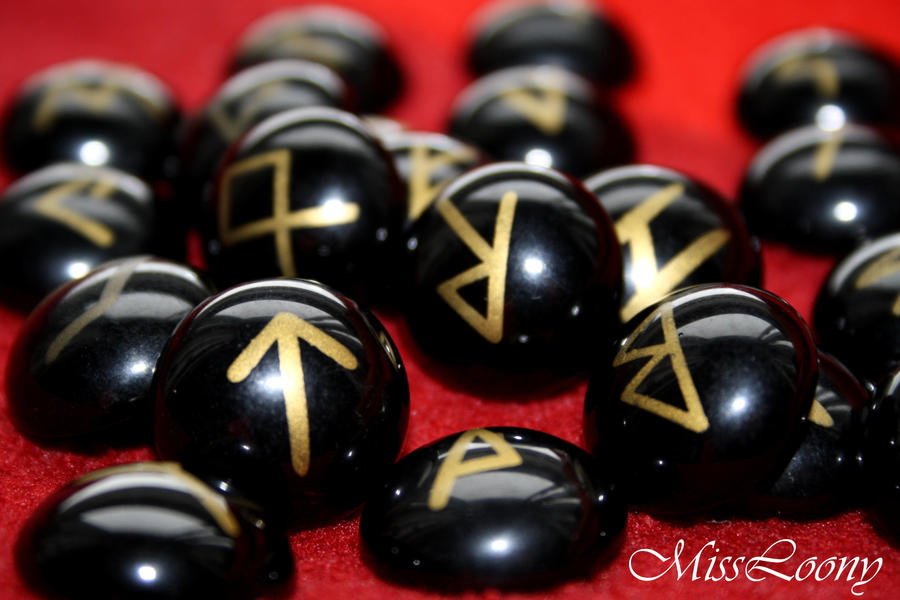
Note: The image was taken by MissLoony.
Most
of my readers were expecting this subject the wednesday the 14th of September, but i couldn't do it, it was my Father's Birthday, but from now on, every wednesday i will post and talk about a new rune till it comes to an end, i hope you enjoy and learn about each rune and its healing power. This is the Introduction to them. Stay tuned, for every wednesday there will be a new rune to talk about.

The runic alphabets are a set of related alphabets using letters known as runes to write various Germanic languages before the adoption of the Latin alphabet and for specialized purposes thereafter. The Scandinavian variants are also known as futhark (or fuþark, derived from their first six letters of the alphabet: F, U, Þ, A, R, and K).

In the nordic mythology it is said, that Odin
hanged in a branch of Yggdrasil for nine days and nights, bleeding, he passed into the other side ( as i've written in the Post about sleipnir ) to know the secret and magic of the Runes.

This is a brief introduction to the runes, the alphabet used by the germanic and scadinavian people, the runes were also adopted by many others throughout Europe, it has survived till today, but the runes have more to say about them and their hidden powers, that many talk about but only few realy know, every wednesday i will post and write about a rune, till it reaches an end, stay tuned if you want to learn more about the runes, thank you for your time, Farewell.