Wight of the Nine Worlds

welcome

I welcome thee free spirit, which thou shalt come with an open heart, open mind and an open soul, for what you are about to read can only be understood by the wise who are eager to learn and to embrace the roots deep and forgotten in the hearts of the free people of Europe, by accepting who you are and where your roots lie, is half way into the great road of life. We will journey unto where our spirit takes us with the knowledge we gained. Learn and teach.
Showing posts with label Other Pagan Celebrations. Show all posts

The Autumn Equinox


Hello friends! Speaking about the Autumn Equinox, Mabon and Haustablót, always with a personal perspective on the subject. Enjoy dear friends :D


My Social Media:


The Bear - Symbology During the Middle-Ages


A video a little bit different than usual. The symbology of the bear during the Middle-Ages. How it turned from a pagan symbol to a christian symbol of evil and the representation of the victory of the divine forces over chaos, in the early European medieval times. Enjoy! :D


My Social Media:


Summer Solstice - The Celebration of Fire


Whatever it is you want to call it, Midsummer, Litha, Midsummerblót, Saint John's Day and so on, the Summer Solstice is the celebration of the sun and the fire element. Never forget your ancestors and how important fire was to them. There were times when fire was the only ally our ancestors had, which helped them to get warm and to survive. Great celebration to all of you and may the sun bring you happiness and spiritual strength.


My Social Media:

Youtube Channel
Society6
Facebook Page
Instagram
Twitter
Deviantart
Wordpress
Blogspot

The Boar in Celtic Culture


You can watch the video about this subject in here: [The Boar in Celtic Culture]


There are many mythological accounts concerning boars in a variety of cultures throughout the world. Boar hunt, and all its process – from tracking the animal, chasing it and delivering the final blow at the end – as always been a very ritualistic activity, greatly linked to initiation rites, tests of manhood, strength and an exercise to prepare for war. 
Hercules chased and captured a ferocious and gigantic boar; the goddess Artemis sent a boar to Calydon to ravage, lay waste, create chaos in that region because Oeneus, the king of the city, forgot about the yearly sacrificial rituals to the gods; in Norse mythology we have Gullinbursti – the god Freyr’s mount - a boar; In Hindu mythology, the boar Varaha is the third of the ten avatars of Vishnu and under that form Vishnu defeated the demon Hiranyaksha. Well, it’s not my intention to give you a list of mythological accounts about the boar, I just want you to understand that this was an animal of great importance in many cultures, but let’s focus on the Celtic culture. 

Through archaeology we know our ancestors started the process of domesticating animals during the beginning of the Neolithic period. Of course they domesticated animals before this period, but the Neolithic marks a time when Man’s actions greatly changed the behaviour and the physical appearances of animals. Changes in the animals eating habits, changings in the habitats, inter-breading to enhance certain features of an animal – the earliest genetic changes – well, a variety of factors which contributed to change the physical appearances of animals. Boars were domesticated and we have transformed them into pigs, and for millions of years, in general to us there as always been this idea that boars were just wild pigs and pigs were domesticated wild pigs. So there was no great difference between the two. However, to the Celts, a pig was a pig and a boar was a completely different creature. In the Celtic languages there are different words for a pig and for a boar, I mean, the Celts didn’t just refer to boars as wild pigs. The Celts did not identify the two animals as being from the same species. For instance, he word for Boar in ancient Irish and Gaelic-Scottish is “torc”, in Welsh is “baedd gwyllt” and in Cornish “bath”, this shows us the singularity of the boar in the Celtic cultures.  

Both the bear and the boar were considered to be the most fearsome creatures of the forests in pre-Christian times and throughout the early middle ages. The Celts highly respected and admired the capacity the boar had to defend itself when the creature felt threatened. So the boar became a symbol of courage and bravery, and also ferocity in battle. To the Celts and also among the Anglo-Saxons, the boar assumes the zoomorphic figuration of the Ideal Warrior, which is why the figure of the boar appears in decorations of weapons and in the equipment of warriors, most prominent in helmets and shields.  

When the Celts went to war, one of the most characteristic objects they would take with them was the Carnyx, those long bronze trumpets, with an animal head from where the sound would come, and most of the heads were representations of a boar’s head, of course there were other 
animal representations such as serpents, but the boar was the most used representation for these wind instruments. The boar being an animal linked to courage, bravery and ferocity in battle, it’s really interesting to see this very creature represented in these objects emitting a battle chant from the depths - frightening. 

The boar is also associated with certain Celtic deities, such as Vitiris, a Celtic god who was worshipped in the British Isles, a very popular deity amongst young warriors and even roman warriors who adopted this god. And the god Mogons also associated with the boar and Moccus a deity from Gaul, worshipped by boar-hunters. The goddess Arduinna, also from Gaul, a goddess from a specific forest in ancient Gaul, and she is associated with hunt and the boar, she even rides a boar. And in ancient Lusitania, the cult of the god Endovélico involved sacrificing boars, and also pigs. So the boar was one of the main animals used in the cult of a variety of Celtic deities. And we have other spiritual/religious references to the boar, such as some of the warriors from ancient Celtic Scotland wore wild boar skins, or even a Celtic tribe from northern Britain, whose name was Orci which means “tribe of the boars”. And then a wondrous variety of statuettes and figurines of boars, and boars represented in coins. The boar was one of the most represented animals, second only to the horse. 

In conclusion, the boar is one of the most representative animals of the Celtic culture, as a symbol associated with war, but above all, courage and bravery, ferocity in battle, and in a variety of folktales and Celtic legends, even the ones about King Arthur, the boar is also associated with magic and the other world, in Celtic mythology, especially in Welsh mythology, the boar can speak with humans and the creature is able to lead people into the world of the spirits, linking the animal to initiation rites; rites of passage. 

Bealtaine and Friggablót


Well friends, here's a new videos talking about Bealtaine and Friggablót, where you have to suffer a little bit of my silliness at the beginning before the actual content. Enjoy it :D


My Social Media:


The Autumn Equinox


You can watch the video about this subject in here: [The Autumn Equinox]


The equinoxes are somewhat times of equilibrium, day and night are matched. After an entire year of hard labour, not just when we speak of agriculture, but also in a kind of spiritual development, the autumn equinox is the time of repose, even in nature when the days become shorter and nights are longer. The autumn equinox marks the completion of the harvest, the waning powers of the sun, a farewell to summer and making preparations for the coming darkness. But let’s start with the Mabon celebration and then the Haustablót or FallFest. 

Mabon is often the term referring to the celebration of the autumn equinox, and to know why this name was adopted for this particular date of the year, we must understand its meaning and where it came from. The name "Mabon" was introduced by the neo-pagan religious movements and in the seasonal list of celebrations of the year. This name comes from the god of hunting "Mabon ap Modron", or in other words, Mabon son of Modron, a deity from the Welsh mythology. Mabon means “Divine Son” and he is the personification of youth. This god was kidnapped, three days after he was born, and was taken to Annwn, which is the other world, the world of the spirits and of eternal youth. We see a union here with youth and death, the beginning of life meeting the end of all things, decay, death itself, and this union is somewhat the personification of this season, letting go summer, youth, rejuvenation, light, and accept the very opposite of that which nature shows us almost in a poetic way, winter, cold, decaying of the soils and put a stop in life. 

So Mabon is the celebration of the year when the days start to grow shorter and the nights and darkness will prevail till the winter time comes. A preparation for the harsh winter, when the crops come to an end, and when people start to gather food to survive the long dark and cold days of winter. It is also a time to burn the soil and the fields where the crops were, in order to fertilize the land that will be covered by frost and snow, and at the spring time nature will do its work, and the land is ready to be planted again. The main celebration during this time consists in the need to share what the earth has given to us throughout the year, during the harvesting cycle, the fruits of the earth are shared with the community in a sort of ceremony to secure the blessings of the gods during the coming winter months. There is a similar Northern pagan Tradition at this time, called the Haust blót or Haustablót, and let’s talk about that so you can better understand the true purpose of this celebrations and enter in the pagan spirit of the season. 


I often talk about blóts, but what exactly is a Blót? I’m afraid I’ve never share that knowledge with you, so I will take this opportunity to do so. Blót was Norse pagan sacrifice to the Norse gods and the spirits of the land. The sacrifice often took the form of a sacramental meal or feast. Related religious practices were performed by other Germanic peoples. This celebration wasn't made just by the norse/germanic peoples, but also throughout Europe, the celts, and latins did it, in their own traditions. Animals and even people (mostly prisoners of war) were sacrificed. The word Blót means "to worship with sacrifice", and in this type of celebration/ritual/ceremony, the people gave their offerings, such as mead, food, animals, 
personal objects, all to the Gods and in turn people expected the Gods to give them gifts back, they asked for fertility, good health, a good life and peace and harmony between people and Nature. 

Now that you know what a Blót is, I will tell you what the Haustablot is, this specific blót in this time of the year, between the 21st and 24th of September. This is the autumn equinox, such as the Celtic Mabon, it is a time to celebrate the harvest of the crops and it's ending, it is also a time to thank and to meditate, the celebration is made with the food and drink that is made with the Corn and wheat, and also to celebrate with cakes, cookies, mead, bread, vegetables, fruits, nuts, and so on. 
It isn’t just a time to thank to yourself, your family and the Gods, for all the hard work, blessings and mutual help among the community, but also a time to thank and praise the Landvættir, who are the spirits of the land, and they protect and promote the flourishing of specific places where they live, which can be as small as a rock or a corner of a field, or as large as a section of a country. It’s important to take note that when people worship or pray to the Landvættir, or to the gods in general for that matter, people are perfectly conscious that the Landvættir or the gods will not solve anything for them, they will solve things WITH them. The Landvættir and the gods manifest themselves through us and infuse us with the power we need to do the things we must, to perform our tasks, so people didn’t ask for, let’s say, give me money, make my fields productive, clean the house for me, no, people asked for the power, the will, motivation to do things for themselves, just a little push to be successful in their hard work. 

In the Northern pagan Traditions, there was a celebration held in this time of the year, at the beginning of the autumn equinox, it’s called Haust blót, or the Autumn Sacrifice, and it is still held today by the neo-pagans who worship the gods from the Norse pantheon. As the season indicates, this is the time when the days grow shorter and darkness prevails until the winter time comes to an end. The last crops are coming to an end also, people start to gather their food and store it to survive the long and harsh winters of Northern Europe. Now, we can try to understand the pagan mind of our ancestors by looking at the natural world itself and how that influenced them. This was also a time to make festivities around the fire and praise, in a way, the Fire Element, because the world itself would take its colours, the fields are veiled by a cloth in tones of fire, dark yellow, red and oranges, the skies at dusk emit a red light that resembles blood, a warning that the days ahead will be hard, the forests and the mountains become silent, most animals also store food and hide in holes or inside old trees, others will hibernate, ravens will go to and fro, from place to place, in search of those who did not survived the hazards of the season and the harsh weather, so this is a time where everything becomes more magical and mysterious, but also the beginning of the trials that are in store for us, the ability to survive and prevail, in a way, a sort of battle between Man and nature, it’s exiting, because we humans love to be challenged, and during winter we are being challenged by the gods themselves, who manifest their powers through nature, and it’s a great honour to accept such a challenge and better still to be victorious at the end, it gives a certain feeling of being worthy.  

This is the time to pray and to thank the Landvaettir, the spirits of nature, of the soils and the land, to pray to the ancestors who still look over their decedents and protect them, and in some 
way still work the soils to provide better crops, so the family can survive in prosperity, happiness and wealth. People also prayed to the elves, who work along with the land spirits, to maintain the land fertile and the soils rich. People also pray to the God Freyr and to Freyja, the Gods of fertility, because the land itself also needs fertility, it needs to be prepared to be planted again, with new seeds, when the winter comes to an end. 

With hard work, perseverance, patience and love the land gives us so much, enough to survive and live with health, and a gift always calls for a gift, so we in turn must give something to the land, a personal object, or food, the mead that is passed amongst the folk in the drinking horn, will be poured into the land, so our ancestors and the gods, may also drink with us, giving to them what we can create with the things the earth gives us. People dance and sing, tales of old are told, to remember the deeds of our ancestors, and so we might find inspiration and strength. 

The Druids and the Moon


You can watch my Youtube video about this subject in here: [The Druids and the Moon]


The Druids are still a fascinating subject, and the unknown still brings mystery, and what is mysterious and almost mystical nowadays, gives us a certain delight in knowing that beyond our dull lives in a civilized world, there is still magic out there, somewhere.  

It’s still extremely hard to understand what the Druids were up to. We know they studied a variety of arts for 20 years, maybe more, but left no written records of their doings. Fortunately, and unfortunately, we have written roman sources describing the religious, intellectual and social functions of the druids within their communities, but these are the points of view from a society with a different cultural, historical and traditional background, seeing from afar something they had never come in contact with; ancestral practices so deeply carved upon the Celtic tribes, impossible for outsiders to fully understand the true essence of Druidism. 

Even so, during Caius Iulius Caesar wars on Gaul (the very same who played such an important role in the transformation of the Roman Republic into the Roman Empire), we have really interesting accounts about the druids, especially duo to Caesar’s friendship with Diviciacus of the Aedui, of course a Romanised name for a person we may never know his true name. Now, there might be a certain confusion here, because there was another Diviciacus during Caesar’s time, and he was also a Gaul, a Gaulish King to be more precise, but we know this Caesar’s friend was a Druid, not by Caesar himself but by Marcus Tullius Cicero, a roman politician who had a very peculiar career before becoming an active figure in the political network of Rome. Cicero had been an Augur, a priest whose purpose was interpreting the will of the gods by studying the flight of birds. So Cicero met this Diviciacus in Rome and had long debates with him, because they were colleagues of some sort and both argued about the art of divination. 

This is one of the most important sources we have about druidism. However, as you might have guessed, it’s only a tiny portion of what druidism is and was. We are talking about druidism practiced in Gaul, from a certain Celtic group within a Celtic group, and obviously other druids did things differently, with certain similarities, but we can’t possibly say that all druids were the same everywhere. Also, these are written roman sources with that beautiful roman political touch of the Roman Republic. 

But the question is, what concrete knowledge did the Celts and the Druids had on the stars and how did they applied such knowledge on their societies? In truth, we aren’t certain (sorry), but we have a variety of studies which gives us a glimpse of such a knowledge which seems with each passing year we come to the conclusion that these societies knew much more than we realised the year before, and the year before that. We can count on the yearly celebrations, harvesting cycles, equinoxes and solstices, we can count on the traditional folklore written by Irish priests, and of course we can count on the studies made by Archaeologists and Astronomers about the orientations of the monuments of antiquity. However, this last one, unlike most people think, such megalithic monuments are not Celtic; they were raised during the Neolithic, so we are talking about roughly 5000-4000 years before the Celts, of course the chronology differs a lot from place to place, still, we know the Druids used such monuments during the Iron 
Age, but did they really knew what that was all about? Were they really using such monuments for the astronomical purposes they had been built so long ago? 

It’s possible that the Druids knew how to use such monuments. Oral tradition since immemorial times survived till nowadays, even though with a lot of changes along the way. But we know the knowledge of the druids was passed along, from generation to generation through the oral tradition, in the attempt to keep the secrets of their wisdom, and they did a damn good job because we are still trying to crack this business. And such a tradition partly survived in the Irish Astronomical Treatises of the Middle-Ages, written in Latin, the very same knowledge the Christians used to continue the studies on the stars. 

But the key to this knowledge seems to be in the Moon. According to the roman sources, the knowledge about the Moon and the observation of its phases was one of the most important subjects for the Druids. The complexity of the knowledge of the Moon cycles is something our modern culture lost, at least the peculiarities of this knowledge. 

First, it must be noted that there are two cycles in the motions and appearances of the moon. The first and best known is that of its phases, which are repeated every 29.5 days approximately. Secondly, is the position of the Moon on the horizon, in fact, if we look at what point of the horizon in which the moon appears, we will see that for about 27.5 days the Moon travels in an arc in the horizon, in a round "journey" between its north and south ends. It is important to note that since both cycles are different, the moon does not always leave in the same phase by the same site of the horizon. 

Now, as the lunar orbit is inclined to that of the earth about 5 °, the points of the horizon where the Moon appears on the horizon does not coincide with the appearances of the sun across the sky. In addition the Moon appearances are not static. And then there is a variety of complex information of the cycles of the Moon which would make my statement too long and complex. What I mean with this is that the Moon cycles are much more complex and we need to be precise in our observations of the moon, because the positions are never the same each year. We had to observe the real cycle of the moon for at least 18 to 19 years, until the whole cycle comes to an end and starts again. 18 to 19 years is very close to the 20-year-study of the Druids. Coincidence? Caesar himself left us an account that it took a novice in Druidry nineteen years of preparations to become a Druid, which coincides with the complete observation of one Moon cycle 

So the Druids had to have a real understanding of the natural world. According Caesar and also Gaius Plinius, a roman philosopher and sort of naturalist of the Roman Empire, the Druids only required to observe the Moon in order to understand the stars and the position of the earth in relation with the stars. 

It's interesting to see that the megalithic monuments are not only aligned to be possible to observe the solstices, but some monuments are actually aligned with certain starts. The starts which are much more visible to the human eye without requiring a tool to enhance the celestial "dome". And these monuments I'm talking about, were not only for initiation rites, but also funerary monuments. Monuments with a variety of functions in prehistoric societies. And as I've said, these monuments are much older than the Celts, so it's a wonder the knowledge these people had, and how this knowledge survived for thousands of years until the Iron Age, and the Druids made good use of such knowledge. 

This may be one of the reasons the Moon has played such an important role in the pre-Christian societies, and why there were so many deities related with the Moon. For instance, since I’ve written about the Romans, we start to see in the Roman funerary stelae (stones slabs) a representation of the crescent moon with the propagation of Celtic tongues and certain customs and traditions mixed with local traditions. 

Easter - Pagan or Christian? (Video)


Hello friends! This is the first out of three videos about the Vernal Equinox (Spring). In this one the question is simple - is Easter Pagan or Christian?. On the next video I will talk about the goddess Eostre and the connection between Easter and rabbits/hares and eggs. On the final video I will talk about the Northern-European pagan celebration called Sigrblót/Sigerblot/Ostarablot. Enjoy friends and tack för idag! :D

(\__/)
(o.O) ~The owl-bunny!
(___ )
''     ''


My Social Media:


The Bear - Symbology During the Middle-Ages


You can watch the video about this subject in here: [The Bear - Symbology During the Middle-Ages]


When people ask you “what animal is the king of all animals?” the first creature to come to mind is the lion. But in truth, before the church imposed the lion as the king of all the animals, the bear was the real king, at least in the European continent. The bear was the symbol of power, strength and majesty.

It is possible that our ancestors during prehistoric times already worshiped bears. We can find bear skulls aligned in niches in caves, and they weren’t placed in there at random. There might have been an early bear cult, and unlike the image we grow up with, of people living in caves, our ancestors actually built houses made of huge animal bones and tusks, tree-trunks and animal skins, so those caves with beautiful paintings, were in fact out ancestors’ first temples. But let's not go back so much in history.

Anyway, we can find traces of the utmost respect, even fear and also admiration our ancestors had for these creatures, in folktales, changed by time and the different political and social realities throughout history, and of course, changed by new faiths. We can also see it in sacred places, christianised, but were once the places of pagan deities and with the new faith became the dwelling places of saints and Christian mythological accounts. For instance, the Celts worshiped a goddess which was represented with a bear on her side or in front of her. The bear goddess called Artio, and the name has a lot of similarities with Arthur, who in turn is also a name connected with bears. This was a primitive deity, linked to the fertilizing force of the earth, in a time when gods had not yet been anthropomorphized and were still represented as animals.

There were certain early Cristian accounts that show the importance the bear had to the pagans, and as such, the devil often took the form of a bear to come and terrorized the monks. The king of animals was turned against those who admired it, by demonizing the poor animal. In the Jewish and Christian traditions, the bear often has a negative symbology, and you can see that in the Old Testament.

When the missionaries began their process of evangelization through Europe, they encountered a variety of pagan deities, many of which were either associated with bears, or were bears themselves. To the Germanic and Celtic populations of Europe, the bear was the animal associated with royalty, so it isn't a coincidence that the most famous legendary king, Arthur, was also associated with the bear. It’s interesting to see that the bear, well, the she-bear, was connected to the warrior goddess Brigid, of whom the Celtic kings were sons of, making them little bear cubs. So there was the necessity to christianise this goddess, and so Saint Brigid was born, and later, this pagan goddess, now christianised, was associated with a real abbess of Kildare named Brigid, who died more or less in the year of 525 of our era.

To the Germanic and Scandinavian peoples, the bear was connected to the warrior spirit, personified by the god Thor. It appears that in certain Germanic groups, one of the imposed trials to the young warriors, was the solitary bear hunt. Although it hasn't been proven yet if these initiation rites were real or just mythical. Anyway, what is real is that the strength and the ferocity of the bear was an inspiration to the Germanic and Scandinavian warriors.

Many ancient cities throughout Europe still have the representation of the bear in their coat-of-arms. The survival evidences of the bear being the king of animals before the church replaced the symbolic functions of the bear for the lion. The lion was an exotic animal, and by the time it replaced the bear, sometime in the year 1000, the lion didn't belong to the European Fauna so this almost mythical creature during medieval times was easily adopted. But to this day some cities such as Bern in Switzerland and Berlin in Germany, to name a few, still have the bear in their coat-of-arms.

It's not a coincidence that during the reign of Charlemagne a lot of bears were hunted almost till extinction, because of the cult the Germanic peoples had and the pagan gods associated with the animal, and of course taking down loads of sacred trees. We all know about the forest devastation held by Charlemagne and his nobles, but we don't often hear about the bear-hunt.

To the church, during medieval times, the bear was the personification of evil, ferocity and chaos, because the creature lived in the dense, almost unreachable, forests. The forests were the dwelling places of the pagans (in truth the forests were the places the pagans considered to be sacred, once, but now it was their refuge from the horrible acts of forced cristianization). But the bear started to enter in the christian mythology in another way. It became the symbol of the divine dominating chaos, because the only ones who could contact with these terrible creatures and turn them into docile animals, were the hermits; those who would seek the most inhospitable places to live in solitude, for spiritual reasons. Only through their faith, and the connection with the divine and the power of god, could they do such a thing, turning a ferocious beast into a docile companion. Thus the bear became the symbol of the victory of the divine over chaos, and we can actually see this representation in the story of Saint Columbanus and his many encounters with bears, and befriending them.

The bear was also associated with the Devil, and a symbol of the many vices and sins condemned by the church. There were many accounts of bears being the evil creatures of chaos, to the point that they became the creatures that would kidnap young beautiful maidens and would rape them. And we can still see this in many folktales; the bear being the "bad guy" in the story. This actually might be the beginning of the creation of the story of "The Beauty and the Beast", highly infantilized and softened by Disney, and thank the gods for that because no child would want to hear about the real account.


So, in conclusion, the fight of the church against the bear, was a symbolic, and in some cases a very real way to free territories from their pagan past and convert them to Christianity and order over chaos. Unfortunately, the bear had a very negative connotation during the middle-ages, but at the same time, the symbolism the bear had during pagan times, somehow prevailed till nowadays, and I'm sure all of us remember the childhood stories of the she-bear being a kind and caring mother, and it isn't a coincidence that many children to this day still sleep with their teddy-bear.

The Oracle of Delphi


One of the things that has always fascinated me the most, were the tales of oracles, prophetesses of the ancient world, sorcerers and so on. When I turn my studies to ancient Greece, I cannot help but to go and delve a little bit more into the knowledge of the oracle of Delphi. So let us leave the north of Europe for a time and go south into the ancient world of heroes and strange myths.

Situated south-west of Mount Parnassus in the valley of Phocis, Delphi was a Greek city associated with the god Apollo. According to the legends, the hill was guarded by a giant serpent called Python, who was a follower of the cult of Gaia (the goddess or the personification of Earth). After killing Python, the god Apollo claimed Delphi as his own sanctuary. 

Every myth has its own truths; metaphores protecting the culture and tradition of a people. So this mythological account might well be based on actual events. Historically and archaeologicaly speaking, during the Mycenaean period (14 th-11th centuries B.C.) there were small settlements in Delphi dedicated to the Earth-Mother as a deity. However, the worshipping of Apollo was established between the 11th and the 9th centuries B.C. By the 8th century B.C. the city of Delphi was already renowned amongst the peoples of the ancient world as a place of prophetic powers held by the Pythia.

"Pythia" was the name given to any priestess throughout the history of the Temple of Apollo at Delphi. The priestess, apparently, was a woman over fifty years of age, lived apart from her husband and dressed in a maiden’s clothes. It's described to us that the ritual of the Pythia during the call of her prophecies required her to first enter the inner chamber of the temple, then she would sit on a tripod and inhale the light hydrocarbon gasses that escape from a chasm in which the temple was build. After falling into a trance, she would mutter words impossible to understand (at least to mere mortals). These words were thereafter interpreted by the priests of the sanctuary in a common language and delivered to those who had requested the prophecies of the Pythia. But of course, these prophecies were always open to interpretation and often signified dual and opposing meanings.

Some interpretations of the prophecies were just what people needed to hear to convince themselves to go to war or fight a specific battle; and as you might imagine, sometimes it went terribly wrong. Nevertheless, some prophecies were accurate and things did happen the way the prophecies had been translated and interpreted. Coincidence? Perhaps, but there were major events that were just too great to be mere coincidence. Nowadays our society has deprived us all of the magic and mystery of the world and what lies beyond conciousness. So I will just leave this post here and you decide what to make of prophecies, although I must say, sometimes there are forces at work greater than our desires and certain paths must be taken before we reach our true goals with success.

New Pagan temple in Poland


You can see my video, talking about this subject, at: [New Pagan Temple in Poland & Religious Freedom]

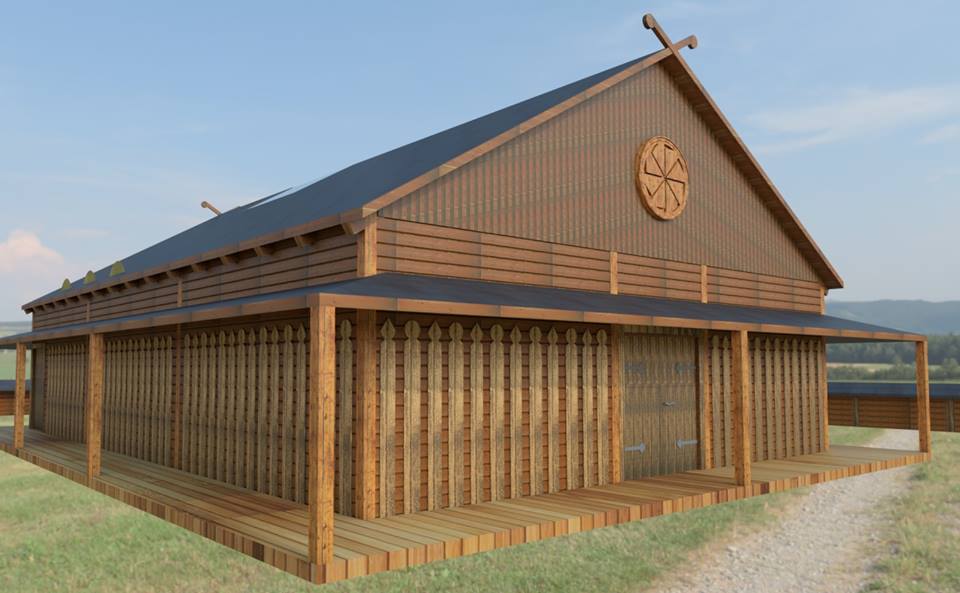
It's happening again; first it was Iceland who started to build the first major nordic pagan temple after a thousand years of christianization in the land. Then, it was Denmark with a very beautiful viking wooden themple to the norse gods. Now pagan history continues with a project to make the first pagan temple to the Slavic gods in Poland, after christianization spread through the land and wiped out all the old temples to replace for the ones of the new faith.

This year, Poland celebrates the 1050th anniversary of Christianization of the country and its people. But the pre-Christian believes were never truly forgotten or left aside, and the pagan faith still lives on. In the city of Wrocław, in Poland, the neo-pagans, or the rodnovers from the Slavic pagan association Watra, have a new project in had - to build a temple to their old slavic deities. For now, only a digital visualization of this temple is available, which is based on the architecture of the old Slavic temples, acording to historical sources.

The importance of this temple is not focused in the old faith, but rather in concentrating the Slavic culture and traditions in this place to rise awareness and to educate people about the history of their ancestors.

There seems to be an uprising (in a good sense) of pagan culture throughout Europe. After a thousand years of oppression from a foreign faith, the peoples of Europe are turning to the old ways of their ancestors. This is very important in a way that we musn't forget who we were, our traditions, our historical past and our cultures. For the future generations the history we are making today will help them to understand the essence of their ancestors. Most of the knowledge of the past was either lost or still remains a mystery, and now with the help of historians, archaeologists and antropologists, we are able to dig the past (literaly speaking when it comes to archaeology). I understand that for those who have other faiths which have the tendacy to dislike the pagan old ways, this uprising might frighten them, but we live in a world were religious freedom should be as natural and normal as waking up and breathe. No one has the right to bind people to a certain faith/spiritual path. A world where religious freedom is possible, is indeed a better world and half of humanity's troubles can be averted.

Here you have the 3D visualization of the pagan temple in Wrocław which is about to be built:


If you seek more information about this subject, please visit this link and support this project at: https://zrzutka.pl/en/rodzimowierczaziemia

Halloween - A Spiritual Approach


It's that time of the year again! I can't help it and must write about it, for it is the time of the year I love the most and it just feels so magical and wonderful (more due to childhood memories). Halloween is nigh! And since I write about it every year, 2016 is no exception.

This particular festivity is probably one of the most celebrated dates in our modern culture. It seems to be admired, immortalized and aproved each year, and its popularity is considerably growing across the Western world; I dare say all over the globe. In modern times it is the beginning of an holiday season and the opportunity to go out at night, dressed in a notably weird costime and, as if it was a ritual, going arround the neighborhood playing "Trick or Treat". Children do love this (and so their parents), for it is an opportunity to be part of the community and a cheerful way, and it's an escape from the average daily life. It's party for everyone. The decorations are also part of this celebration to enhance the atmosphere; nature of course does its part and brings the cold, rain, mists and very vibrant fiery colours.

It is interesting to see that this is a season of insobriety. Oh yes, the lack of moderation when eating treats (for children) and of course intemperance in drinking alcohol (for adults). But it's just one time of the year, right? We all need to celebrate once in a while and have a little freedom, as long as we do not disturb others.

Now, to the main subject, let us leave behind our whimsical behaviours and delve into the historical and spiritual path of this season. If you are here reading this, you most certainly know that Halloween is the glimpse of what remains of our ancient traditions during this time of the year. The roots into paganism are very deep and strong, although we can't possibly know the ancient name for this celebration. Some neo-pagans call it Samhain (which is the most common term when refering to this season), others call it Winternaucht or Ancestor's Blót and so on. Suffice to say, this season is closely connected with the end of Summer in our world (and the beginning of it in the world of the spirits), the last harvests, the preparation for the coming winter ("Winter is Coming!") and of course, a time to be connected with our ancestors. However, and I've said this a hundred times by now, the Catholic Church appropriated this occasion claiming the 1st of November to be the christian celebration of "All Saints’ Day" and the eve before to be Hallows’ Eve, which in time became shortened into Halloween. Still, the importance of honoring our ancestors was there, even if cloaked by a new faith.

For those of you who still practice the old pagan ways, Samhain (let's refer to it like this) this is yet another important celebration of the year and one of the major ones. For most, this is the season to honor our ancestors, to be in contact with them since the connection between this world and the next comes closer and in mythological references this is the time of the year when the gap between worlds is opened and the spirits might come easily into our world. For the northern pagans for instance, this is also the time to be in contact with the spirits in general; the landvaettir (the spirits of the land), Elves, ancestors and the gods. It's also the time for the Wild Hunt that many pagans have in common in their lore. The time when the spirits of the gods and ancestors travel the skies to hunt for souls. In some cases they take the dying, in other accounts they take those who are worthy, or those who want to take part in it, or sometimes they simply take who they wish. What is important to see here, beyond the myth and metaphors, is that once again this is the time when we are closely connected to the supernatural in a spiritual way.

But since every year I talk about this subject and show the historical background of this season, as well as the purpose of it, I would like to go a little astray from that (and you might read the other posts about this for a better information on the subject) and go into a more spiritual approach.

As I've said, this is the time when the veil between worlds is at its thinnest and spirits from other realms can easily engage with humanity. There is a good possibility that we can achieve connectivity with the spirits and undergo a spiritual experience that might change us completly (often for better). For this same reason and to assuage any malevolent behavior from the spirits, gifts of food and drink were left for them, and people would wear masks to fit in with the ghosts. Into our modern days somehow this managed to survive and gave us the new tradition of "Trick-or-Treat" and putting on costumes.

But, it's not only about our connection with the spirits and the knowledge we might gain during that process. This is indeed the time of the year that we also change our behaviours, our moods, and our personalities have to adapt to a new reality. This is the time when darkness conquers the natural world, and the light and warmth of the sun is gone, such as the flowers and the green meadows and everything that is beautiful in nature. There is a huge change in nature, a transfiguration, a metamorphosis. The cicle of life comes to an end, or at least this is the beginning of that end. It gets colder, the leaves fall, the trees are naked and nature dies out in general. Wild creatures either hibernate or seldom come out. This is just a part of nature that we must accept, the same way we must accept ourselves and our own changes. Our moods darken, there is a sence of melancoly and sadness. Death is in the air, that's what it is. But death is a part of nature and with death also comes life. Nature is giving the possibility of new life to be created, so you too must give yourself that opportunity. This is the perfect time to make your inner spiritual journey and find yourself and understand your place in this world. Darkness can be a friend, when you spend more time indoors, getting to know what really makes you happy. The trick is not knowing what defines us during happy times, but to understand who we truly are and what we truly want in the most desperate moments.

You shelter yourself from the cold and storm. You tend to find a cosier atmosphere at home, maybe beside the hearth. This will be the beginning of your spiritual journey, the beginning of inner reflection. In nature life ended and death began to give way to more life. Your natural cicle also ended and now you must create a new one. The problem is that darkness isn't a cheerful companion and it brings a sense of dread and loneliness. But maybe that's because we were thought to avoid it and walk towards the light and get distracted with beauty. Darkness means being aware, confronting our inner problems, get to know negativity so we might balance it with positivity, to appreciate and feel the other face of nature and the energies of the world. Don't try to avoid the coming darkness, because there is no escape; it's just natural. Darkness will come and you can either embrace it or live the rest of the year feeling miserable and lonely until spring comes again and you start to avoid your problems again, running away from yourself and be dumbfounded with light and the illusion that you can actually escape what is less pleasant. Do not avoit it, just accept it the way it is. If you accept it, you will see that there is happiness to be found even in the darkest moments of life. This is the perfect time to think about your own projects, remake your life, rethink the choices you made and start preparing for another journey in your life. Be ready for changes and walk towards them; walk towards the things and the people that make you happy.

We all have shadows in ourselves that we tend to hide. The wounds will never fully heal if you deny them. This time of the year is to be in contact with our ancestors and that also means being in contact with your past. Understand it; it helped shape who you are today and you must know how to let go of the past just as you must let go of those you loved, or, make a new approach with what really made you happy and with the things and people that you are certain that there is a chance to rekindle the light that now seems so dim and faint.

Halloween, Samhain, All Saints' Day, whatever you call it, is the time to embrace the other side of nature and your own other side. You can't live apart from one side and try to run your life with the other. You can't break your heart in half and throw it away and live with the other. That will keep you out of balance. It keeps you away from your own essence, and out of touch with the other aspects of your own desires and wishes. Self-awareness is what will actually help you to live life and not just survive in it. This is the period in your life to find a rebalance and restoration of your own being.

I wish you all happy Holidays and that you might find balance in life and within yourself.

 My Social Media:

Youtube:     https://www.youtube.com/channel/UCYac9irNGo3pSrvc_L8HERw
Facebook:  https://www.facebook.com/ArithHarger
Instagram:  https://instagram.com/arithharger/
Twitter:       https://twitter.com/ArithHarger
Deviantart: http://vikingwidunder.deviantart.com/
Wordpress: https://arithharger.wordpress.com/
Blogger:     http://whispersofyggdrasil.blogspot.pt/
Askfm:        http://ask.fm/ArithHarger

The Goddess Perchta


It's clear that there are thousands of deities we never heard of, and honestly, its quite impossible to know them all since many don't even have names or descritpions because it was lost in time. However, there are certain deities we can talk about even if the knowledge about such gods is a bit tiny but it might lead us to a better understanding, and who knows we might even find out more about them.

Today I will talk about the goddess Perchta, or at least everything I know about such a deity, which is little unfortunatelly, but it's just to expand the horizons and to let you know that there are loads of deities which are very interesting and people seldom talk about them.

Perchta is a birch goddess, well, a deity linked to this specific tree which shows at first a connection to the Celtic folklore. Perchta, Berchta or even Percht,  is a goddess belonging to the Alpine paganism (which is another sort of paganism we seldom hear of). The Alpine region is very rich in folklore and traditions dating back to the celts, gauls and germanic tribes, because it's a place right between these cultures and the peoples of this region soaked up different European spiritual beliefs and cultures, transforming it into something unique and quite interesting to study.

This goddess is the patron of spinning, and it is said she once led the Wild Hunt during the winter (her connection to the germanic spiritual beliefs). She is very similar to the germanic goddess Holda and the Norse one Friga/Frigg. However, it is said that she appears in two forms: as beautiful young woman with skin as white as snow, and another, elderly and haggard. There might also be a connection here with the Norse deity of the underworld - Hela/Hel - which also changes her appearance likewise, although more skeleton-like. This might mean that this goddess is in fact a deity that combines different spiritual beliefs and works as a sort of spiritual ambassador to unite different cultures in understanding one another through spiritual practice.

Some of her worshippers comprised a Mystery cult, which is hard to know what exactly was about and how the rituals were held. Her worshippers became possessed by the dead, or by the Goddess herself, in a ritual apparently related to her procession as leader of the Wild Hunt. 

Her name is definatly connected to the goddess Bertha, which is just another deity (or the same) connected with spinning and weaving. I would say this goddess through time became more of a household worship kind of deity rather than a goddess worshiped in the forests, but it's certain that she started to be a goddess from the wild probably connected with death and winter.

So Perchta might have been a goddess connected with the underworld, death, winter and the wild hunt. A very powerful goddess, both feared and loved, but probably due to the coming of christianity her cult might have been kept under secret within the family environment, thus slowly becoming a household deity.

The Bronze Age Priestess


Archaeologists have found buried in Denmark a Bronze Age woman, dating back to 3400 years ago. She seems to have come from a foreign land, far from Denmark, suggested by the analysis made on her teeth and hair. Unfortunately, all the bones from this woman were missing when the archaeologists found the burial, but her clothing, hair, nails and some teeth were still in excellent condition, which provided scientists with the knowledge of the origins of this woman. (The subject may have spent her early life in southern Germany).

The woman's final resting place was in a large burial mound made of peat bog. In addition to the remains of this woman, which had approximately 16 to 18 year of age when she died, was also found a oak coffin which bore the cremated remains of a child, who was about 5 or 6 when he/she died.

This Bronze Age woman was wearing a wool skirt belted with a large bronze disk with spirals on it, and she was buried in such garments. This is very relevant because figurines from the Bronze Age show women in similar dresses, with spiral symbols associated with a Scandinavian cult of the sun, archaeologists have concluded that this woman must have been a priestess of that same cult, or had some connections to it.

The study of these findings showed that Bronze Age people were not just trading, but were also traveling long distances. Nordic amber has been found along rivers and beaches in Europe and in the Mediterranean. Meanwhile, blue glass beads from Egypt and Mesopotamia have also been found in Scandinavian graves. For instance, the bronze used to make the girl's sun-cult belt decoration wasn't from Denmark, but instead came from the Alps.

Triora - The Witches' City


The "city" of Triora, known as the "city" of Witches, is located in Italy and it's a small village in the hills of the Valle Argentina (not in Argentina of course, we are talking about Italy - Europe) near the border with France.

Much of the architecture of the village dates back to the 12th century, but the most famous period of this village was during the 16th century when a certain number of women (not clear how many, but the number was great enough to be remembered to this day) were sentenced to death by being burned alive by the Inquisition.

In this village, supposedly, a curse overshadowed it during the Middle Ages. Two years of bad weather followed it, as well as drought and famine because of shortages in agriculture, which in the year of 1587 the church and all most of the villages denizens were certain that witches were conspiring against the village. A group of women from Triora and nearby villages were accused of sacrificing infants and offering them to the devil. They were tried, tortured and burned alive during a long period between the years of  1587 and 1589. The ruins of La Cabotina where hypothetically they did their blasphemous rituals still exists to this day.

These women actually had a vast knowledge of medicinal herbs and worked with such herbs, turning them into medicines and oils to heal the sick. A tradition that was passed down from mother to daughter to granddaughter; from generation to generation this traditions was passed down. Apparently this fact was enough evidence to accuse these women of witchcraft.

This dark event in the history of Triora, which led so many to a gruesome and horrible death, is still remembered today. Triora's residents seem to have a morbid pride about the dark history of their village. A museum, shops with witchcraft items, signage, sculptures, witch houses and various relics were placed and preserved, and can be seen throughout the entire village. There are a number of events and folk festivals, and witches are the main theme (of course). There are three annual festivals: Witchcraft and summer Divinations Festival during August, and two autumn celebrations: the Mushroom Festival in September and Halloween in late October.

Triora has an ethnological museum, old documents and objects that belonged to people who claimed to be witches and a sort of wax museum - reproducing scenes of the arrest and interrogation of women suspected of witchcraft. In the village there is also an association of witches, whose members are descendants of people accused of witchcraft and burned alive.

A tiny list of pagan death-deities


The Deities of different cultures have always had their importance amongst the populace. We find many archaeological artifacts since pre-history till the early medieval ages (where in some places the old gods were still worshiped) of deities linked to fertility; the so called smithing gods linked to atmospheric changes and the power of natural forces of the sky and their influence over the earth. But such artefacts representing the fertility deities are linked to the common folk, whose work was agro-pastoral.

People worship the deities more closed to them and to their needs and professional affairs. So it is only obvious that common folk would worship fertility gods and deities related with farming, sexuality, protection and so on, because that was what they needed. Warriors would worship war deities, violent deities, bloodthirsty deities, etc. So what about the death deities? Well, the elites administering communities have the power over religion, and they are the ones who make the rules and administrate the social-religious cults. Linked to religion comes death of course, and all the cults, myths and ideias around death. People would only need to have contact with such deities, when a member of their community or family would die, or even themselves. But those whose affairs in society were constantly related with death, such as priests and priestesses, were the ones to worship the death deities.

As such, it is natural to see that the most famous deities are linked to death, because those are the deities worshiped by the elites of each ancient societies, therefore their representations and names come in all forms because only the wealthiest have the means to registrate, either in written form, in architecture and artefacts, the deities they worship.

That is why, till this day, we know more about death deities than any other deities; even if we only hear the name, we know it and we link it automatically with a deity, whilst other names of other deities are less familiar to us. So here is a tiny list of pagan death deities that you have certainly heard about:

Celtic

Cichol - Leader of the Formorians, a race of semi-divine creatures. A being who preceded the gods of Celtic lore. 

Mannanan - Technically a sea deity but is also associated with the veil between the living and afterlife.

Donn - Lord of the dead in Celtic lore.

Morrígan - Associated with battle, strife, and sovereignty. Most frequently seen on the battle-fields in a form of a crow or raven, seeking the dead.

There are many celtic deities associated with death, for the celts were a variety of peoples with similarities in their warrior-culture. They were constantly in conflict amongst themselves and with others, for the basis of their religious ideas was to achieve glory, honour and to become heroes, by their deeds in battle, the control of the art of war and their warrior skills.

Egyptian

Anubis - Guardian of the dead, mummification and the afterlife in ancient Egyptian religion.

Osiris - Lord of the Underworld.

Nephthys - Anubis’ mother, and sister of Osiris, was also a guardian of the dead. She was believed to also escort dead souls to Osiris.

Seker - A falcon god of the Memphite necropolis who was known as a patron of the living, as well as a god of the dead. He is known to be closely tied to Osiris.

Greek

Hades - King of Underworld. (of course)

Persephone - Queen of the Underworld, wife of Hades and goddess of spring growth.

Hecate - Goddess of magic, night, moon, ghosts, necromancy and crossroads.

Thanatos - Spirit of death and mortality.

Macaria - Daughter of Hades, goddess of the blessed death.

Melinoe - Daughter of Persephone and Hades (or Zeus disguised as Hades), 
goddess of the restless undead, (ghosts etc.).

Angelos - A daughter of Zeus and Hera who became an underworld goddess.

Erebus - The primeval god of darkness, his mists encircled the underworld and filled the hollows of the earth

Keres - Goddesses of violent death, sisters of Thanatos.

Styx - Goddess of the river Styx (the river the dead have to cross), a river that formed a boundary between Earth and the Underworld. 

Erinyes - Chthonic deities of vengeance

Norse

Odin - God of many things, including death. 

Hel - Goddess of the dead, presides over a realm also called Hel or Helheim. 

Freyja - Goddess of fertility, magic and also death. Part of the fallen in battle don't go to Valhalla but to Fólkvangr, the Halls of Freyja.

The scandinavian cultures have a similarity with the celtic one. In the case of Odin, you might think that he is associated with magic and all the cult around that. In truth, Odin was the god of war and death, and not many people worshiped this deity; in fact, the cult of Odin was made by chieftains, specific priests and warriors. The cult of Odin was very violent, therefore not many people worshiped him. With the coming of christianity into scandinavian ground, the worship of the Norse pagan gods was prohibited, but since Odin had had a major importance in the warrior-society of old, his cult was maintained in hiding and he became almost the only old god to be worshiped. This is why all the witchcraft practices also became linked to him and the story of Freyja teaching him magic, spells and all those sort of things, was created. Odin was never a god of magic but a god or war and death.

Finnish

Tuoni - The god of the Tuonela (Underworld).

Roman

Dis Pater - God of the underworld

Mania - Goddess of death

Mors - Personification of death

Orcus - Punisher of broken oaths; usually folded in with Pluto

Pluto - Ruler of the underworld

In the case of the romans, the most famous deities are not linked with death but with the imperial cult. The cult of the emperor and his figure representing power, righteousness, divine love and law,  was much more important during the roman empire (obviously).

Slavic

Morena - Associated with seasonal rites based on the idea of death and rebirth of nature.

Chernobog - The name means "black god". It may be associated with death, although there isn't a very strong association with it or anything else. There are historical sources - christian ones - that interpret him as a malicious god. However, for the Slavs this deity may never had that connotation and wasn't seen as evil.

Peklenc - The lord of the underground and a divine judge.

Veles - Associated with water and the underworld.

Lusitanian and Celtiberian

Cariocecus - God of war and also associated with sacrifices, both of animals and people, which may also be linked to death.

Durius - The god of the river of that same name (nowadays called Douro). There were many river deities, and it is possible that they were linked to death due to the deposition of the peoples' ashes, after funeral rites, on important rivers, including offerings of weapons.

Trebaruna - Goddess associated with home, families, protection, battles, animal sacrifices and possibly death due to the two last associations.