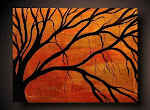
Wight of the Nine Worlds

welcome

I welcome thee free spirit, which thou shalt come with an open heart, open mind and an open soul, for what you are about to read can only be understood by the wise who are eager to learn and to embrace the roots deep and forgotten in the hearts of the free people of Europe, by accepting who you are and where your roots lie, is half way into the great road of life. We will journey unto where our spirit takes us with the knowledge we gained. Learn and teach.
Showing posts with label Thor. Show all posts

The Origins of the Gods - Part 1 (video)


Hello friends! I know this is a very long video (probably too long!) I’ll try to make it shorter next time 😛 But I hope you enjoy it!

This video is about the deities worshiped during the prehistoric periods of the Palaeolithic age to the Mesolithic. I’ve used the Norse Gods as examples of the types of deities that were worshiped during these periods in history. Not that the Norse gods were worshiped in prehistoric times, but certainly the gods of prehistory were the ancestors of certain gods of the Norse Pantheon. This is getting confused? Alright, I’ll explain it better during the video.

Hej då! Tack för idag! 😀


My Social Media:

My Youtube

Facebook Page

Instagram

Twitter

Deviantart

WordPress

Blogspot

Thor's Hammer Unearthed


I don't think an explanation about what Thor's Hammer is, is needed. For those of you  who are interested in such matters, you probably already know what this deity's hammer is all about. Anyway, summarizing (a lot) it is a symbol of both protection and fertility.

Now, this post is about the archaeological findings on the matter, so lets get to it. There have been thousands of amulets found throughout the places where the Norsemen have been. Amulets such as Thor's Hammer - Mjölnir - which have intrigued archaeologists in why were those objects there and if these were in fact a representation of Thor's Hammer from mythology or something else?

Not long ago archaeologists have unearthed a 10th century Thor's Hammer (torshammere) in Købelev, on the Danish island of Lolland, that could gives us a hint on how Thor’s legendary weapon influenced the Viking Age jewellery.

The latest find was a little unusual, due to the fact that it has runes inscribed on it that one might read 'Hmar x is'  meaning 'This is a Hammer'. It seems it was the amulet’s protective power that counted, and often we see Thor's Hammer and Christian crosses appearing together, possibly providing double protection and during the process of christianization, because the old symbols of power and faith were not that easily discarted and kept by the recent converted populations.

The object is cast in bronze and has traces of silver or tin and gold plating. The fact that the person who made the hammer was literate is a source of fascination for archaeologists. There is a possible claim that the amulet could indicate that literacy was widespread among craftspeople. On the other hand, craftspeople could have simply copied the sketch of the person who ordered the work, obviously, but it's quite possible that the knowledge of the runes and their meanings was something much more important and people knew exactly what they meant. The runes were not just alphabetical symbols, but also a part of the sipirtual practices, culture and tradition, so it's very possible that the craftsman and other's from the Viking society knew how to write and read the runes.

Now, back to the subject and to this specific finding, the runes in it range in height from 3 to 7mm, so it required precision to inscribe them onto the amulet. Viking craftsmen and blacksmiths are known to have been brilliant and skillful people on whatever they did. As well as the Thor's Hammer that has been found, archaeologists also recovered fragments of silver needles and a mould for making brooches. These suggest that there may have been a workshop producing jewellery nearby.

This new discovery brings a new light into the knowledge we have about Viking Age society. It would seem that literacy could have been widespread throughout the Viking world, and craftsmen may have had an important role in it.

The Discovery of Thor's Hammer - The mystery of Viking amulets


A 10th century Viking artifact resembling the Hammer of Thor was discovered. This discovery has solved a long mystery surrounding more than 1.000 ancient amulets found all over northern Europe. These relics, known as the Mjöllnir amulets, appear to depict hammers, which historians have linked to the Norse god of thunder, Thor. However, this could not be concluded with certainty as their shapes are not conclusive, and none of them contained inscriptions revealing their identity.

Another similar pendant has been found in Købelev, on the Danish island of Lolland, which is the first one to be discovered with an inscription. The runic text reads “Hmar x is”, which translates to “this is a hammer”.  Cast in bronze, and likely plated with silver, tin and gold, the 1,100-year-old pendant shows that Thor’s myth deeply influenced Viking jewellery. It seems that his is the only hammer-shaped pendant with a runic inscription (so far found). This is a good indication tha the pendants are in fact depicting hammers.

According to the Norse mythology, (which I have mentioned countless times in this blog) Thor is a hammer-wielding god associated with thunder, lightning, storms, oak trees, strength, friendship, honour, the protection of mankind, healing and the fertility of the land along with his wife Sif. Thor is a prominently mentioned god throughout the recorded history of the Germanic peoples, from the Roman occupation of regions of Germania, to the tribal expansions of the Migration Period, to the high popularity of this deity during the Viking Age, when, in the face of the process of the Christianization of Scandinavia, the Mjölnir amulets were worn in defiance and Norse pagan personal names containing the name of the god bear witness to his popularity. In fact, Thor was much more worshiped than his father, Odin.

Featuring an interlacing ornament on one side of the hammer head and the short runic inscription on the other, the newly discovered Mjöllnir amulet is believed to have been made by a local craftsmen. Fragments of silver needles and a mould for making pendants indicate that the jewellery was produced in a silversmith’s workshop on Lolland island.

Asgard Home of the Aesir (6th Part)


This is the 6th part of Asgard and the continuation of the places of renown and great importance that lie in the realm of the Aesir tribe of gods.

Vingolf

There is another hall that few know about it, since all the other most known halls in the norse mythology have somehow placed the others in the shade. One of these "not-so-famous" halls is Vingolf, which at first was aquired by Odin because Valhalla was filled with Einherjar and another hall was needed to place the overflowing warriors. But Valhalla isn't yet filled because of various reasons that I have written in the previous posts.

Vingolf became the property of the Aesir goddesses, they claimed it of their own and it is now a haven for the female Aesir. Of course that men can visit this hall, however, it is filled with that feminine touch, but it is quite beautiful and its gardens are pleasent to look upon. This hall was built in a beautiful land filled with hot springs around the hall itself, and there is also a small hall built in the center of the hot springs which serves as a healing house.

Bilskirnir

The largest hall in Asgard and one of the largest single-owner hall in all the nine worlds, is Thor's hall called Bilskirnir. This single hall is larger than Valhalla and all the houses around it, including the walls. Bilskirnir is the equivalent of a small city. This hall has six hundred and forty rooms, not only filled with people from Valhalla but also with those who died in battle and were sworn to Thor. In it Thor's guests also live there for a while, the servants of Thor and also Sif's servants, even Loki dwelt there for a time. The walls of this huge hall are made of brick and stone and all the rooms are high-ceilinged and each room has windows that are constantly open to let the air in, even when it is raining.

Unlike what we are used to hear or see about Thor in out modern world prespective, Thor is the champion of Asgard, he is the god of the common people such as farmers, he is the protector of mankind and often wanders in the world of mortals and has mortals as guests in his own hall. Thor isn't blond, he is red-haired and has a red-beard.

In this great hall also lives Meile, which most don't know who this figure is, and in truth he doesn't want to be known or be famous, but he is one of Thor's younger brothers who seldom is at Bilskirnir, but can be found there once in a while.

There are two other denizens of this great hall, two other of great renown a part from Sif herself, the wife of Thor. These two are Roskva and Thjalfi or Thjalfr. They are the children of Egil Skytten, the midgard mortal, it is said that he had an affair with Groa, the giant sorceress wife of Aurvandil who is the first husband of Sif, and together they had a son, the god Ullr. So it is said that Roskva and Thjalfi are the sons of Egil the mortal and of Groa, which makes them Half-human.
There are many talls of how Roskva and Thjalfi came to live with Thor, the most heard one (summarizing) is that when Thor and Loki were traveling together, they came to a farm where they found this human family with two children. They all sat and had dinner together, they ate one of Thor's goats but all had been warned not to break any bones. The children did it and as a payment for their disobedience, Thor took them to his hall to work there.
Another tale, not so often heard, is that Groa and Aurvandil were good friends of Thor and after raising the two children, they sent them to be fostered at Bilskirnir. Thjalfi became Thor's page, accompanying him in many journeys.
Thjalfi is also the messenger of Bilskirnir and a guide for those who are wandering about Asgard and lost. Roskva helps in Bilskirnir and she is also a guide there, for this great hall is a confusing labyrinth.

Behind Thor's hall there is a small hall (small compared with Bilskirnir itself) that belongs to Thor's daughter Thrud, the sister of Magni and Modi. The land where Thor's hall was built is called Thrudheim, in honor of Thor's daughter and to show the love and pride he has for her.


Note:  If you have any questions for me or if you want to see my artistic works, check out my Facebook page and make a Like if you can by following this link --> http://www.facebook.com/ArithHarger

Working with the Gods: Thor


Thor is one of the most famous deities in the Norse Pantheon, and for those who do spiritual work with him, they must have two things in mind. Thor prefers to work with male bearded spiritual-workers and he loves the color red, any kind of clothing that you may have with that color is fine.
Thor is the tipical warrior god, sturdy, stalwart, stoic but very kind and friendly, faithful to friends and the bonds he creates with those who work with him.
Nowadays isn't hard to find a symbol that represents him, Thor's Hammer, it is actually very easy to get and you should wear one when doing spiritual work with him, or use a real hammer as a as a symbolic token.
Thor also likes beer, it is actually his favorite alcoholic beverage, but for him the most important thing is to have someone to drink with, as I have mention it before, he is a god that likes to creat friendships and maintain them. He shows you the importance of friendship, not just the merrymaking, but the bond between friends, a brotherhood kind of connection, always being there for a friend when help is needed, being faithfull to them.

Sif the bride of Thor


Sif is the goddess of fidelity, she is Thor's wife, and it is interesting to see their symbolic connection, as he is a god which helps in the fertility of the fields with his hammer, and Sif's hair is as golden as the wheat fields in which her husband helps in the growth and fertilization, the cycle of the land and the soils for agriculture dance with the moods of the weather.

Little is known about Sif apart from behing Thor's wife, a so famous god in the stories, sagas and in the history of religions and spiritual beliefs of the Norse/Germanic peoples.
Sif has a son called Ullr, the skiing hunting god, and with Thor they have a daughter called Thrud.
 There is a story in which Loki cuts off the fair and long hair of Sif, the very thing she is famous for. But it is clear that Sif's hair is the symbol of the cycle of harvesting of wheat, so she is probably a goddess associated with the fertility of the earth and with the abundance, but this fertility assossiation is connected with mankind and the need to cultivate the land to survive, again this is also closely associated with Thor for he is also a god of fertility but turned to the weather, these two gods together make the perfect magical work which helps us having food, for Thor is also the god who is more connected with humankind than anyother deity. Sif is also a deity associated with frith , or in other words, her attitudes and actions are to ensure peace and harmony, not only between the gods as shown in the Poetic Edda called Lokasenna in which Sif and Loki exchange a lot of insults but she attempts to make peace, but also peace and harmony extended to families and communities.

Thor the god of Thunder


Thor is the Germanic/Norse god of thunders, storms and rain! Well he doesn't need much introductions, he is the most famous god of all the Norse pantheon, he is the god that people gave much importance to, for his bravery, his many adventures and for being one of the gods most close to the human kind and also a great friend of the peoples of Midgard. Recently the Marvel movies about Thor widened the interests of the populations in knowing who this god is, suffice to say that the real on from the Norse myths is very different from the Marvel one and it is important to state this this fact, for the real Thor is of great importance to all and there is more in him than all the stories we are all used to listen. I feel the need to make a post about him, because to the Neo-pagans he has become a cliche figure, people don't know his true nature, nor they give him the proper value, for many.. he is just the symbol Mjölnir neckless around the neck.. we mustn't forget his true powers and how important he is.

Thor was one of the most popular gods among the Germanic/Norse tribes, famous as he was, we nowadays see the great importance he had once, for his hammer is the symbol most used as a genetic symbol of modern Heathens, Asatru and other followers of the Norse/Germanic paganism. In England he was known as Thunor and to the Germans he was Donar, also the Saami people whorshiped a figure carved in a trunk of Oak with a hammer in hand, called the Old thunderer father, this might have been the first source of Thor when the Scandinavians got in contact with the Saami, or maybe the first source could have been the celtic god Sucellos, very much famour in Gaul ( Modern France ), Britain and Lusitânia ( Modern Portugal ), a god whose name means "the good striker", often said to be a deity of agriculture and forests, yet no one knows his true powers and purposes, but what is known it that he was a long haired bearded figure carrying a hammer in his left hand, this was actually his main attribute, this hammer.
Important as Thor was, we got the weekend name "Thursday" from his own name, meaning "Thor's Day". He is also a Deity of fertility, bringing us closer to the Celtic source of the god Sucellos from agriculture, but also a deity of strength. Just as the Greek thunder-god Zeus, Thor is also associated with the oak tree, once again this brings us to the Celtic god Sucellos, for being on of the important gods of Lusitânia ( Modern Portugal ) a land filled with Oaks from which people made all kinds of objects from it's bark and it was also a very sacred tree for the Lusitanian people, for when a child was born, the placenta was thought to be the double of the baby, a part from him and his spirit, the protective natural cloak, and so the placenta was placed underneath an Oak Tree so that the person would always have a part of him/her connected to nature and the magical/healing/protective powers of the Spirits of the Oak tree. The Oak tree is also associated with Thor because its bark is a poor conductor of lightning, unlike other trees, oaks explode when they are struck by lightning, creating a field of flamming wooden bits that usually were collected and used to start fires, this might have been the first controlled fire that humankind has experienced in primordial times, so this gives us the hint that the gods of thunder are older than they seem, way back before history was recorded. This may be why Thor is associated with giving to humans their first warmth and safety.
Thor is the patron of common man, in other meanings, the ancient times farmers. He is the champion of Asgard, with the power of his hammer and his utmost bravery, he is sent to deal with all kind of troubles that threaten Asgard. He is a very tall god with immense strength, taking after his mother, the giantess Jord goddess of the Earth, he is also red haired and red bearded, not like the Marvel Thor people recently are so used to. We see in him the true spirit of a common Norse Warrior, impulsive and honest, quick to party and also quick to anger, he likes to drink a lot, bue everyone can count on him when it is needed, he is completely reliable. His primary concerns are with honesty and honor, keeping promises and making sure that others keep theirs, it is important for him that when someone does something, anything, whatever one might do, must be with whole their hearts. meaning that we must be ready to defend what is most important for us, keeping our promises and commitments, being loyal to those we love and to our friends.
As i have mention it, he is the son of Jord, the first lover of Odin, his wife is Sif and with her he has a daughter called Thrud. He also has two sons with the giantess Jarnsaxa, which are Magni and Modi. Thor also has a younger brother by a different father, Meile. He is also the stepfather of Ullr, born from Sif's first marriage. The image we are used to think of when talking about Thor, is him riding a chariot pulled by two goats, Tanngrisnir and Tanngnjostr, with his hammer Mjölnir.
It is seldom mentioned, but one of Odin's lover, the giantess Grid, gave to Thor a magical belt of strength called Mengingjord, a pair of magical iron gloves named Jarngreipr, and also a magical staff called Gridavolr.
The famous Asgard Hall named Bilskimir is Thor's Hall, the largest building in all the Nine realms with six hundred and forty four rooms, there are many servents in his Halls and the chief servants are Thjalfi/Thjalfr and Roskva, tow of the three children of Aurvandil, Thor's hunting companion and Sif's former husband with this giantess wife Groa. In other stories, Thjalfr and Roskva are the children of a pair of farmers or peasants who give Thor shelter for a night and accidentally hurt one of his goats, and so Thor took the children as servents in payment.
There is an interesting fact that most people don't know, but Thor can shift from ordinary human size to being as huge as any giant, this is how he manages the fight giants so often. However, one of the side effects of this talent is that even when is in the ordinary size of a human ( about six feet tall ) he weighs as much as he would weight if he was in the giant size ( about twenty feet tall ). It is because of this fact that he is the only god who cannot cross the rainbow bridge Bifrost, and must get in and out of Asgard through the river Thund Thvitr that surronds it.

Thor is the most famous of all gods because there are more stories and myths about him than any other god in the Norse mythology, maybe perhaps Loki, but even so, the two of them were traveling companions for quite some time in many adventures.

Note: The artwork to illustrate this post is a painting of an Oak three made by me with the title Þórs Eik Tré which means "Thor's Oak Three" in old Nose. If you have any questions for me or if you want to see my artistic works, check out my Facebook page and make a Like if you can by following this link --> http://www.facebook.com/ArithHarger

Working with the gods: Jord


Note: Photo Taken by Ana Teresa, you can see her photography works at this [Link]


There has always been a goddess of the earth in many cultures, or at least in the cultures which are not based in the abrahamic beliefs. The Germanic/Norse cultures also have a goddess of the earth, of the northern land, most of the time people forget about her or do not mention her at all, but she is the morther of one of the most famous gods of the Norse pantheon, she is mother to Thor.

Jord is the Goddess of the Earth, and the living grounds beneath our feet, she gave birth to many children, she gave life to us an all living creatures, the place whence we came and were we will go back some day. She is the very symbol of fertility, however, she is not a goddess of agriculture, she is the goddess of all the place there are not under any human control, the goddess of the mountains, fields, every tree, every rock and moss on it, the verdant meadows and other lands with a pure wild spirit. She is also the mother of the Land-spirits or the Landvaettir. She reigns over all the uncivilized places.
Jord means "earth", and she is the daughter of Nott, the goddess of night which i have already written about her in here. Her powers as you might guess, are connected with the forever fertile soils, from where life emerges and grows, the beauty of nature at it's best. She lives in Jotunheim, and she is the spirit with great fertile powers, even more powerful than all the Vanir gods. She causes the wild fruits to grow and mature, and the seeds carried by the wind with Kari's help, the god of winds.
She is also known as Fjorgyn and Hlodyn, although the first name is sometimes refered to a parent of Frigga, so probably she may be the daughter of Jord, or her father is somehow connected with Jord.
She gives in people, the love for natural things, the happy feeling of freedom, the beauty of all living things and the magical wild world, the love that she instills in people is also the love for our own body, how we are physically, accepting how we are, this doesn't mean of course being in an unhealthy physical state and don't give a damn about it, on the contrary, to love our physical self, we must take care of us, of our own body, eating healthy, exercising the body etc. that is the true love one can have for himself, taking a good care of ourselves. Most of the time Jord is seen as a large woman, physicaly strong, as most goddesses of the earth are seen, but once again, this doesn't mean she is a fat figure, unhealthy and in danger to die because of all the problems obesity can bring to the body, in truth the shape of her body is naturally large because that is her physiognomy, such as a being from the Jotnar kin might be, she is a Jotun, so its natural to see her as a large figure because she is a Jotun of the Earth, a giant. Also she has that physical appearance as a symbol of fertility, to all pregnant women and mothers, or soon-to-be mother and nursing mother, as such, she can be called by those in need of fertility in their own body, in the family, in their livestock, in the garden or land. She can also be called for healing the land and the earth it self. She can be called by the environmentalists to help in their hard work, for the safety of the wild nature and to restore order in places that were badly damaged by us humans.

If you have any questions for me or if you want to take a look at my artistic works, check my Facebook page and make a like if you can in here --> http://www.facebook.com/ArithHarger

Working with the Gods : Thor


"Thor is a God and one spirit-worker pointed out, "and that's the first thing to remember." He doesn't mind modern clothing as long as it's a red plaid flannel shirt and jeans, or something along those lines - practical, woodsy, working-class, very masculine. He prefers his students, spirit-workers, whatever you want to call them, to be male-bodied and have a substantial beard. Ideally, he'd prefer someone not terribly small, with some muscle to them. The person should wear a Mjollnir around his neck, as actual war-hammers are hard to find. He likes cheery colors, especially red and blue, and plenty of beer. He'll even drink the cheap stuff if there's lots of it - and if there are people to drink it with, which is the most important thing. Attendants must first and foremost be drinking and partying buddies, so pick people with the proper capacity.
The best food for Thor is a goat roast, but he has one peculiarity - don't break the long bones in the goat meat. You can separate them at the joint and serve a leg to him, but the bones should be left intact. He'll eat other sorts of meat as well, but the same applies - make sure it wasn't from an animal with broken bones, which may mean arranging to do it yourself.
Although Thor is happy to Party Down with loud music and lots of food and drink - he doesn't mind not having everyone pay attention to him as long as he has a circle of cheery drinking buddies - he is one of the least likely to hit on women, as he is mostly very monogamous with his beloved Sif. He might dance with them, but it generally won't go all the way to the bedroom, unless the woman in question is one of his mortal wives.

Birch Tree - 24th December to 20 January


The Birch Tree is a small tree that rarely exceeds 25 meters, and it can live to 50 years. In Europe it grows below 2,000 feet of altitude. It is a tree that remotes to an ancestral time, of more then 30 million years of existence.
This tree represents ( in druidic lore ) the
renewal and rebirth. In the woods, this is the first tree to gain leaves, to rebirth and to renew its green appearance after the Winter. It is also the first tree to grow again in places where it has been a great burning or a place where the trees have all been chopped down.
It is belived that these were the first trees to grown after the great glacial age.
The origins of its name, birch , comes from the indo-european
languages, linking to the words Brightness and shining.
However, it is a
possibility that the name comes from the Anglo-Saxon term, beorgan, which means "to protect" or "shelter".
That is why it is said, in a dark forest, it is the birch tree that always show us the way out.

This tree is sacred to the Norse god Thor but especialy to the
Welsh goddess Blodeuwedd, and to other goddesses such as Freya, Frigga and Ceridwen.

In the Druid
Calendar, the first month, that goes from 24th of December till 20th of January, is called beth - the birch moon. In Portugal, this tree is called Betúla.

There is an ancient habit, to give to the newly married folk, small branches of birch tree in order to ensure the fertility.
In certain places in Europe, farmers used to plant these trees around the house, as a protection against lightning, and the juice
extracted from leaves, prevents worms from appearing in the cheese.

The wood of the birch tree is one of the tradicional timber used in the Beltane fire festival.

Mythology around Runes: Sowelo


Note: The Photo was taken by Missloony

Mythology of Runes

Sowelo


In northern mythology, the sun is considered to be female, personified as a giantess named either Sol or Sunna. Two of the Asgardian deities are also associated with this rune.
The first is Baldur, "The Beautiful", the beloved, yet tragic, god, who was slain by a mistletoe dart thrown by his blind brother, Hodur. This myth expresses the cycle of the year and the duality of light and darkness.

The thunder god Thor, must have a place in the symbolism of the rune, because it looks so much like a lightning flash. Thor, the guardian of justice and order, was known for the swift retribution that he dealt out to wrongdoers. So the meaning of this rune can be applied to the workings of the law and also to taking justified revenge.

Thor's Festival 19th January


Today is Thor's Festivel at 19th January 2012.

I will talk about this day just a bit, it is an important day like any other celebration.

What do we do at this specific day?

Well, this is a bit like the Blóts when made to a specific deity. We raise our Drinking Horns full of mead or wine! But at first, we dont drink it. the horn goes through all, the family, friends, loved ones, all who are sharing this day with you, and each one gives to the horn, his/her "spirit", ecense, strength, might, beliefs, courage. This will be an offer to the gods. How so? - each one will raise the horn to the sky and ask for courage. Why courage? - it, will help you facing all the battles and tasks in your life. In today's world, we do not battled with swords, axes and spears, but the weapons we use, are courage, self-reliance, honor and self-sacrifice to help and protect those who do not have the strength to protect them selfs, and when i speak of battle, i'm talking about your daily problems, at work,at school, at home, with your family and friends, for exemple - A fireman needs the courage to face the fires and to rescue people.

well.. back to the subject, In this day, you pray to the God Thor, when the horn passes through all, you will spill the mead to the ground in a place where nature dwells, by doing so, you give these gifts to the God Thor, and because a gift calls for a gift, The Gods in turn, and in this specific day, Thor, will give you courage and strength to better face the world and live in it with joy. In the Blöt, the gods will give you their many gifts that each one has.

"The world is good. Prosperity is good. life is good, and we should live it with joy and enthusiasm."

We are free to shape our lives to the extent allowed by our skills, courage and might. There is no predestination, no fatalism, no limitations imposed by the will of any external deity. We do not need salvation. All we need is the freedom to face our destiny with courage and honor. We are connected to all our ancestors. They are a part of us. We in turn will be a part of our descendants. We are also linked to all our living kin - to our families and to every man and woman rooted in the tribes of europe. They are our "greater family". We are connected to nature and subject to its laws. The holy powers ofen express themselves in nature's beauty and might. We belive that morality does not depend on commandments, but rather arises from the dignity and honor of the noble-minded man and woman. We do not fear the holy powers, or consider ourselves their slaves, on the contrary, we share communiy and fellowship with the divine. The holy powers encourage us to grow and advance to higher levels. We honor the holy powers under the names given them by our germanic/norse ancestors. We practice Asatru by honoring the turning of the seasons... The ancestors...the divine...and ourselves - in everyday life. Asatru is about roots. It's about connections. It's about coming home.

If you need more information or if you want to check my works, take a look at my Facebook page and make a like at --> www.facebook.com/ArithHarger

Mythology around Runes: Thurisaz


Mythology: Thurisaz


The first syllable of the rune, thur, or, thurs, survives today in Thursday, the name of the fifth day if the week, which literally means "giant's day", but it is also associated with the mighty god Thor, who was something of a giant, even among the larger-than-life deities of Asgard. The rune's name, Thurisaz, was an ancient title of the thunder god, and it has been suggested by some that the form of the rune represents Thor's hammer, although others think that it merely shows a single thorn on a stem.